
In This Blog:
- Introduction – Patagonia and Viking Expedition Cruise Choice
- Expedition Excursions: Flexibility and Transport
- Preparing for Glacier Excursions
- Garibaldi Glacier Excursions – SOB/Zodiac
- Agostini Glacier – Submarine Dive/Zodiac
- Amelia Fjord/Skua Glacier
- Pio XI
- Practical tips
- Pink Bear Rating
Introduction – Patagonia and Viking Expedition Cruise Choice
The main attraction on a vacation to Patagonia is the natural beauty and raw scenery. There are immense fjords filled with towering rock walls, icebergs, and glaciers of all sizes. The Chilean Fjords are a vast network of glaciated inlets and channels stretching over 1,600 km across the southern tip of Patagonia. Patagonia and the Chilean Fjords have been on the Pink Bear bucket list for many years.
For retired senior travelers like us, one of the easiest ways to visit Patagonia and the Chilean fjords is a cruise. Cruises offer the opportunity to unpack once and experience many different areas. Most details are taken care of by the cruise line, including itinerary, meals, and entertainment. For us, like many experienced senior travelers, we are no longer interested in cruising on large party ships with large numbers of people.
For a trip to Patagonia and Chilean fjords, luxury or expedition cruises were our best options. In Patagonia, expedition cruises prioritize active exploration and remote access using small, maneuverable ships and many direct from the ship excursions. In contrast, luxury cruises focus on high-end, resort-style experiences, but their larger ships often limit close-up access to narrow fjords and landing sites. As healthy, active seniors, the expedition cruise appealed to us much more than the large luxury-style cruise.
Many cruise lines offer expedition cruises to the Chilean Fjords. Some of the best-known operators include Viking Cruises, Quark Expeditions, HX Hurtigruten Expeditions, Lindblad Expeditions, Silversea, and Seabourn. While each company has its own strengths, they all share a common goal: taking travelers beyond traditional cruise ports and providing opportunities to explore remote regions through Zodiac landings, wildlife encounters, and expert-led excursions. When planning our Patagonia adventure, Pink Bear spent considerable time comparing expedition cruise options. We ultimately selected Viking because it offered the combination that best matched our travel style. Viking offers casual comfort as well as the more adventurous expedition experience. At our age, while we want a more intimate expedition experience, we are not looking for aggressive adventure travel. We had previously traveled on Viking River cruises and were familiar with their style. Viking offered an expedition cruise to Argentina and the Chilean fjords on the Polaris, and that was our ultimate cruise choice.
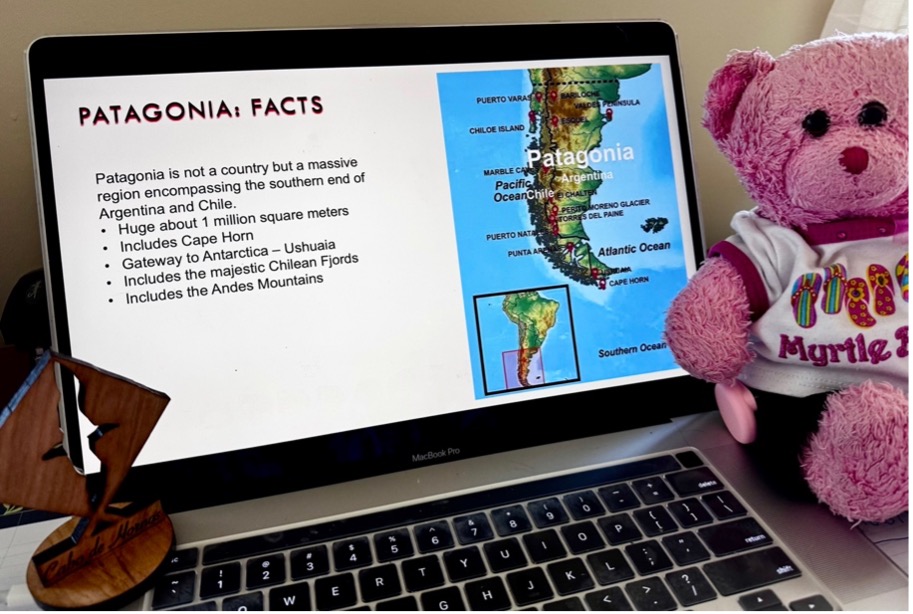
Pink Bear is researching Patagonia.
Expedition Excursions – Flexibility and Transport
Flexibility
Before discussing expedition details and transport, it is important to understand one of the defining characteristics of an expedition cruise: flexibility.
Unlike traditional cruises, where port schedules and shore excursions are planned months in advance, expedition cruising is heavily influenced by weather, sea conditions, wildlife activity, and local regulations. The expedition team constantly evaluates conditions and adjusts plans to provide the best and safest experience possible.
As passengers, we quickly learned that flexibility was not only necessary—it was part of the adventure. Detailed excursion information was often not available until the evening before, and plans could change throughout the day. A landing could be delayed, modified, or occasionally canceled. In some cases, the expedition team would discover unexpected opportunities and completely revise the day’s plans. At first, this uncertainty can feel unusual, especially for travelers accustomed to carefully planned itineraries. However, we soon realized that this flexibility is what allows expedition ships to deliver extraordinary experiences.
Transport
One of the features that attracted us to Viking Expeditions was the variety of ways to explore destinations beyond simply viewing them from the ship. Depending on weather and local conditions, guests may have opportunities to experience remote areas using several different expedition vehicles.
Zodiac Boats
The workhorses of expedition cruising are the Zodiac boats. These rugged inflatable boats typically carry around 10–12 passengers plus an expedition guide. Zodiacs are used for shore landings and scenic cruising. Most of our Polaris adventures took place aboard Zodiacs, and they quickly became one of our favorite parts of the expedition experience.
Special Operations Boats (SOBs)
Viking’s Special Operations Boats are rigid-hull vessels designed for stability and speed. They are much larger, with a higher passenger capacity than the Zodiacs, and provide a smoother ride in rougher conditions. Passengers must remain strapped in the seat because the SOB sometimes travels at high speeds. During our glacier excursions, the SOBs provided spectacular views while allowing us to travel farther from the ship.
Kayaks
For guests seeking a more active adventure, Viking offers guided kayak excursions. Small groups paddle alongside expedition guides, providing a quiet and intimate way to experience glaciers, fjords, and wildlife. While kayaking is not our preferred activity, many guests considered it one of the highlights of their expedition. We did not take any kayak excursion on our Polaris journey.
The Submarine
Perhaps the most unique feature aboard Viking’s expedition ships is the onboard submarine. The submarine allows guests to explore beneath the ocean’s surface and observe marine environments rarely seen by travelers. While submarine operations depend heavily on location, weather, and sea conditions, it represents one of the most distinctive experiences available on any expedition cruise ship. We were blessed with the opportunity to have a submarine experience, which I will discuss in detail in this blog.
Preparing for Glacier Excursions
The Hangar
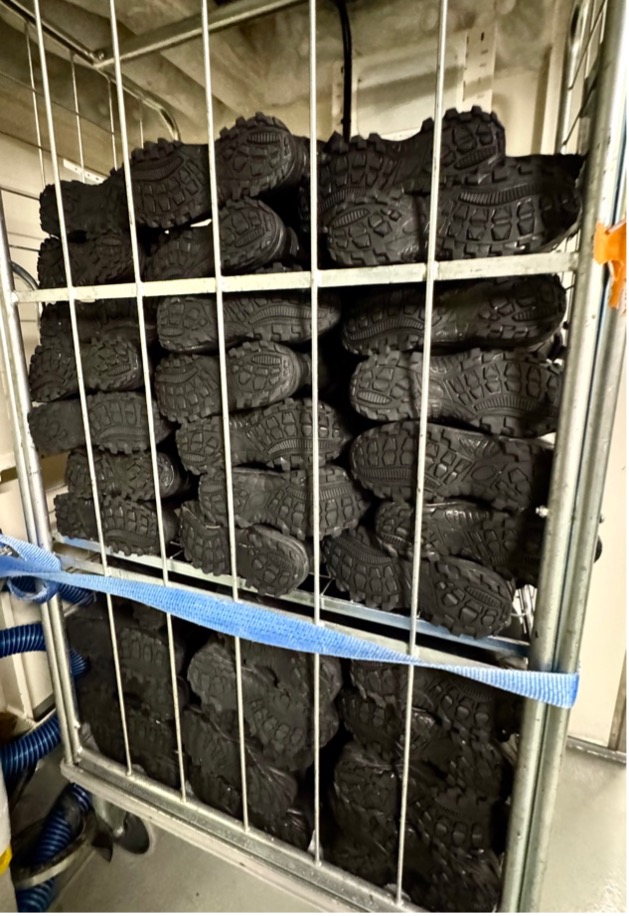
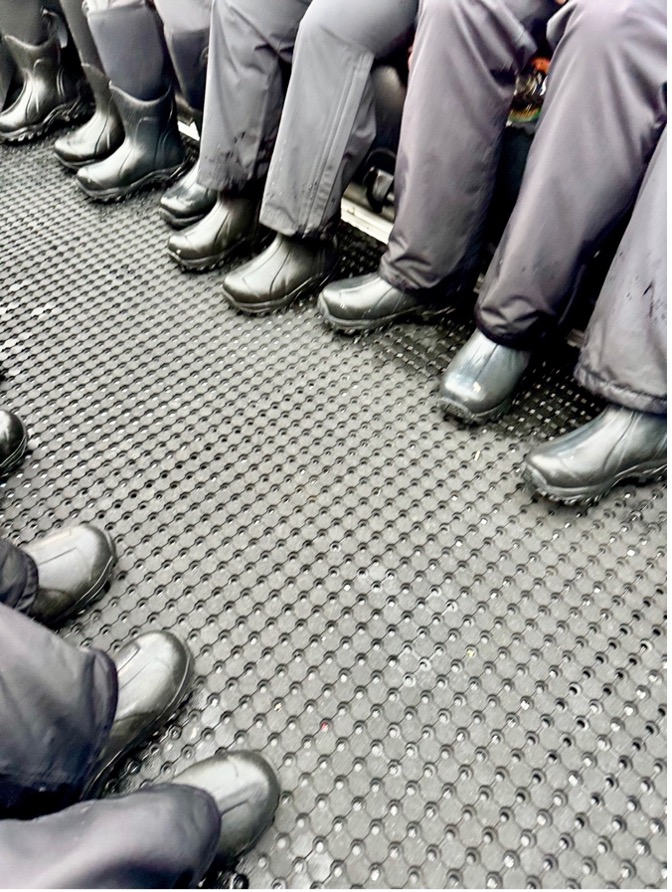
One of the most unique features of the Viking Polaris is the ship’s expedition Hangar. Located at sea level near the stern of the ship, the hangar serves as the launching point for expeditions (Zodiac, Special Operations Boat, and Submarine). Unlike traditional cruise ships, where passengers typically board tenders from an exposed outdoor platform, the Polaris allows guests to prepare indoors in a comfortable, climate-controlled environment.
For many guests, gathering in the hangar before an excursion becomes part of the adventure itself. There is a sense of anticipation as travelers don their expedition gear, listen to final instructions, and watch the crew prepare the Zodiacs for another day of exploration in some of the world’s most remote destinations.
Gear Distribution
Upon embarkation, we received a time slot when we were to pick up our Viking-supplied gear from the Hangar. For the Argentina and Chilean Fjords expedition, waterproof pants and boots are supplied. Because it is not considered a polar cruise, jackets are not supplied to passengers. During the assigned time slot, we proceeded to the Hangar on Deck A. Deck A is located below Deck 1. One set of tables with boots and another with pants was set up. We gave the crew our size and then tried on the gear. It took several attempts to get the correct size for both boots and pants. Boots run large, I am a 6 but needed a 3! Pants run small. I am a small and a small fit, but they were snug, therefore I selected a medium. The pants we were given were nice, Helly Hanson brand with an elastic bottom. The length was perfect for my 5ft 3 in height.
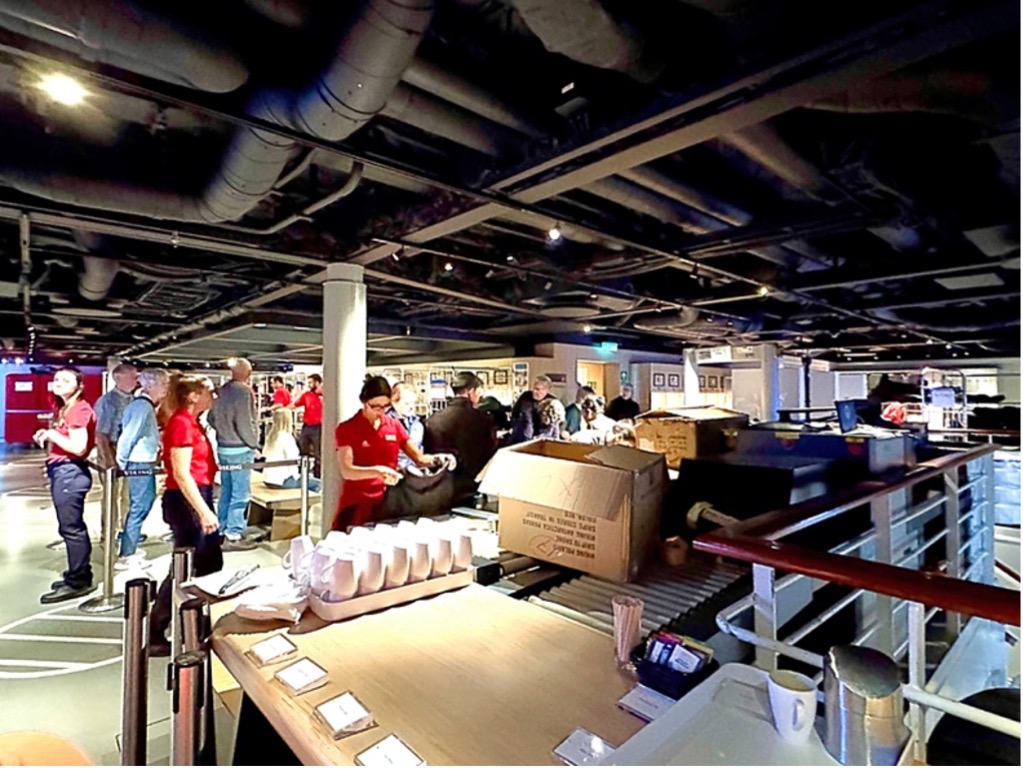
Gear Distribution
What I Wore
For expedition trips, I wore a thermal thin shirt, a second thin insulated shirt, a waterproof battery puffer jacket (purchased on Amazon), thermal socks, insulated stretch pants, the Viking-provided pants, and boots. I bought my cell phone wth an attached neck strap or an optional waterproof case. We also needed to wear a compact life vest provided in the drying closet of each cabin. For some excursions, I brought my small waterproof backpack. I purchased this on Amazon, and it was very useful. I could carry my Canon Rebel camera in it when I chose to bring it, and it kept it safe and dry. For the submarine, special booties are distributed. I will discuss the submarine in more detail later in this blog.
Sailor’s Grip
Our lecture on the first night on board described the “sailors’ grip”. We were told that the familiar “handshake hold” will almost certainly fail to “hold” in the event of an accident. The “sailor’s grip” involves closing the fingers and thumb around the WRIST of the other person. “Sailor’s grip” is far less likely to fail in the wet and cold than the “handshake” grip. We were told to use the “sailor’s grip” whenever entering or exiting our excursion watercraft.

Sailors’ grip
At first, I was very nervous getting in and out of the Zodiac, but after a few excursions, it became second nature.
Garibaldi Glacier
Located within Chile’s remote Alberto de Agostini National Park, Garibaldi Glacier is one of the most accessible tidewater glaciers in the Chilean fjords, and the first we visited on the cruise. Descending from the snow-covered peaks of the Darwin Mountain Range, the glacier flows directly into Garibaldi Fjord.
The first expedition excursion plans at Alberto de Agostini National Park immediately taught us about flexibility. Our itinerary from the previous evening was an operations boat (SOB), followed by a submarine dive, and then a Zodiac. However, due to poor visibility, the submarine dive was cancelled and rescheduled. The SOB and Zodiac trips went off without a hitch.
SOB
At our assigned time, we proceeded to the hangar. It is easy to board the SOB; you simply step onto it. You do need to dress warmly and put on your waterproof pants and boots. The boat goes fast at times, and it does get chilly and a bit wet. The sun was shining, and it was in the mid 40s when we took off, but it did get a little cold.
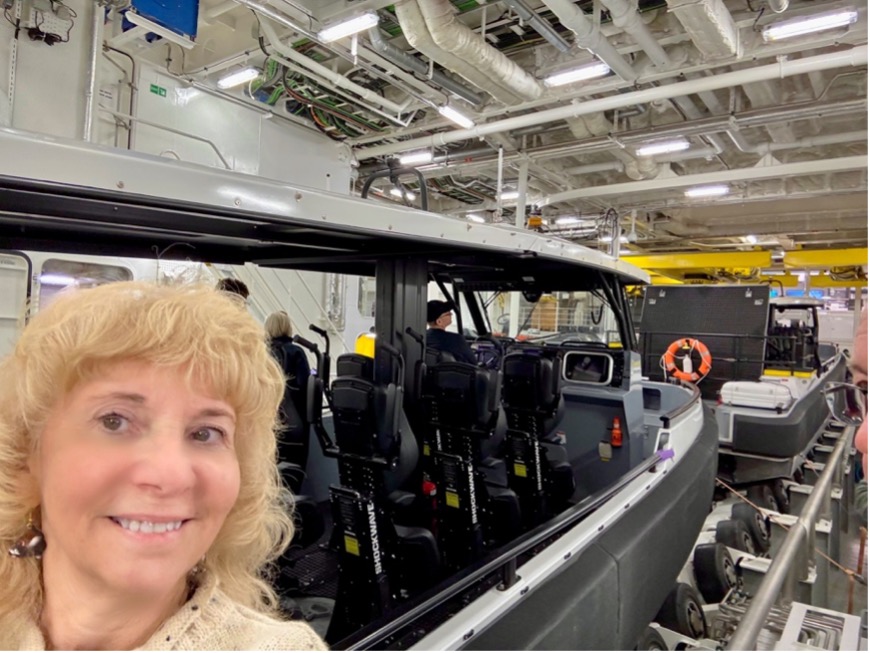
SOB in the hangar
We took off and drove through beautiful ice fields to the glacier, which was really cool, pun intended. Not much in the way of wildlife in the Garibaldi Fjord, at least for us.
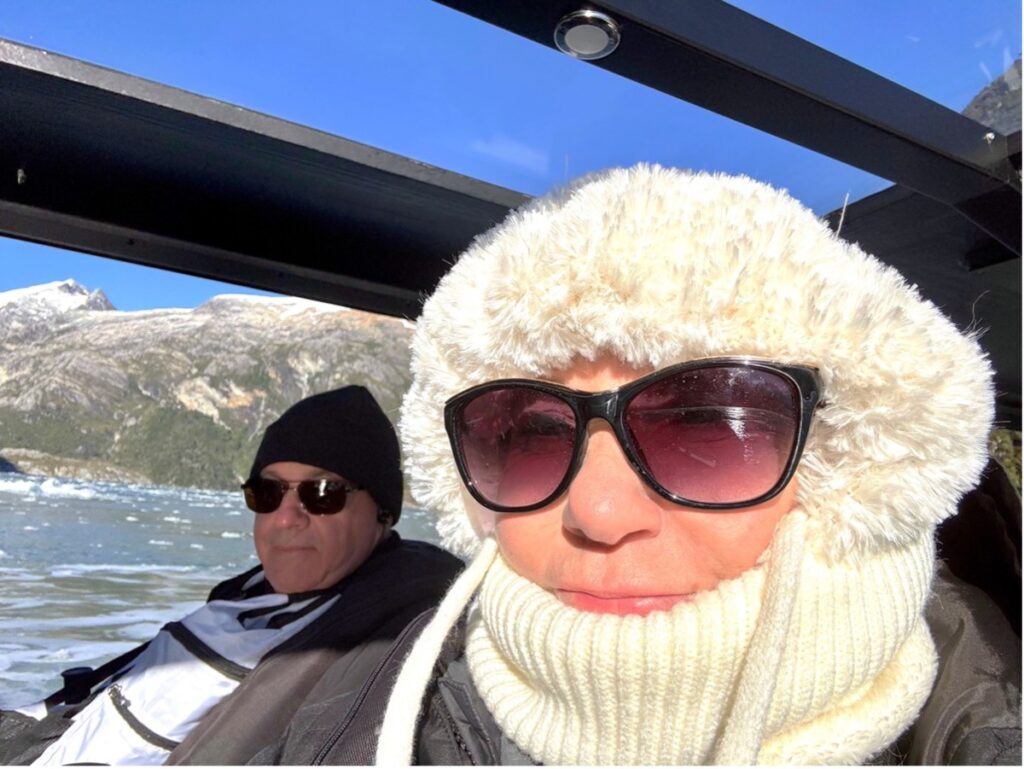
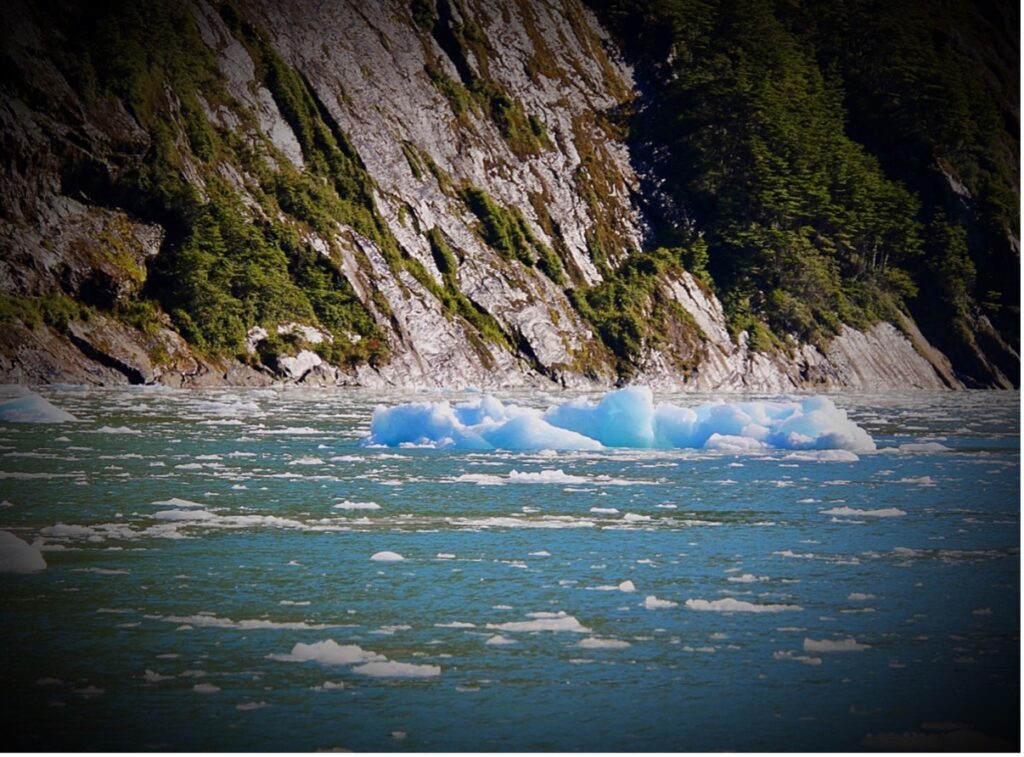
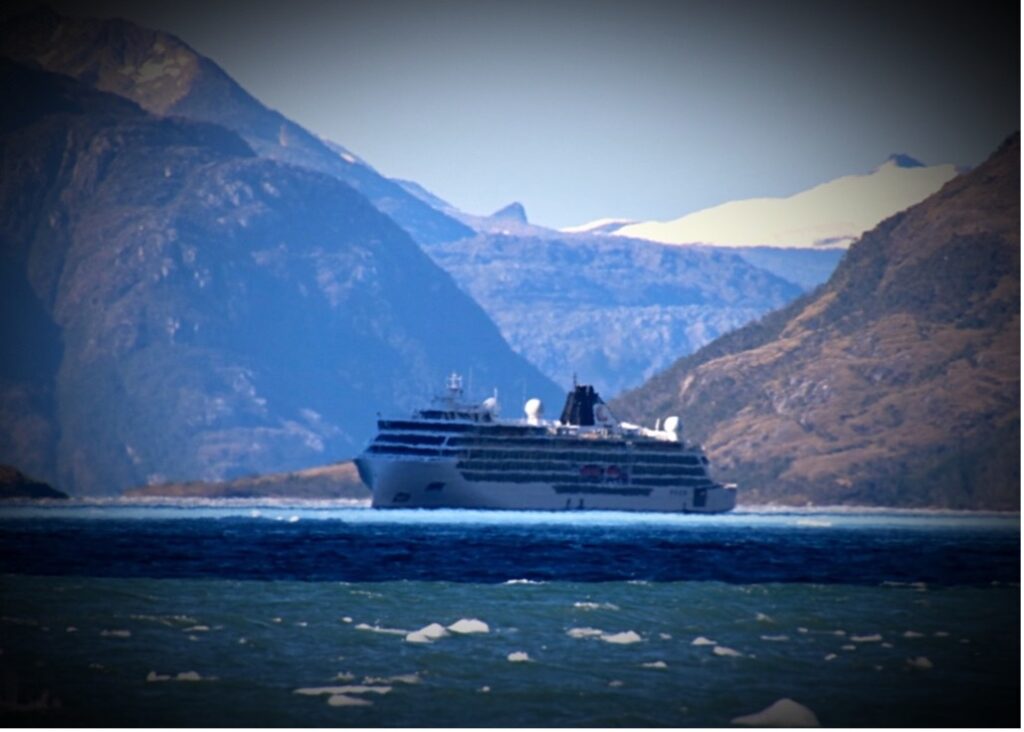
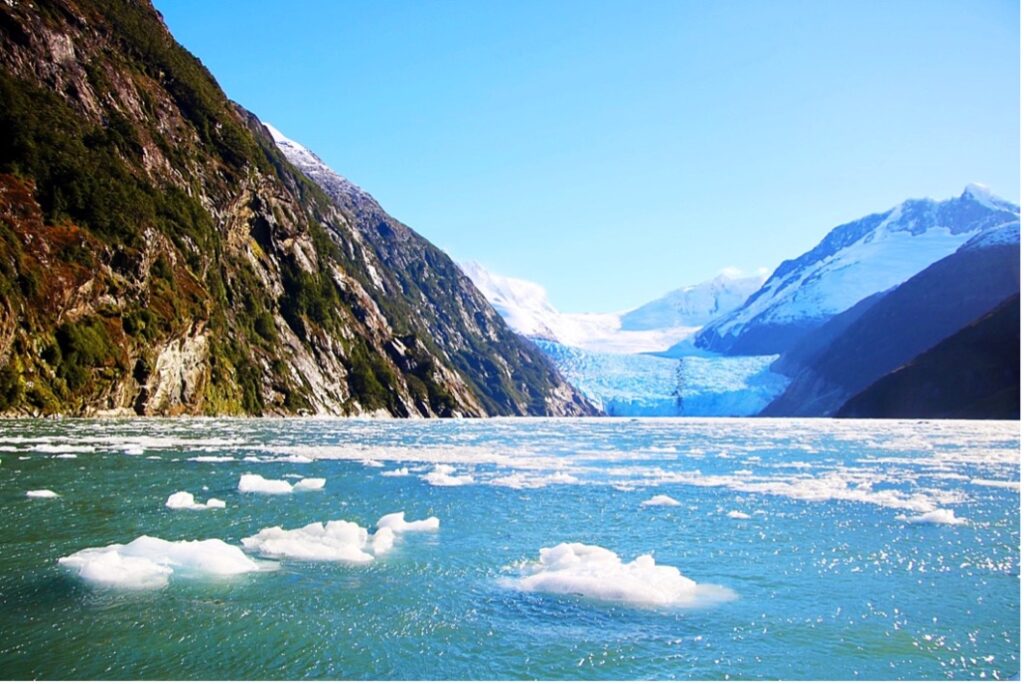
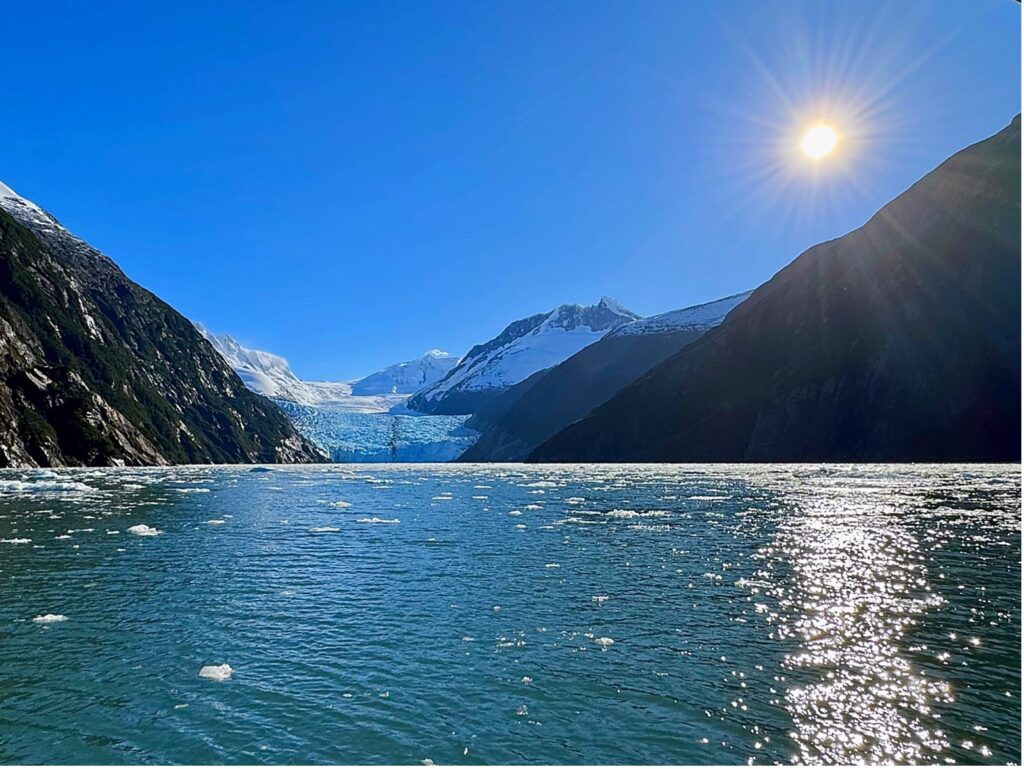
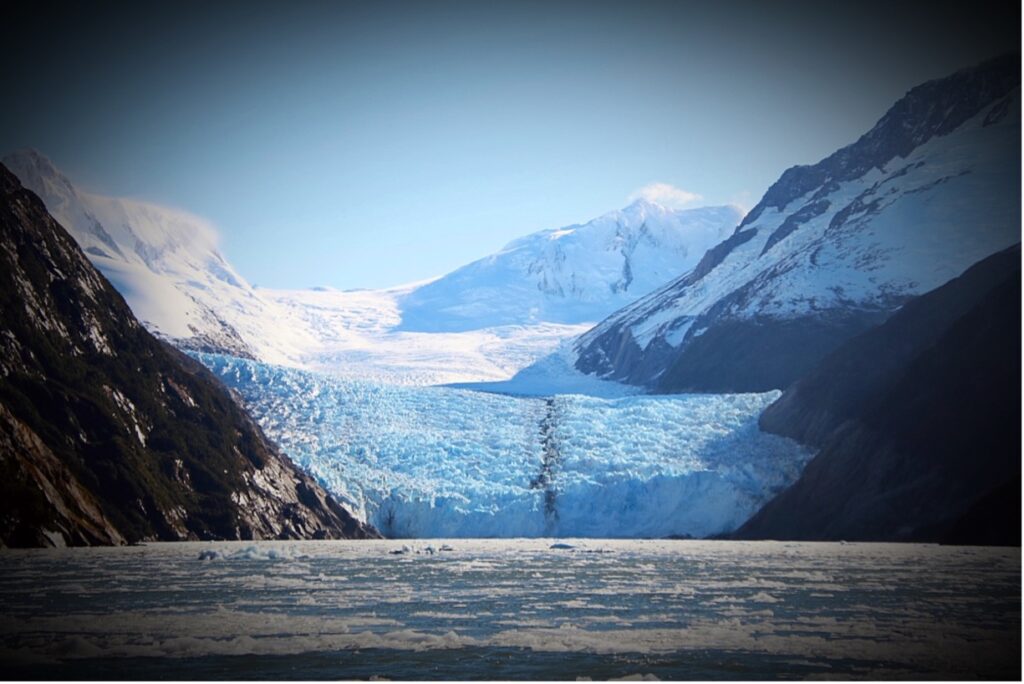
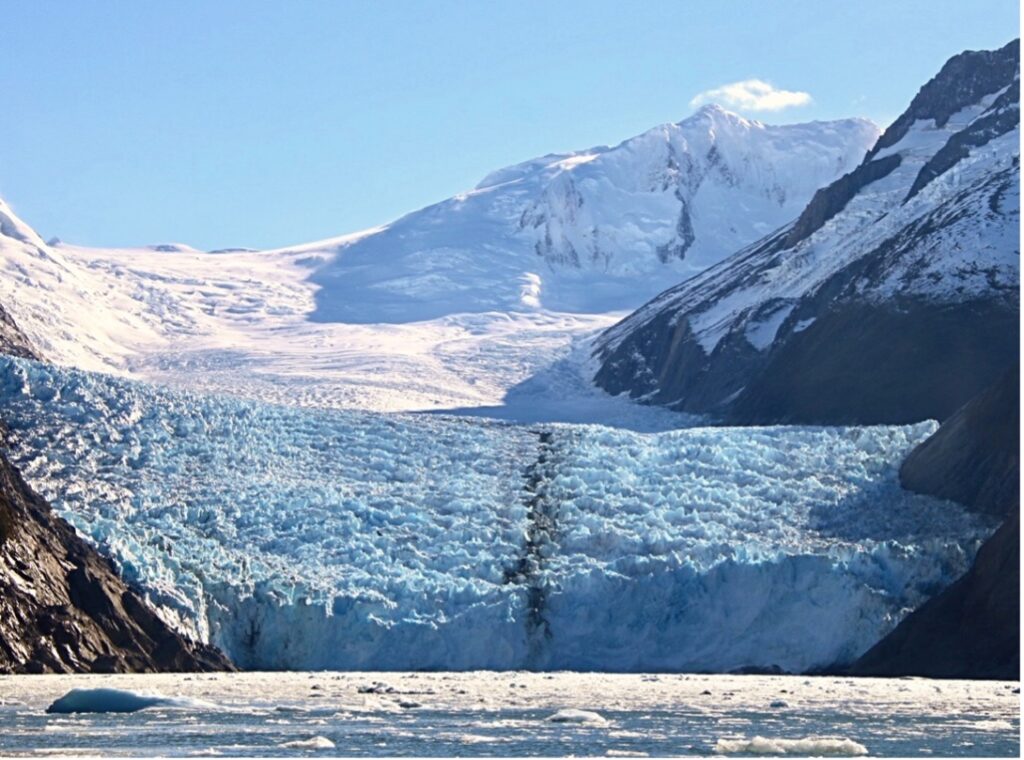
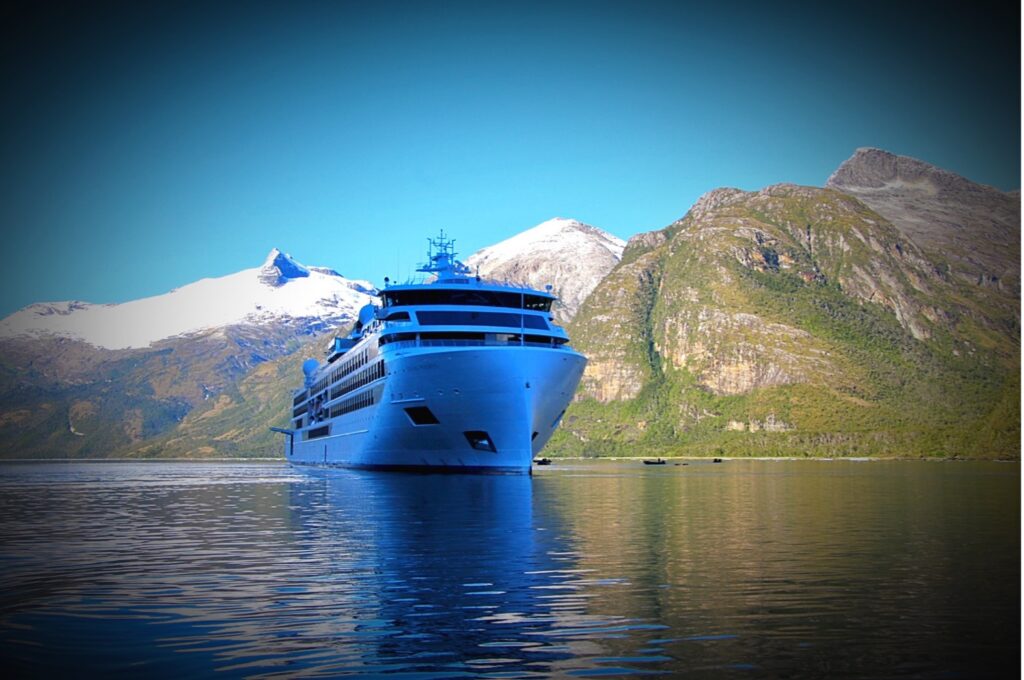
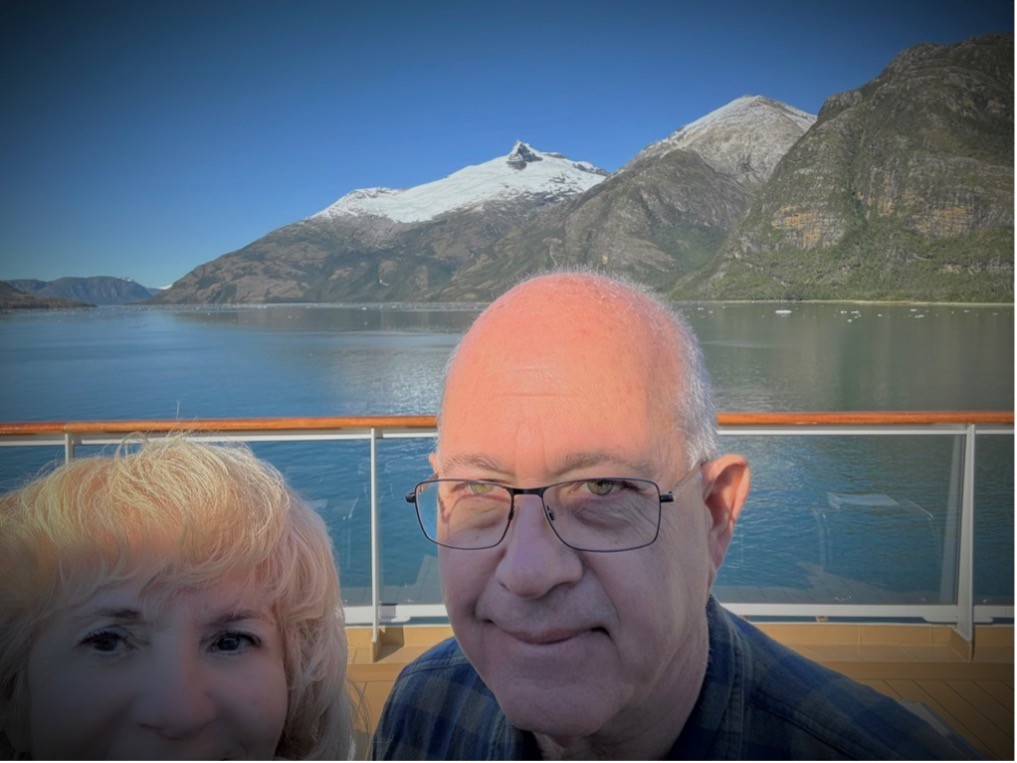
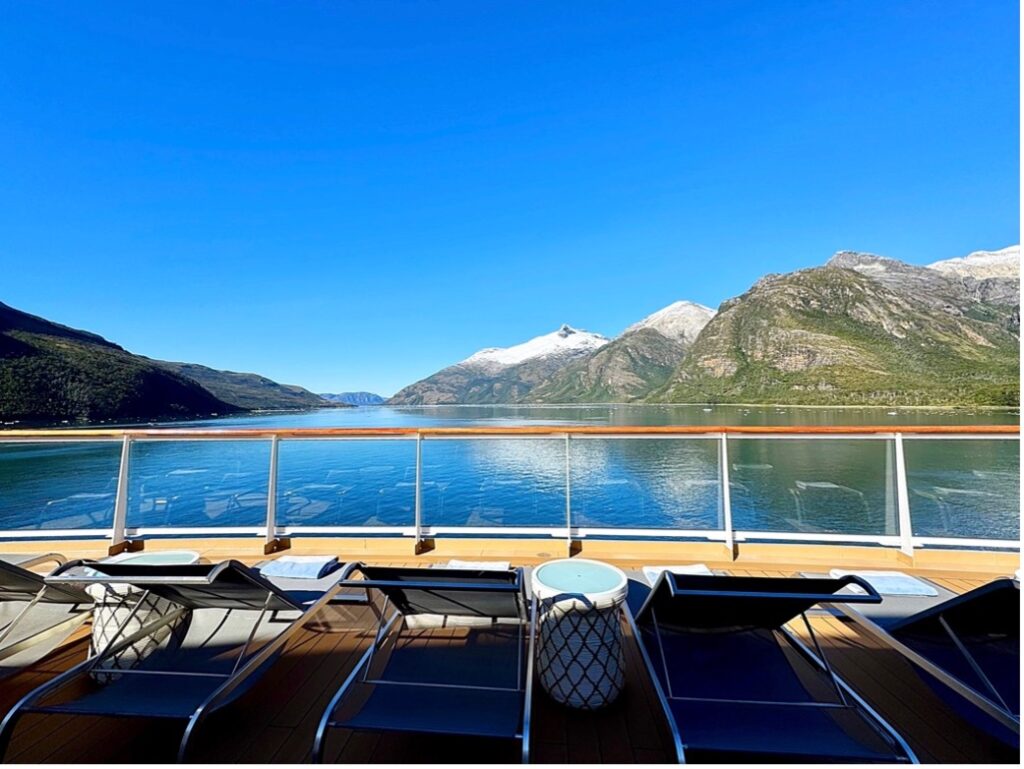
After our SOB excursion, we had a bite to eat at World Cafe. As we were eating, we noticed the boat moving away from the glacier. We found out the reason was that the wind picked up, so the captain had to reposition the ship. Another example of flexibility on an expedition cruise.
Zodiac Excursion
After lunch, we had a Zodiac excursion scheduled. We once again dressed in our gear. Dressing and undressing with all the gear and layers does get a bit tiring, but we got very good at it after a while.
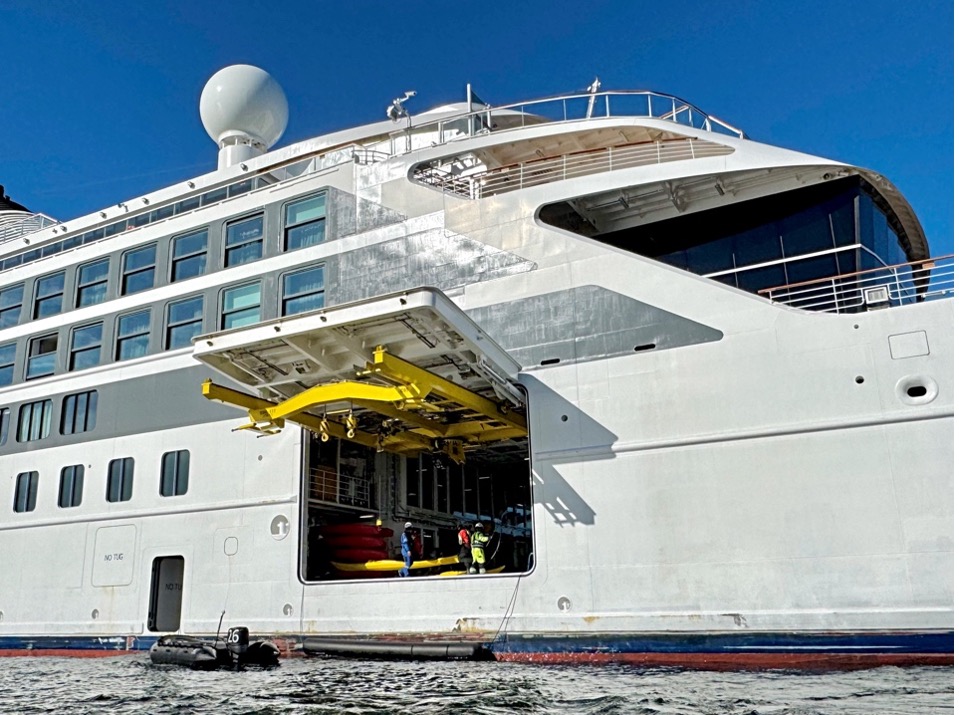
View of the Hangar as we left on our Zodiac
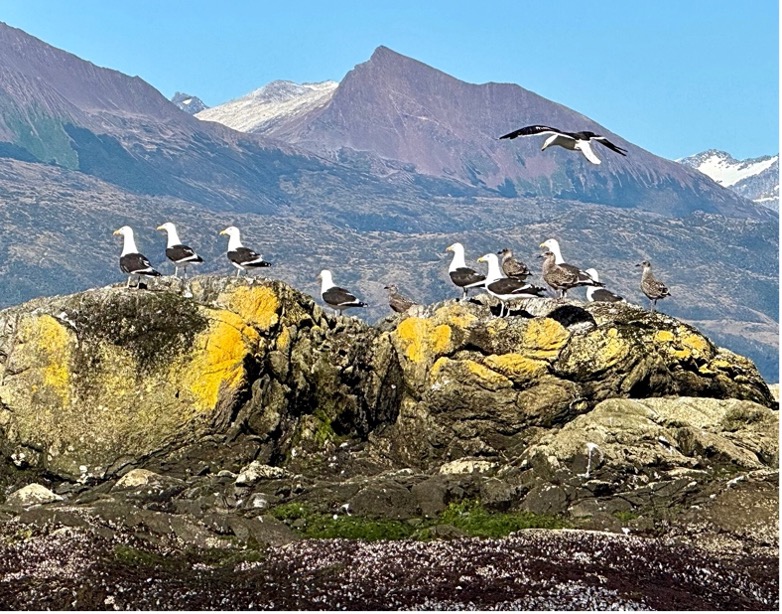
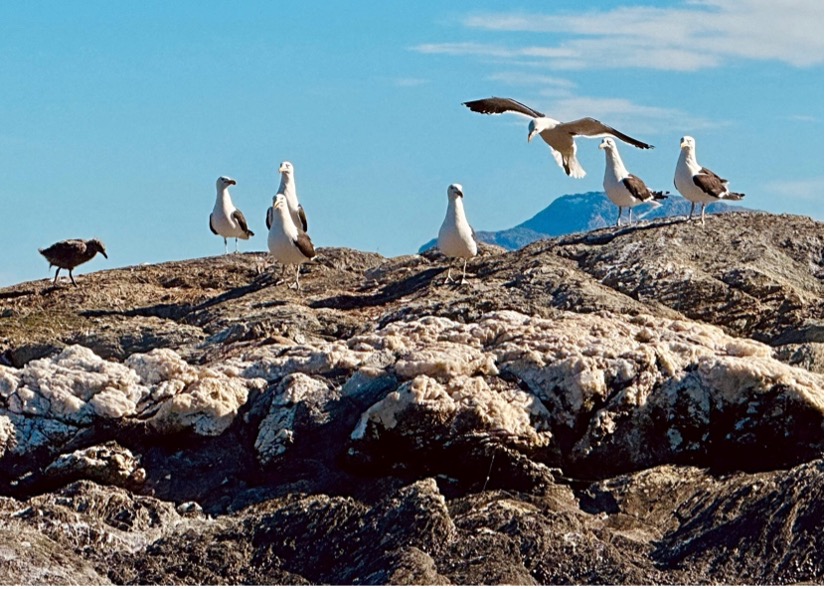
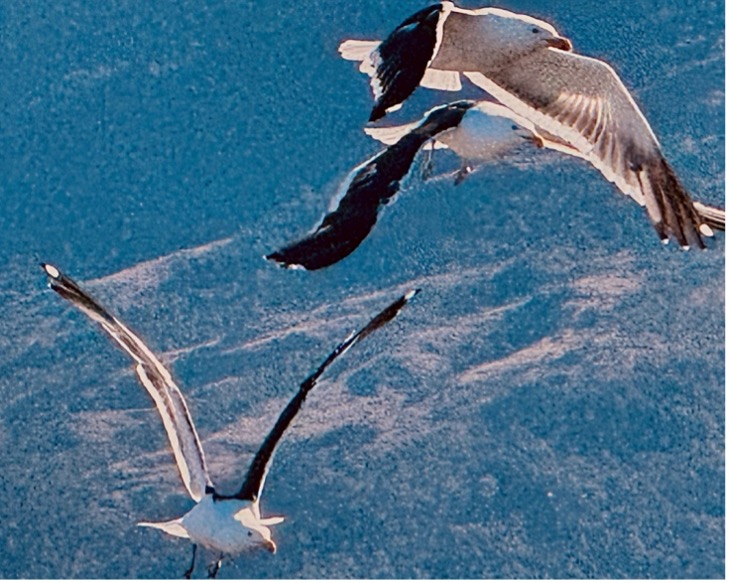
We had a nice ride, but did not spot much wildlife. We had a couple of potential penguin sightings, but never got a clear view, just a quick bob out of the water. We did see some lovely birds, and it was fun.
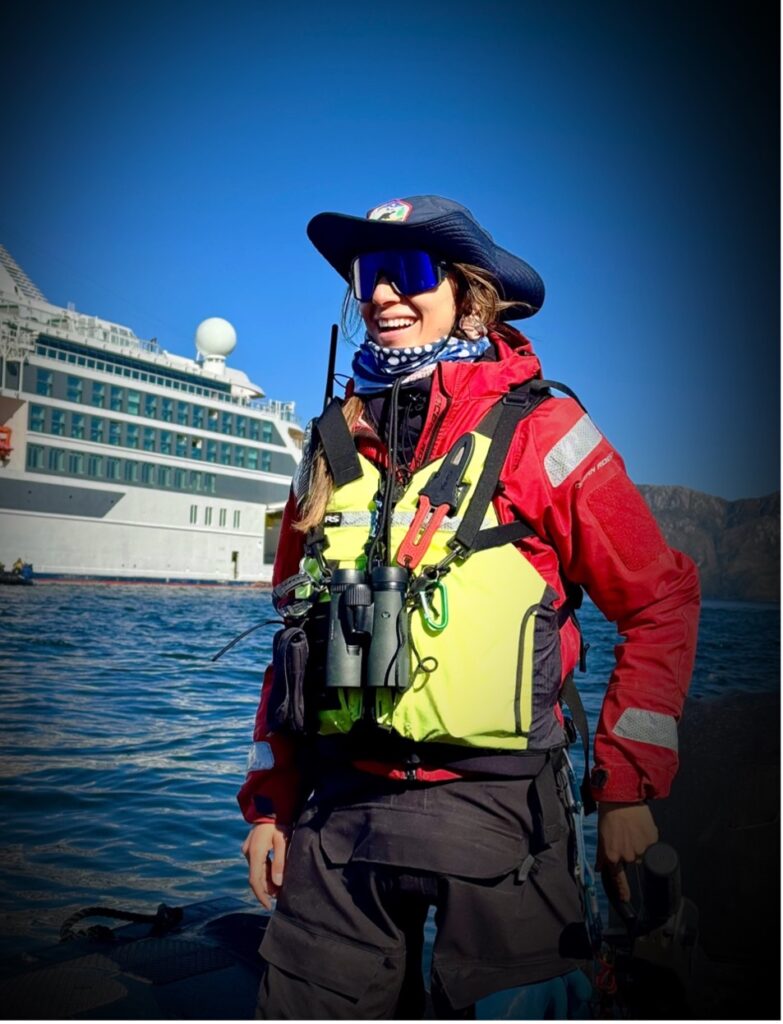
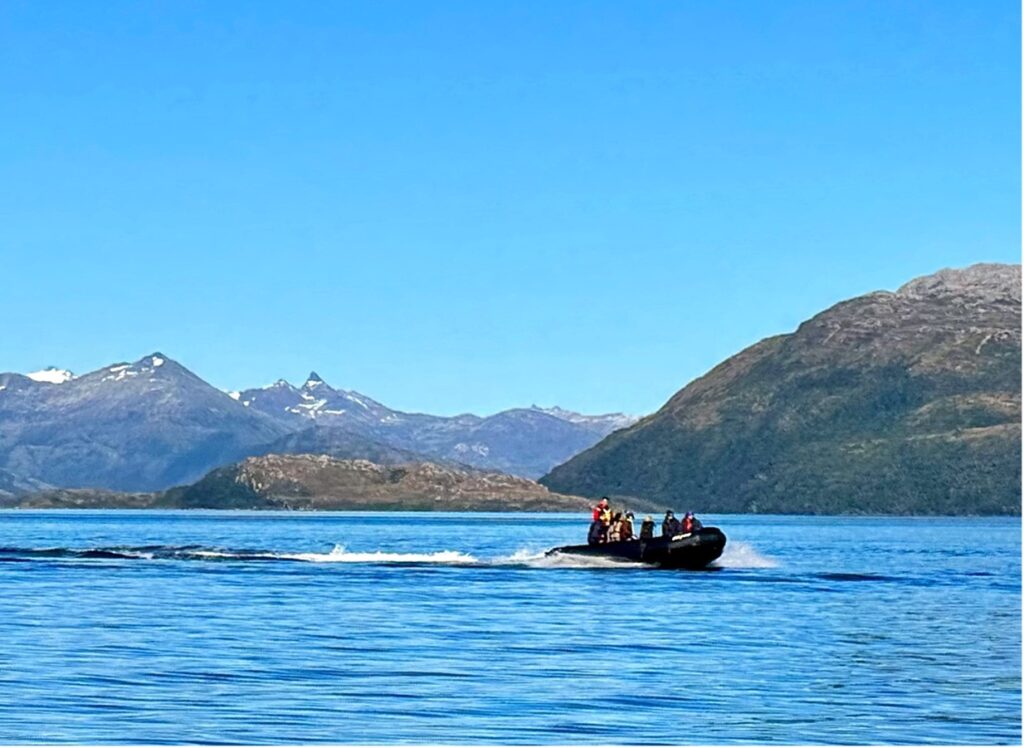
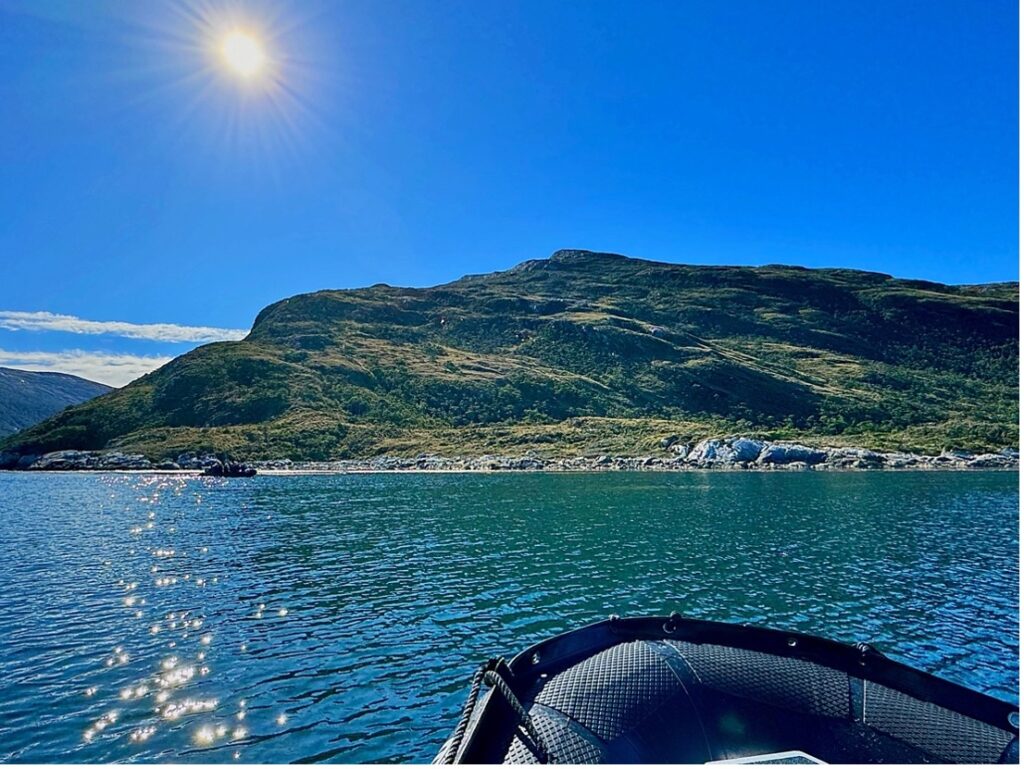
Agostini Glacier
Located deep within Chile’s remote Alberto de Agostini National Park, Agostini Glacier is one of the most impressive glaciers in the Tierra del Fuego region. Flowing from the Darwin Ice Field, the glacier descends through a dramatic mountain valley before terminating at the head of Agostini Sound. Surrounded by jagged peaks, waterfalls, and pristine wilderness, Agostini offers visitors a classic Patagonian landscape.
Today we had a submarine dive and a zodiac landing on the glacier. Pink Bear was disappointed she was not allowed on the submarine or in the zodiac, but did enjoy the view from our Nordic balcony.
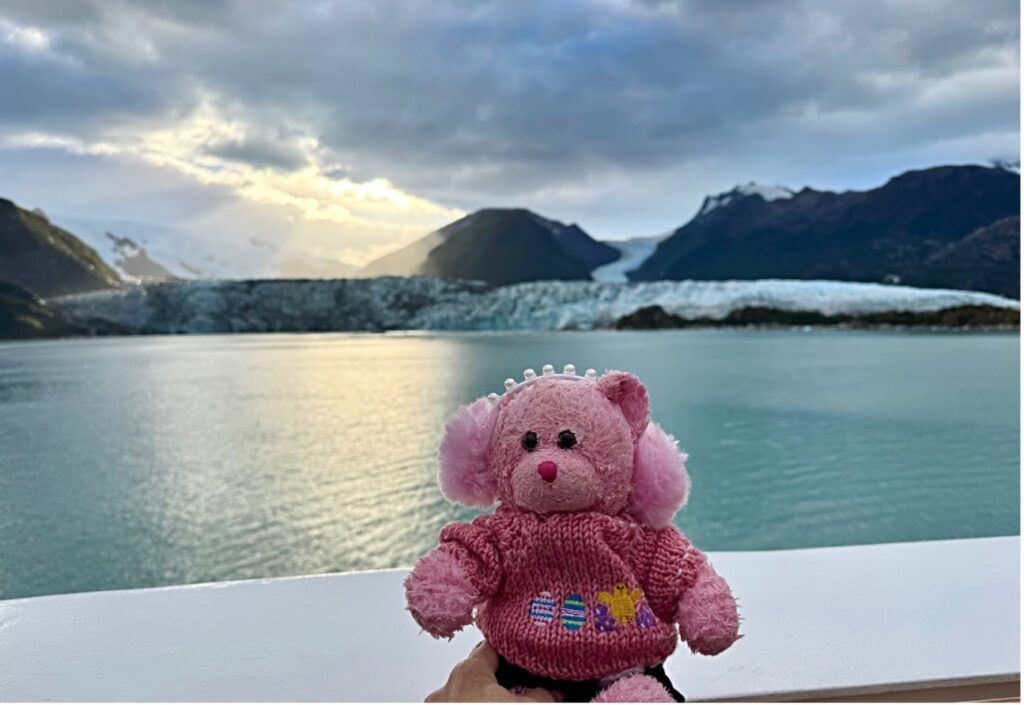
Pink Bear is enjoying the view from the Nordic Balcony
Submarine Dive
One of the most unique features aboard Viking Polaris is the pair of six-passenger submarines carried on the ship. Designed for underwater exploration, these battery-powered vessels allow guests to observe marine environments that are rarely seen by travelers. Large acrylic viewing domes provide panoramic views beneath the surface, offering a completely different perspective from traditional shore excursions or Zodiac cruises.
Viking Polaris carries two six-passenger submarines named George and Ringo. Their sister ship, Viking Octantis, carries John and Paul.
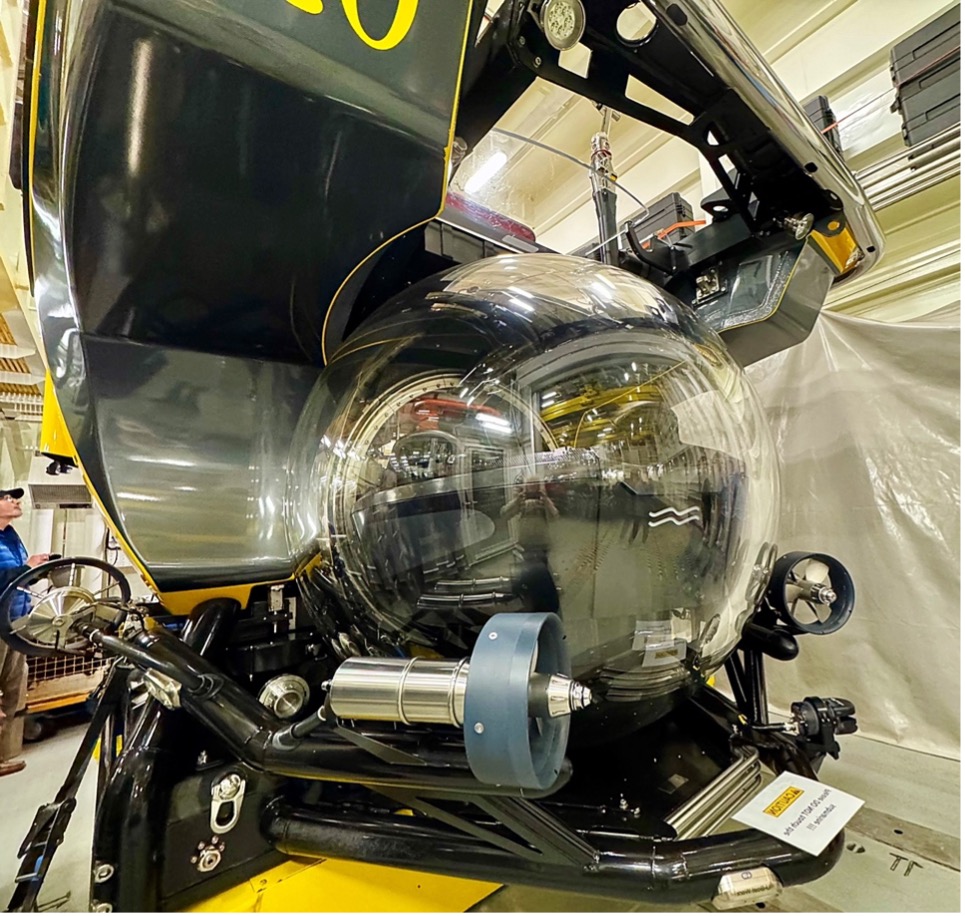
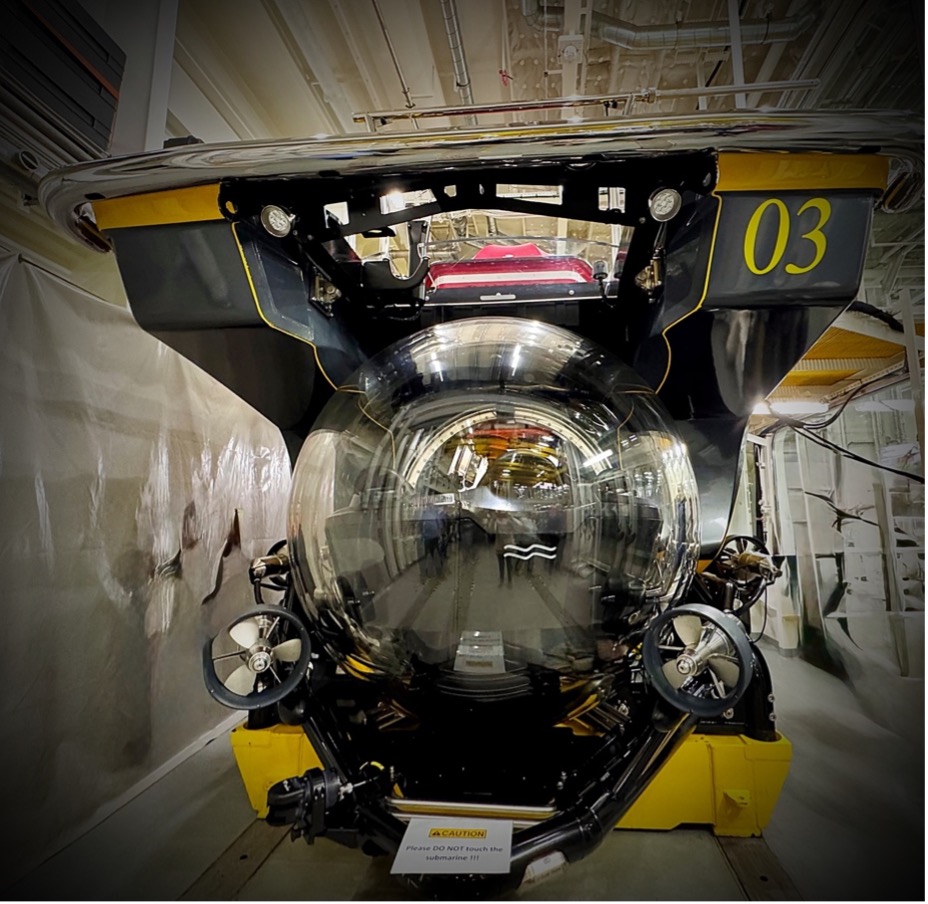
Our submarine dive was rescheduled from the previous day to 11:10 AM. We awoke to dark skies, low clouds, and light rain as Polaris approached Agostini. I was concerned our submarine trip would be cancelled again, and our glacier landing would be very wet. But the rain soon stopped, and the captain announced conditions at the glacier were good.
“We All Live in a Yellow Submarine, Yellow Submarine… “
The subs on Polaris are Ringo and George. Ringo was going out today.
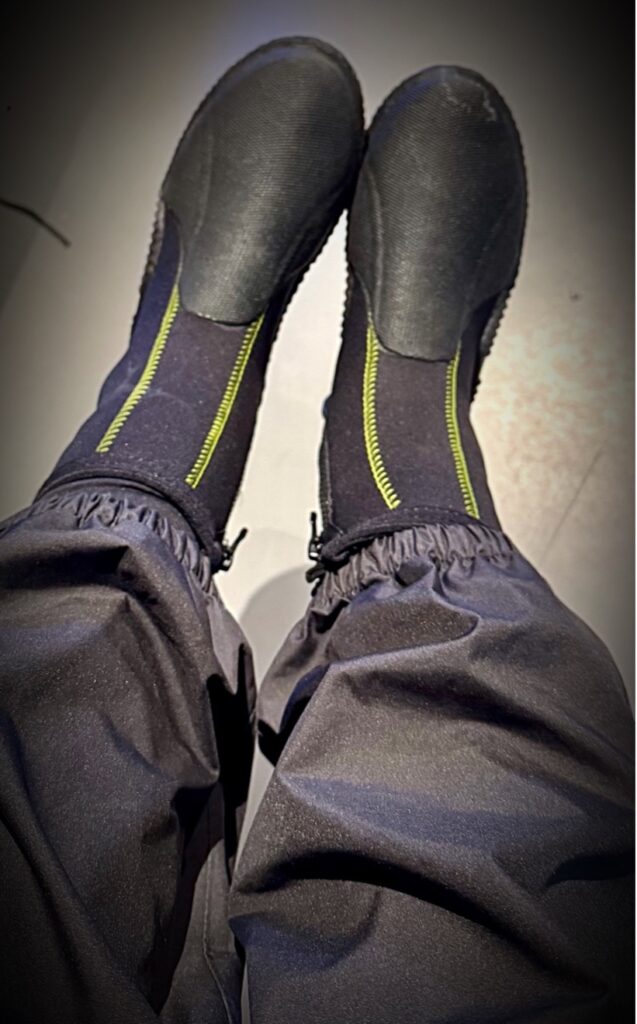
Our submarine meeting time was 11:10 am, so we went up to the World Cafe first. After breakfast, we went to the Hangar to confirm the clothing needed for the submarine excursion. Clothing for a submarine is like the Zodiac, but lighter. Booties are provided for the submarine trip; therefore, footwear is your choice. No large rings or jewelry are allowed. Because access is through a small hatch, I decided to bring only my cell phone since my big zoom camera is too bulky.
At the Hangar, we were fitted for booties and given a lanyard with a number. As each number was called, the passenger proceeded to the zodiac for transfer to Ringo.

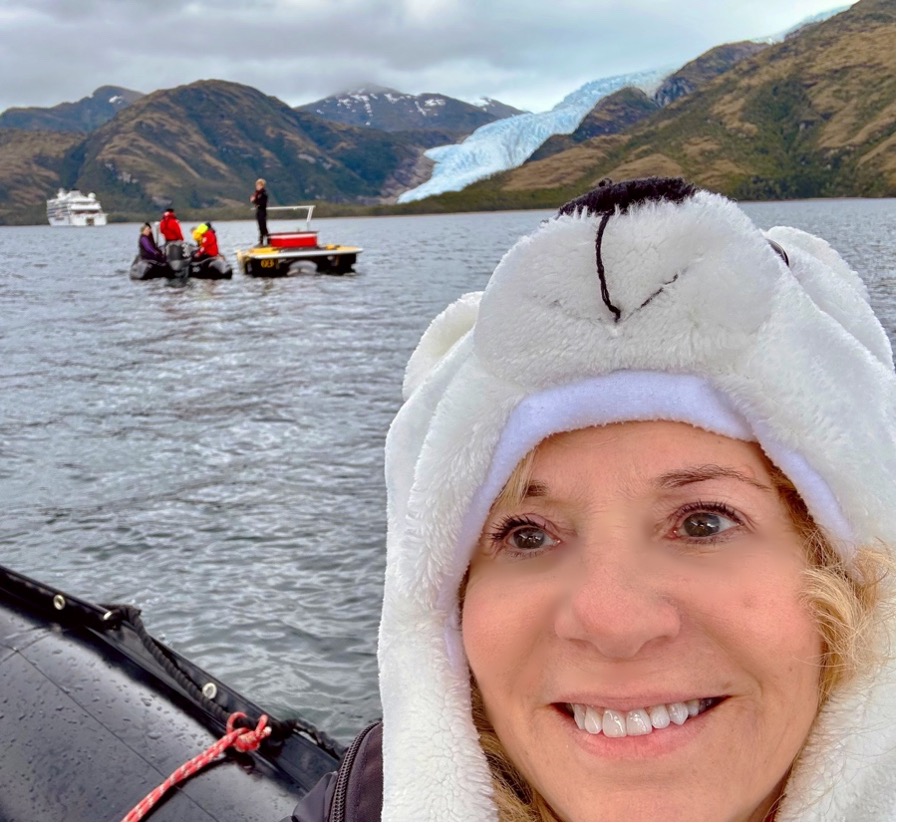
We boarded the Zodiac and headed toward Ringo, ready and waiting for us.
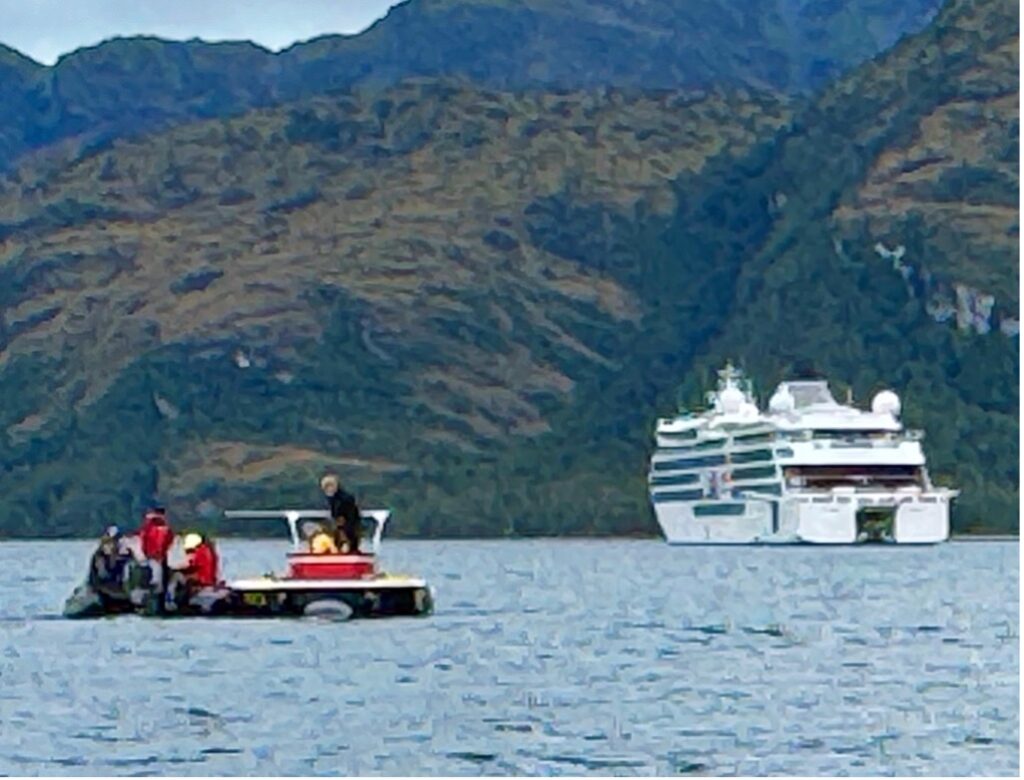
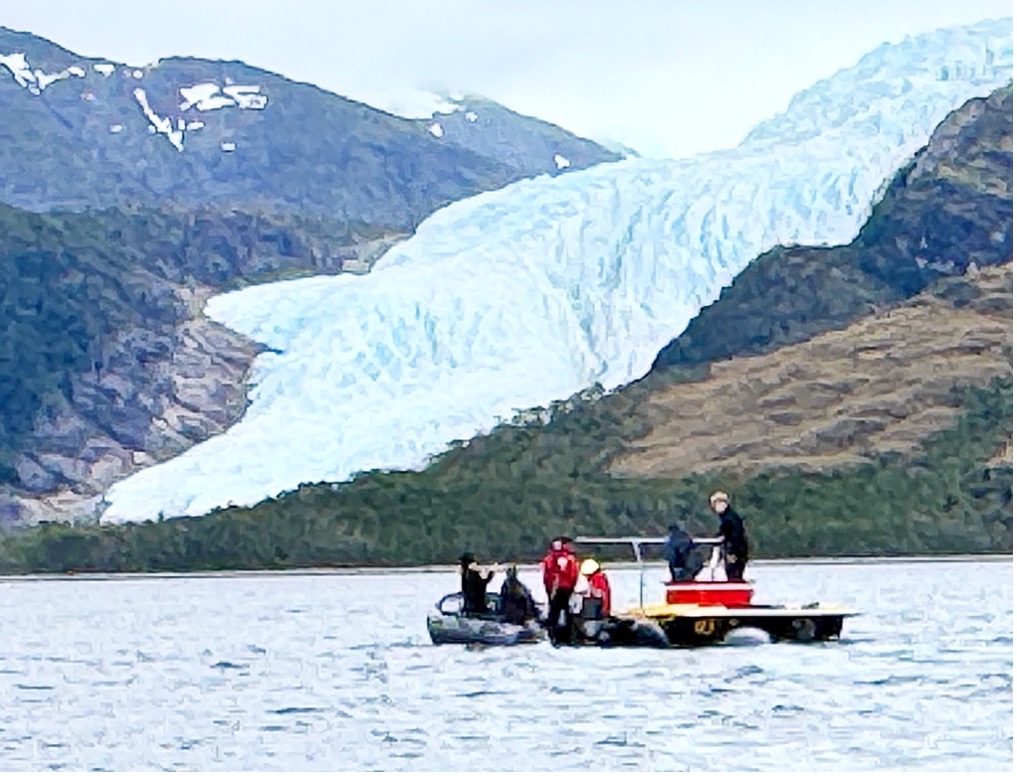
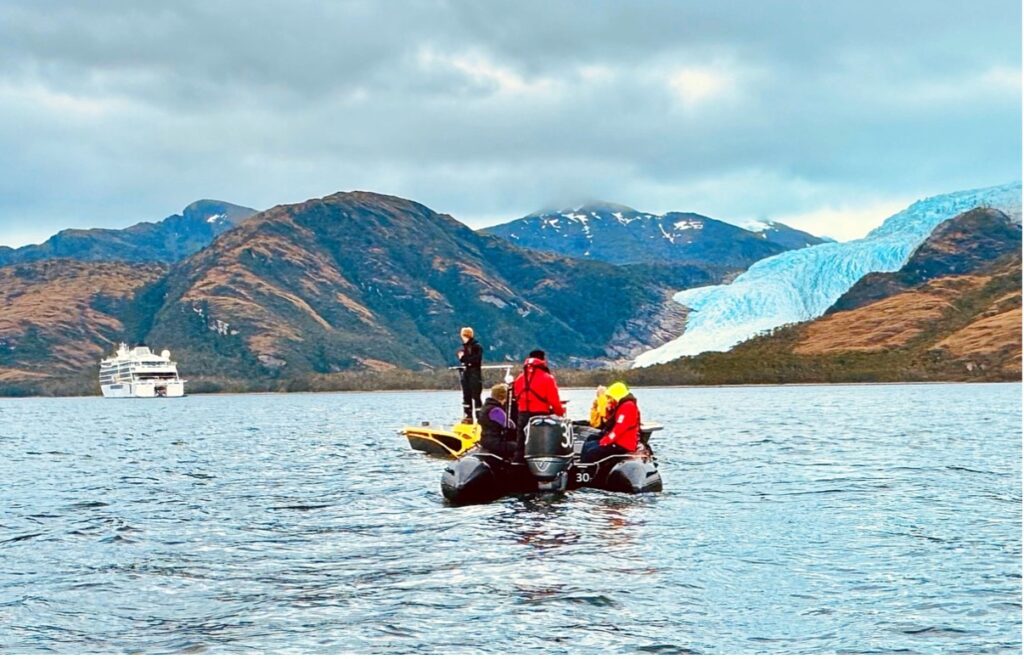
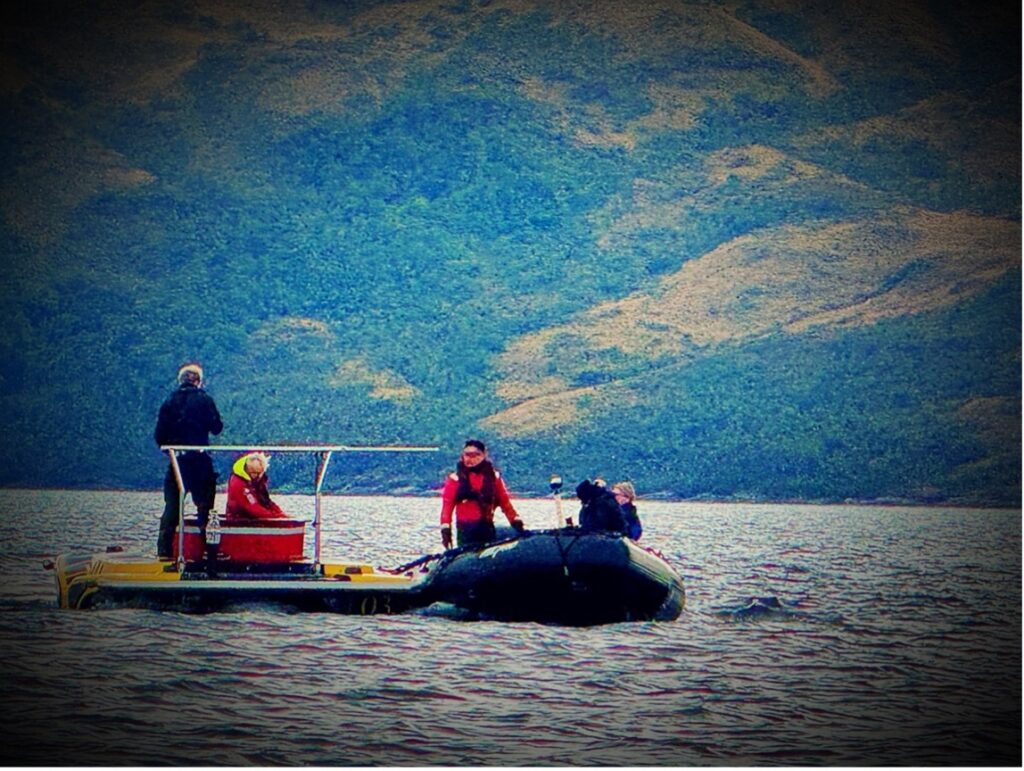
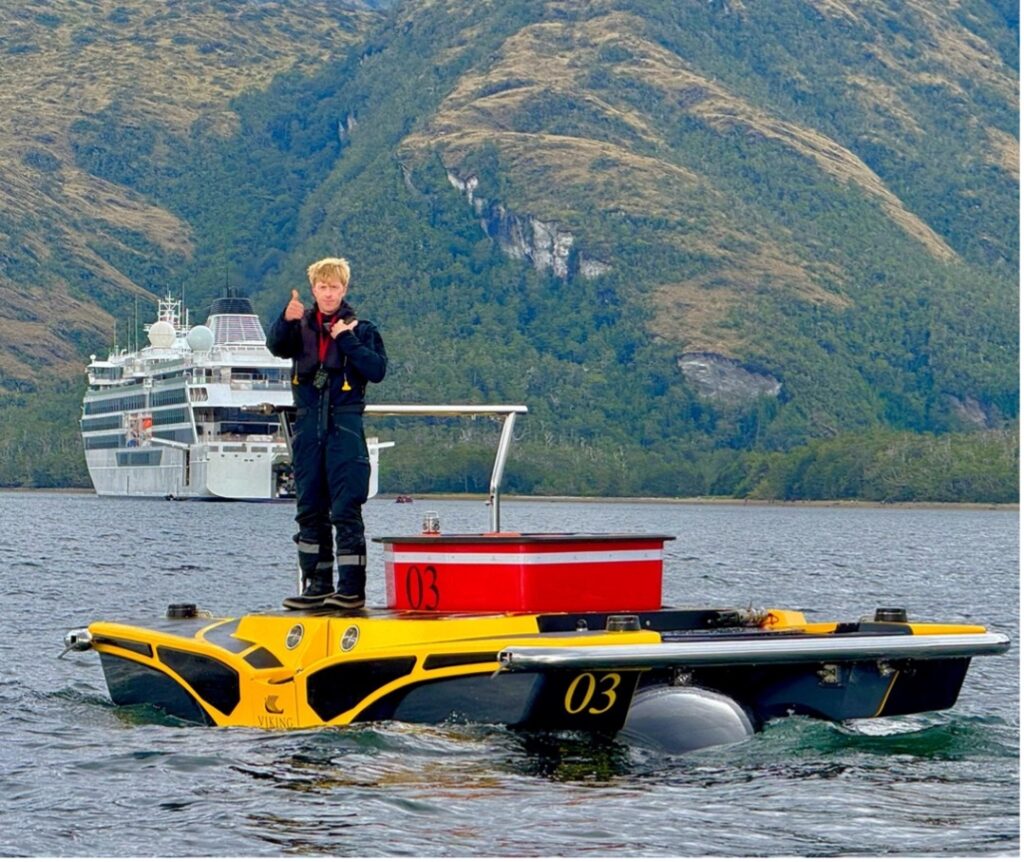
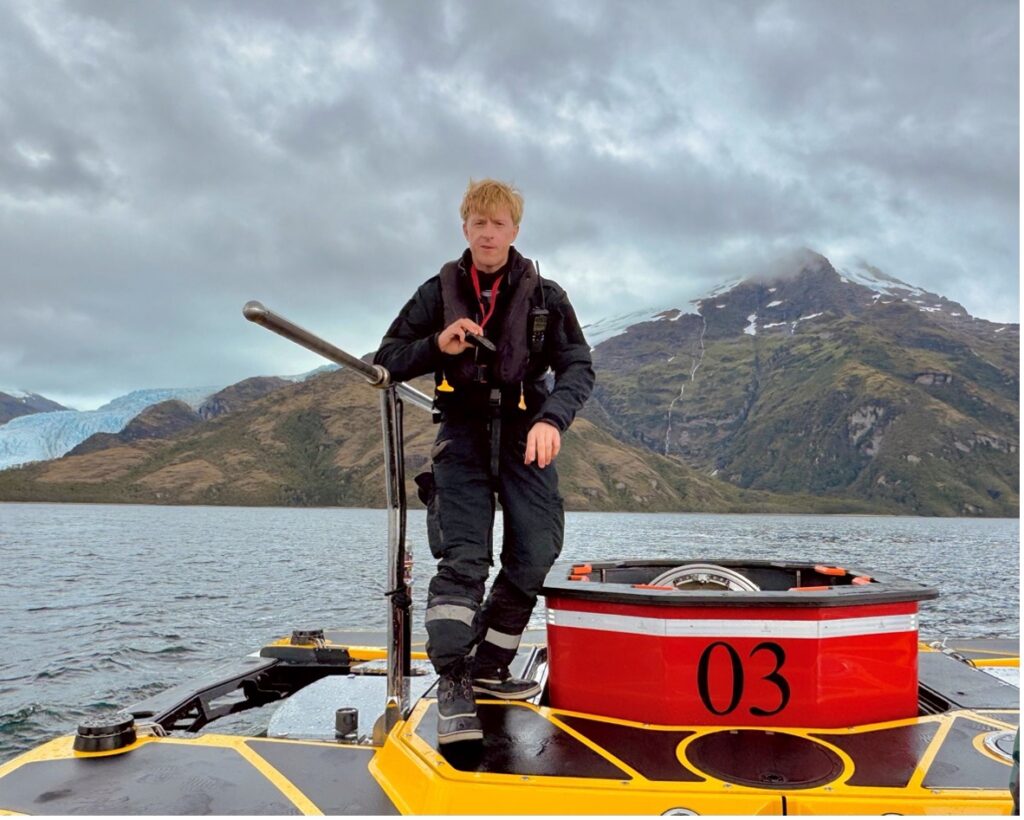
At Ringo, we were instructed how to board. We were called in by number; odd numbers went to the right, and even numbers to the left, after climbing down the hatch.
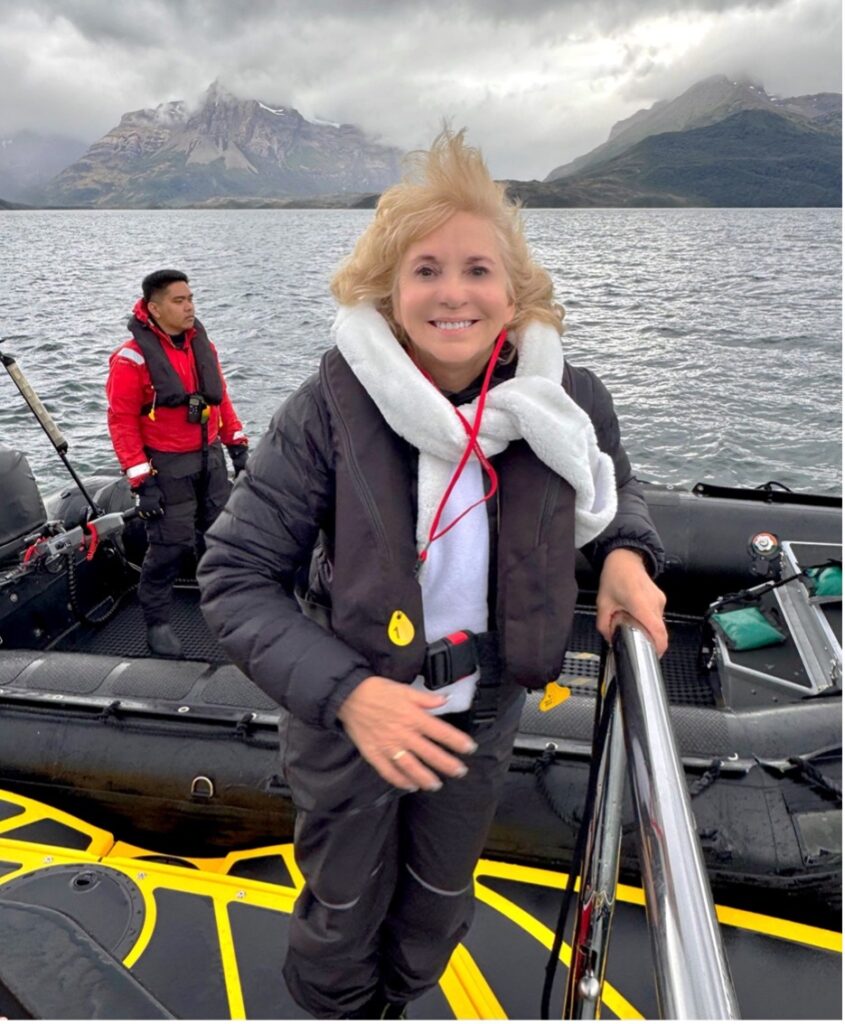
Laura is preparing to climb down the hatch
It is tight climbing in, but not bad, and the seats are comfortable.
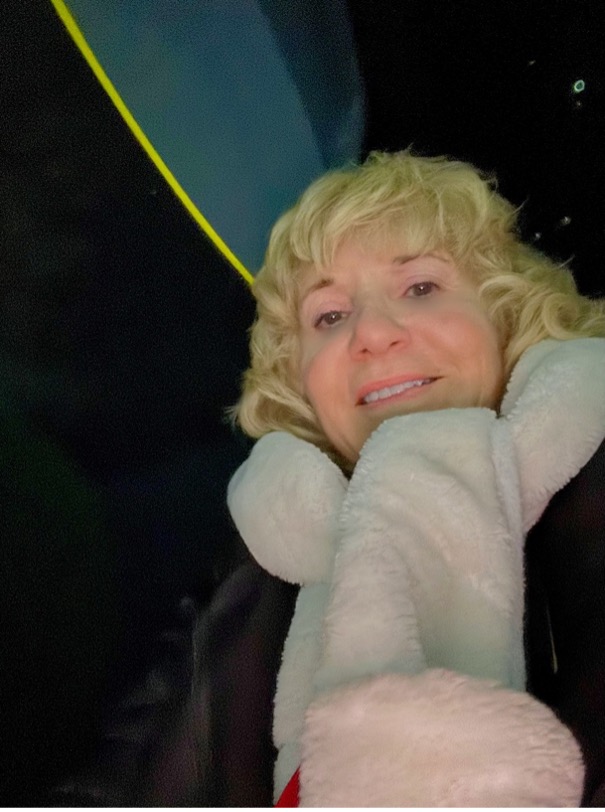
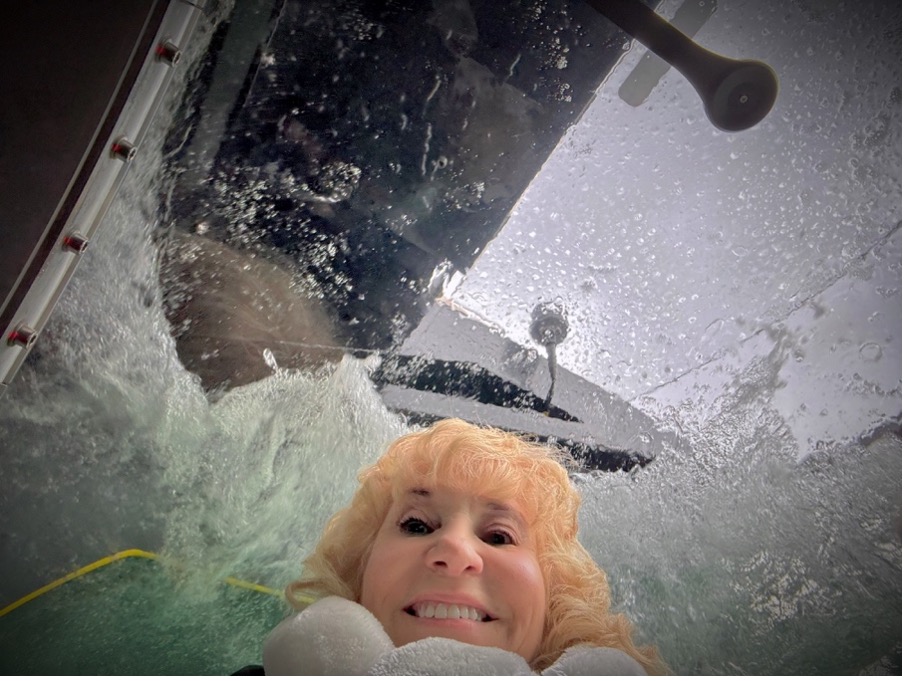
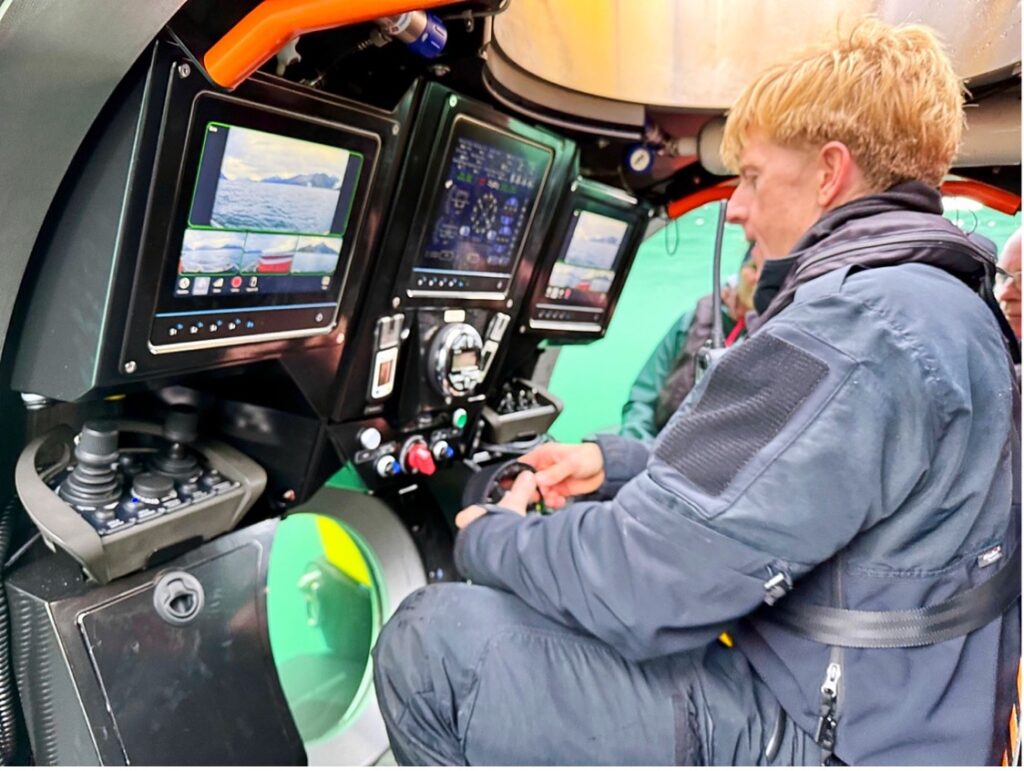
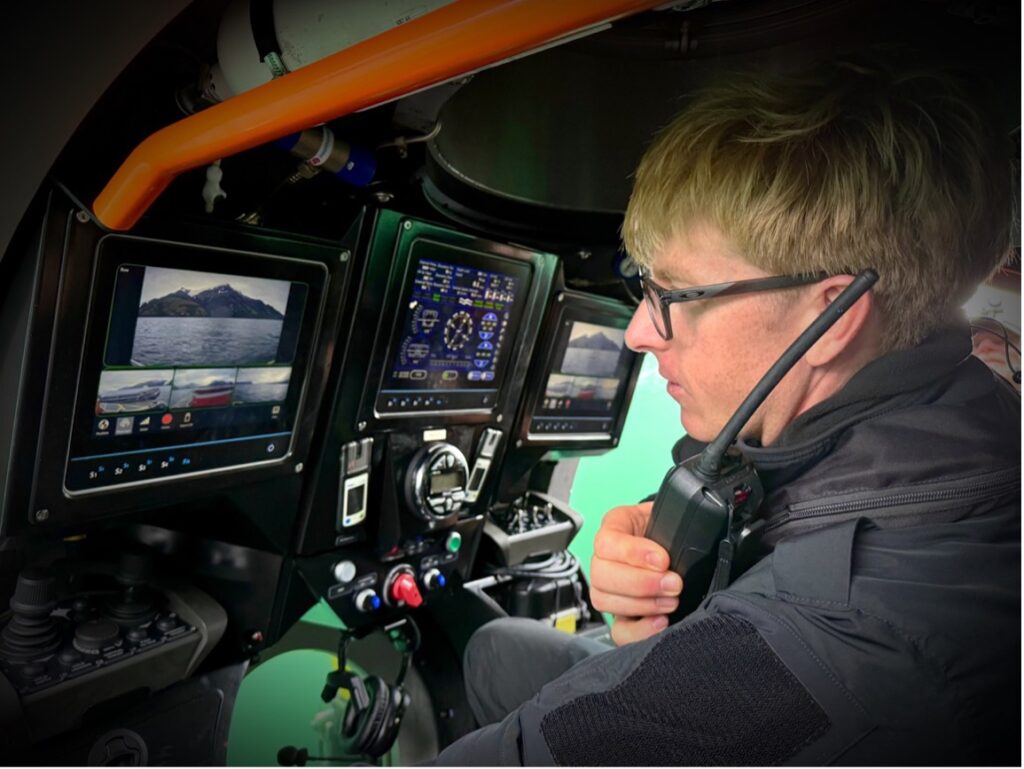
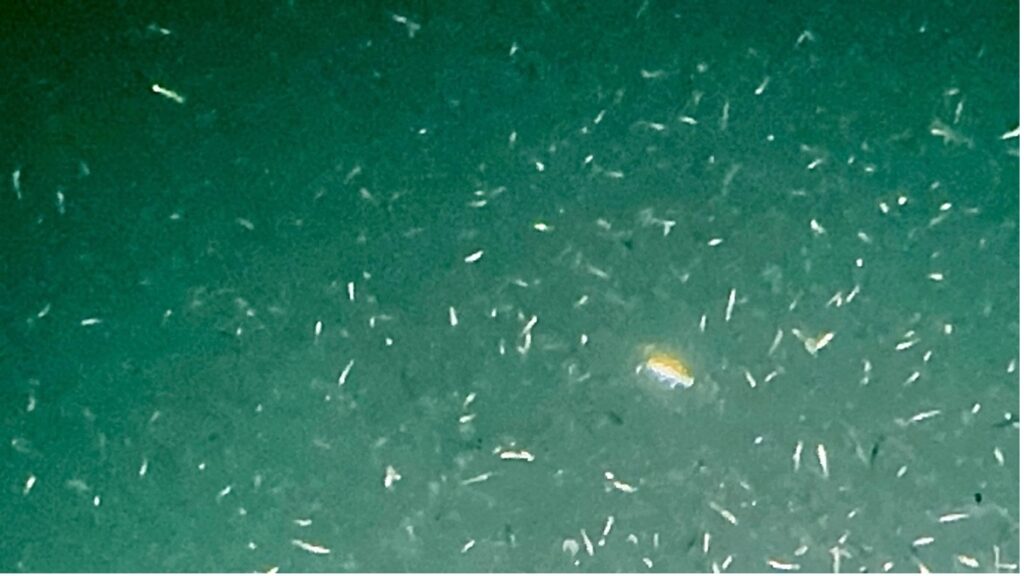
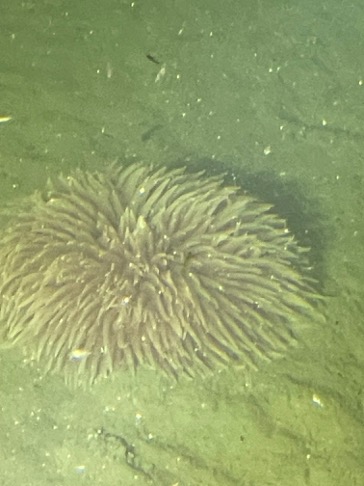
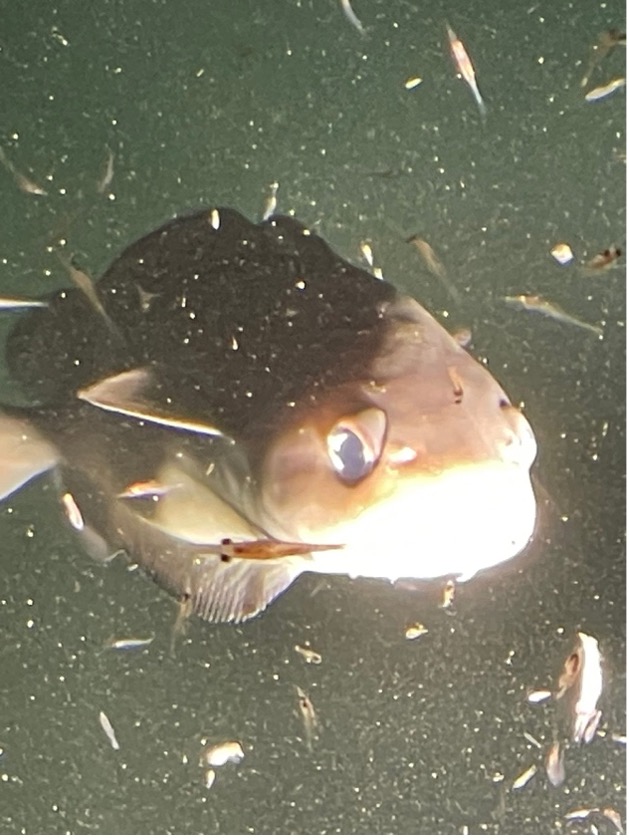
As we descended to the ocean floor, we saw lots of plankton, small fish, and shrimp. Once we reached the floor, we saw coral, a squid, a crab, and more fish. We got an hour in the submarine, and it flew by. It was one of the most amazing experiences I have encountered.



Submarine Cost
The cost of the dive on our cruise was $499 per person. It is expensive, but we feel it was very much worth it. As part of our retirement strategy, we take every opportunity to have unique experiences.
Zodiac Excursion
Our second excursion at Agostini glacier was a Zodiac excursion. Our Zodiac landing was scheduled for 2:30 PM, so we got a little rest before heading out on the Zodiac again. It was an easy, slightly wet landing in about 6 inches of water. We then walked down the coast to the glacier, which is magnificent. The walk to the glacier is a very easy mile.
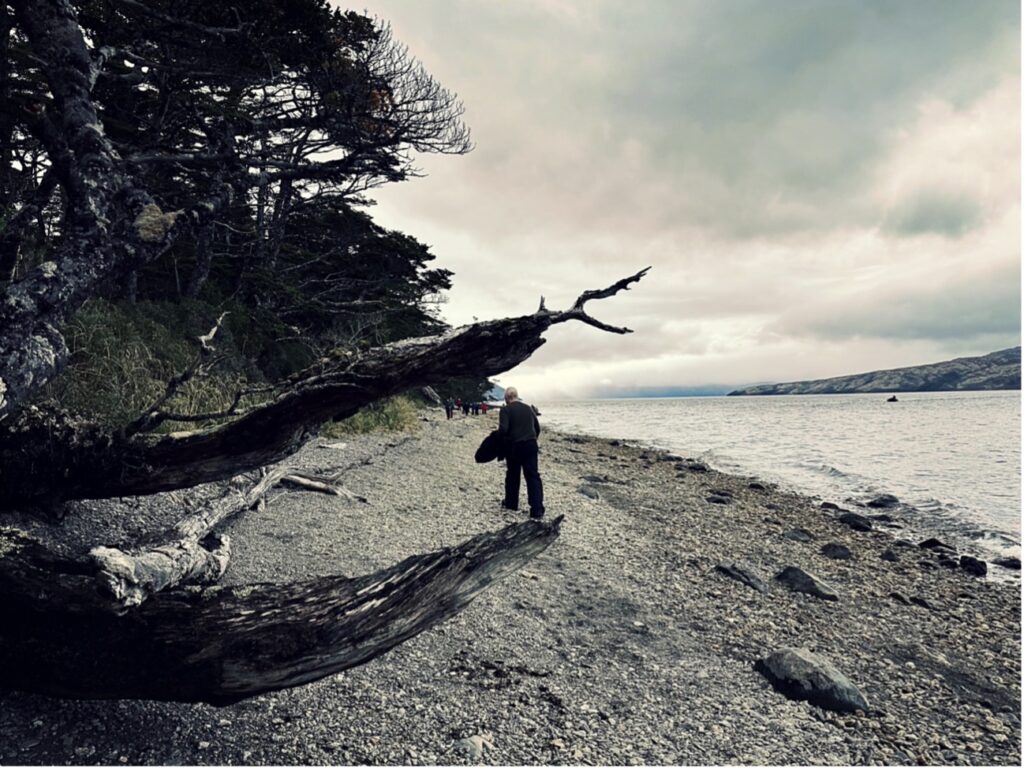
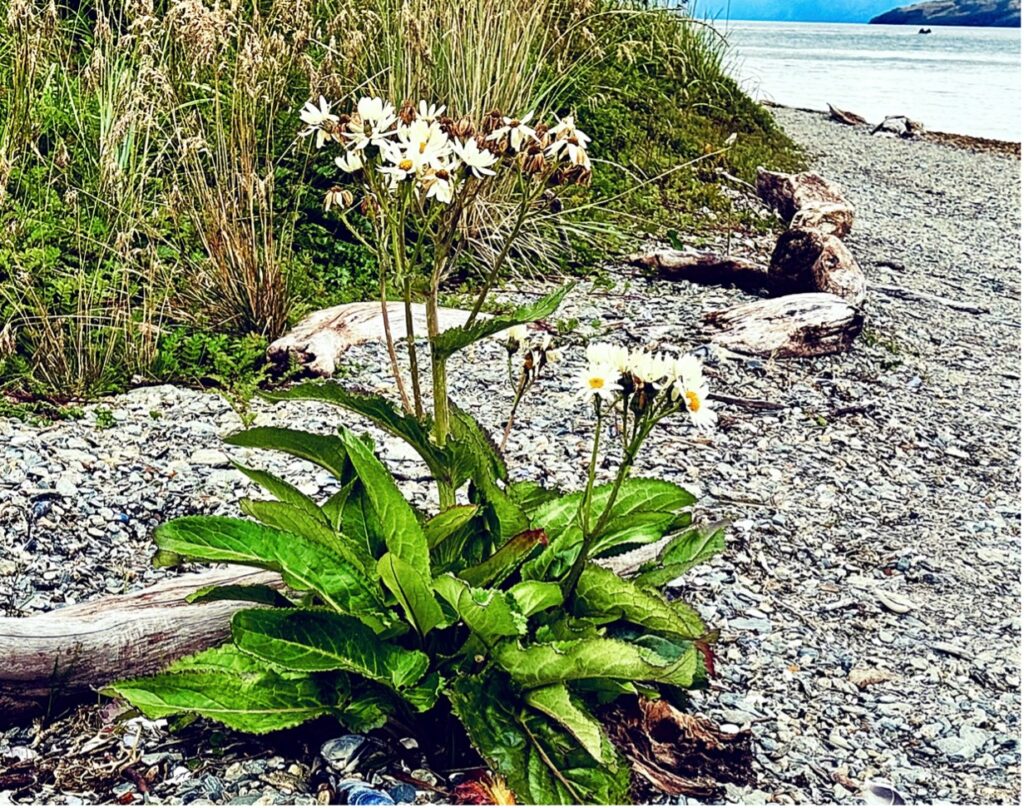
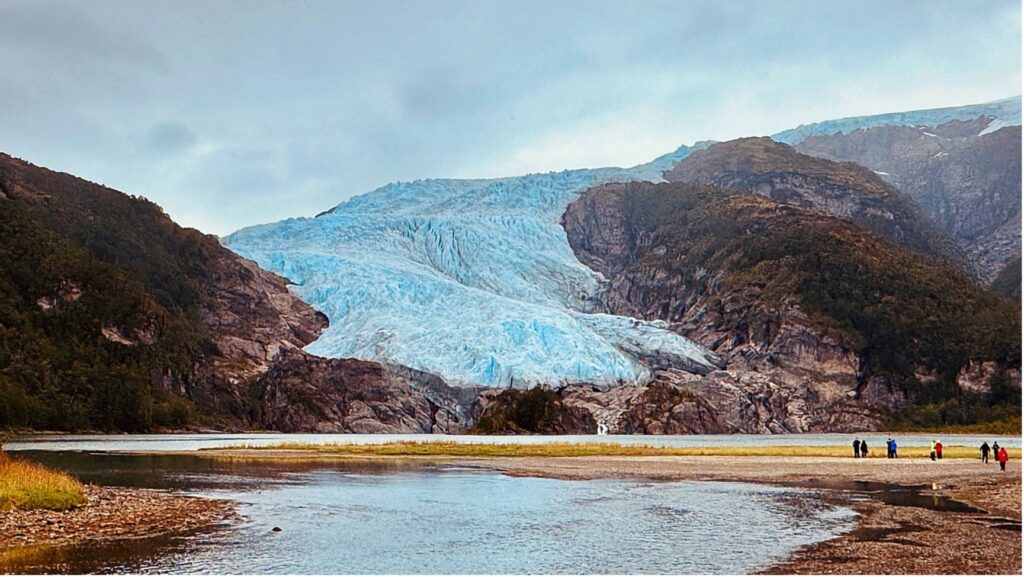
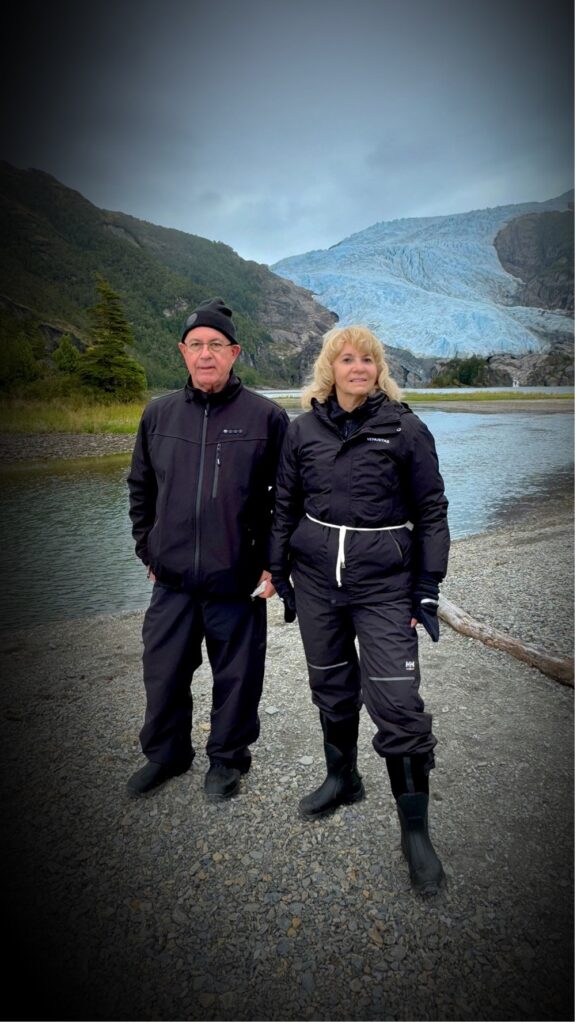
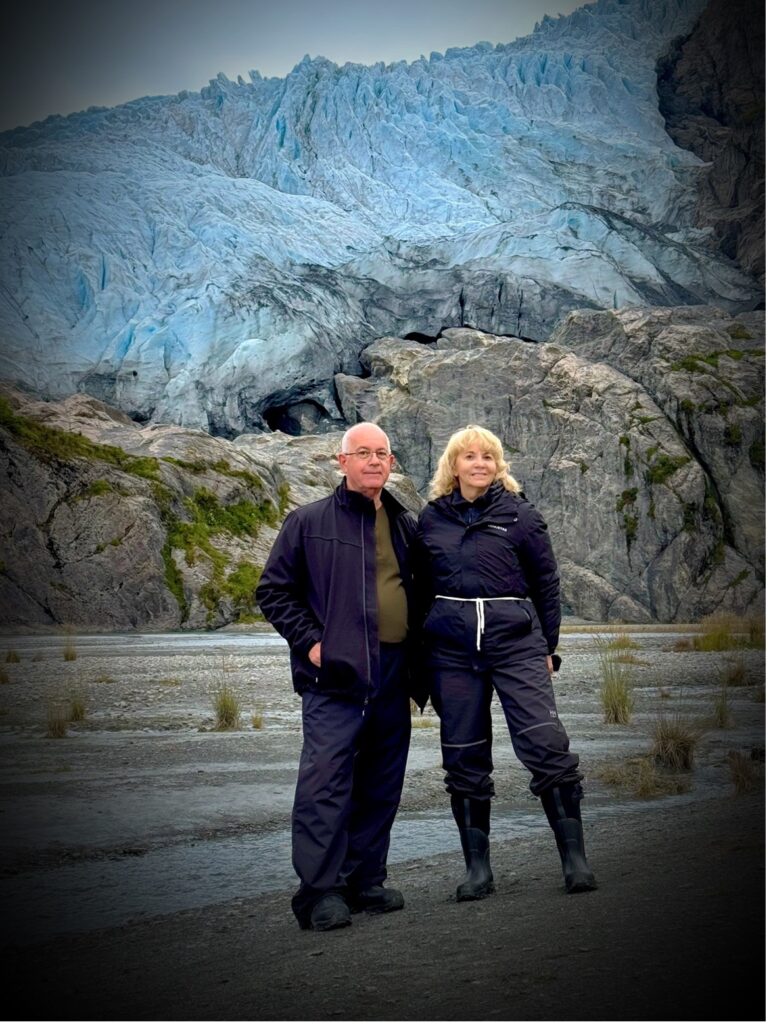
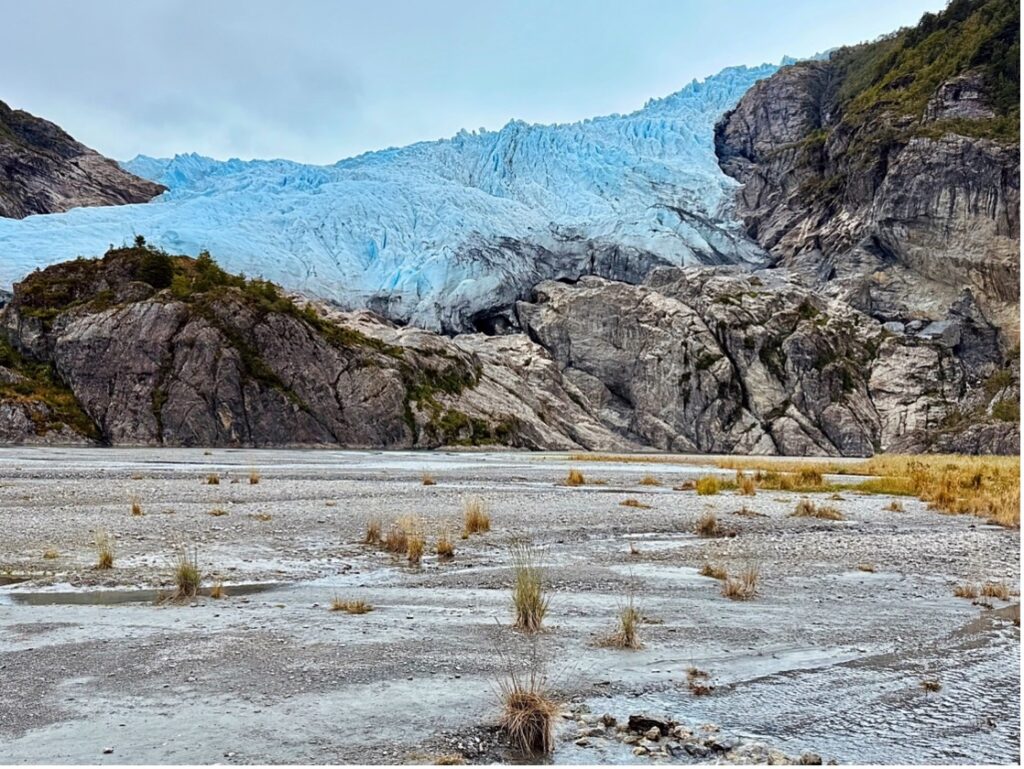
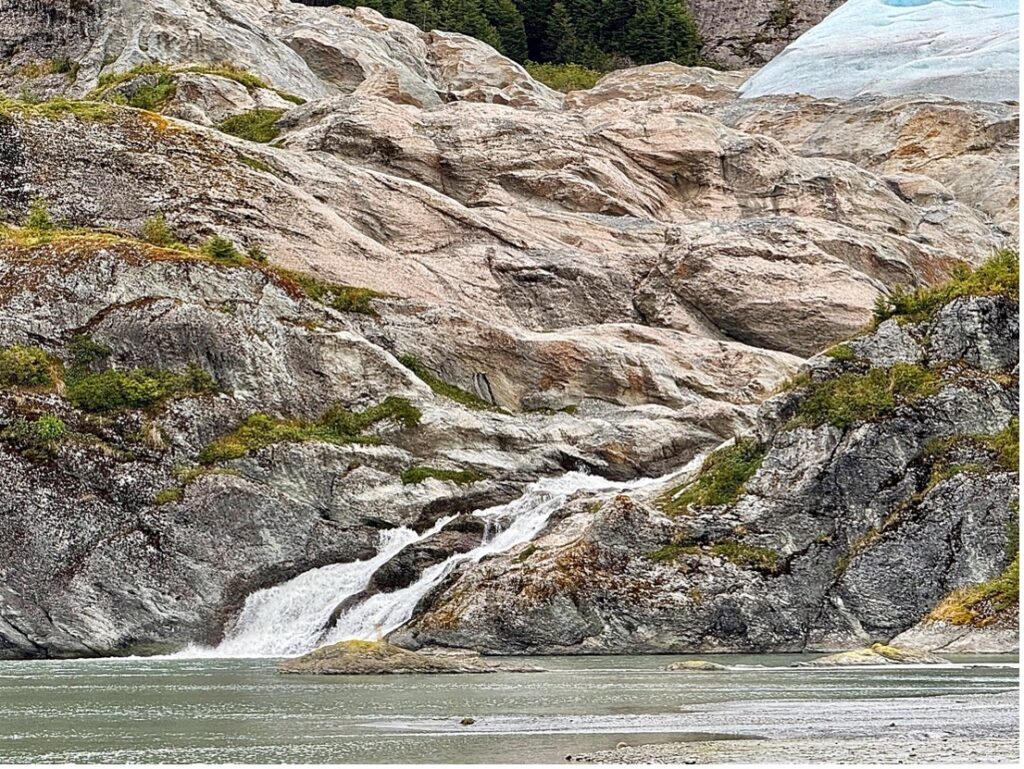
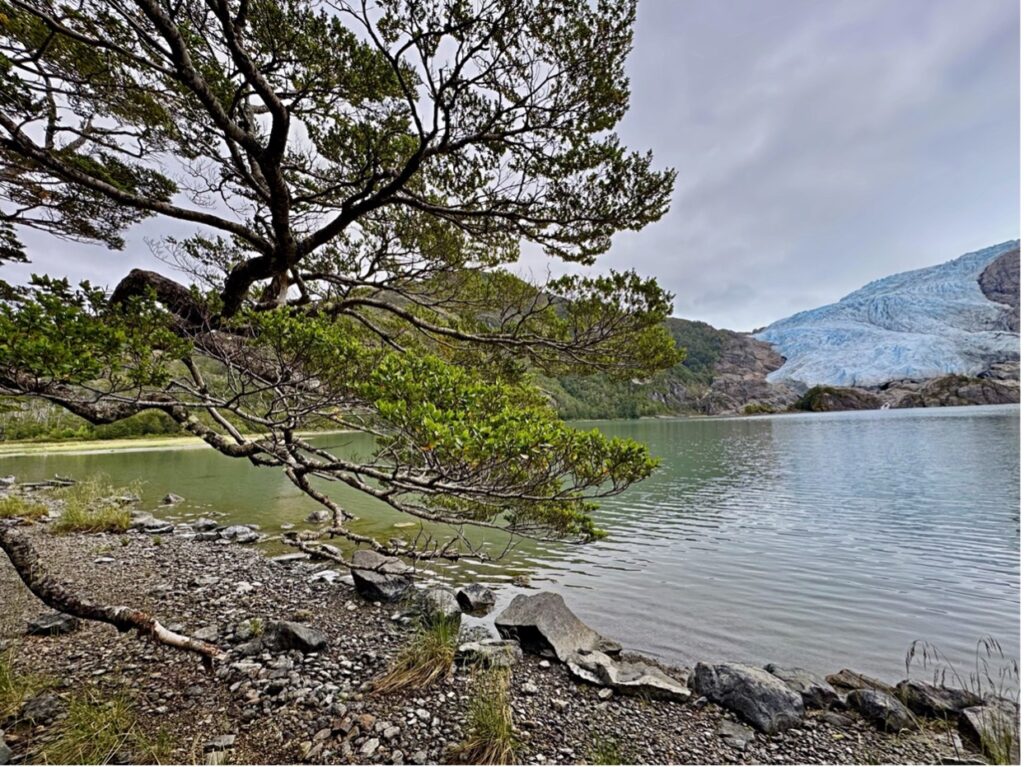
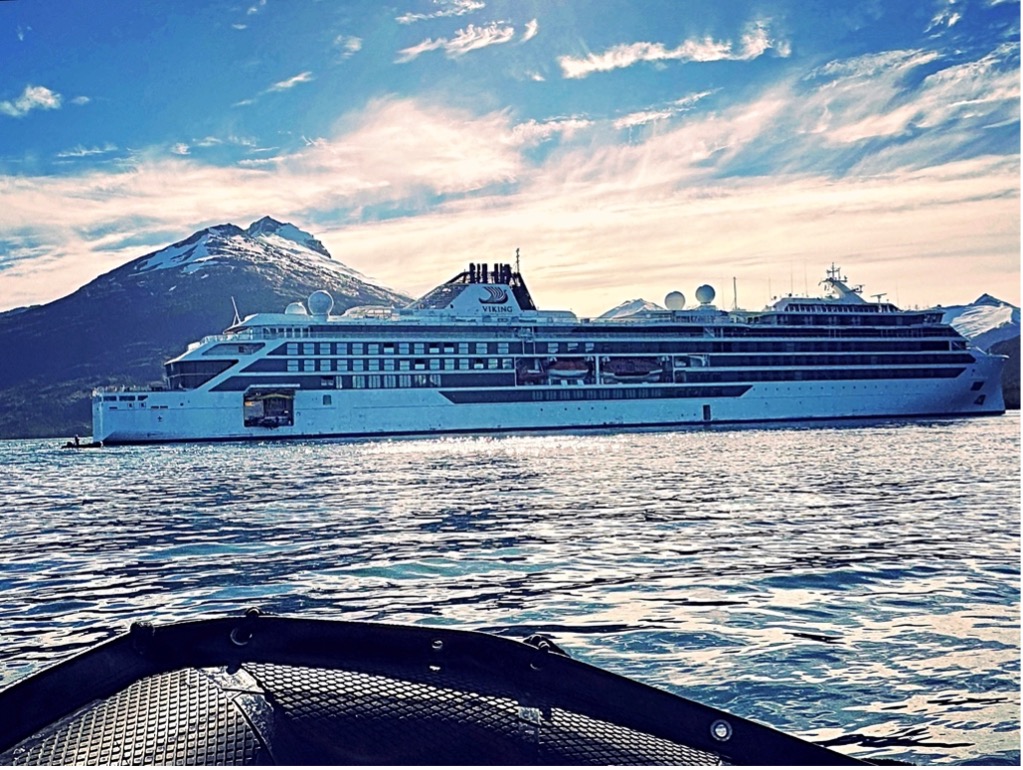
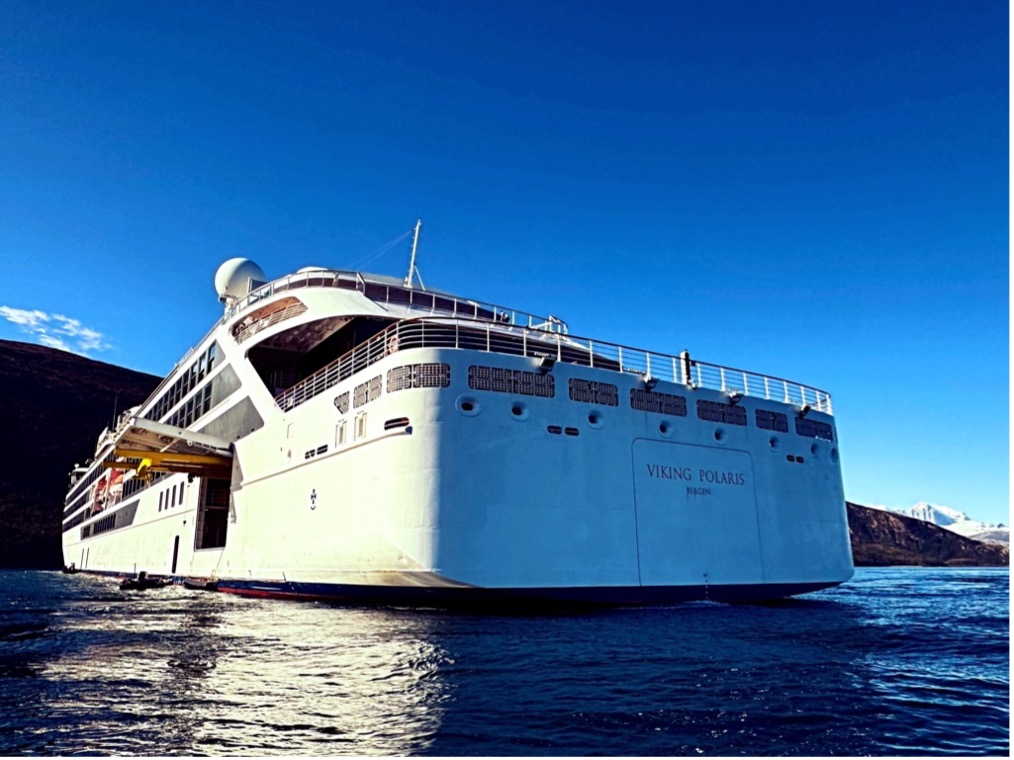
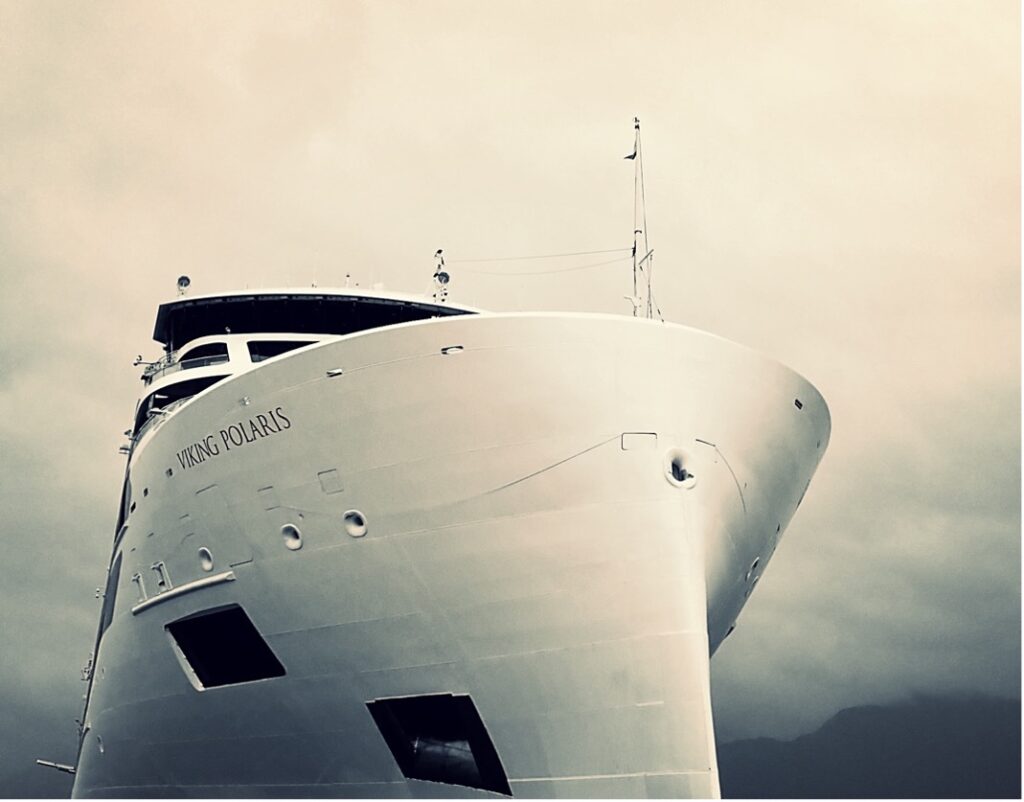
After spending time at the glacier, we took the zodiac back and I got lovely pictures of Polaris in the fjord.
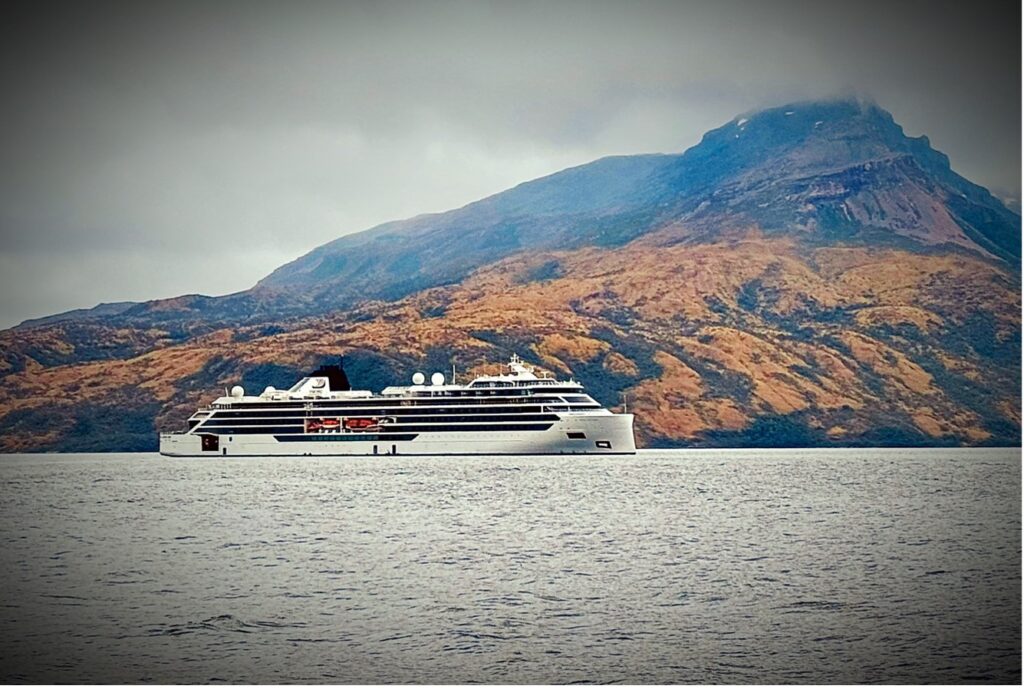
Polaris in the fjord
Amelia Fjord/Skua Glacier
Amalia Glacier, also known as Skua Glacier, is a tidewater glacier located in Bernardo O’Higgins National Park, Chile, on the edge of the Sarmiento Channel. The glacier originates in the Southern Patagonian Ice Field. Skua Glacier is at the head of the Amelia Fjord.
We arrived at Amelia Fjord, and we were again blessed with wonderful weather. A gorgeous sunrise over the glacier could be viewed from our cabin.
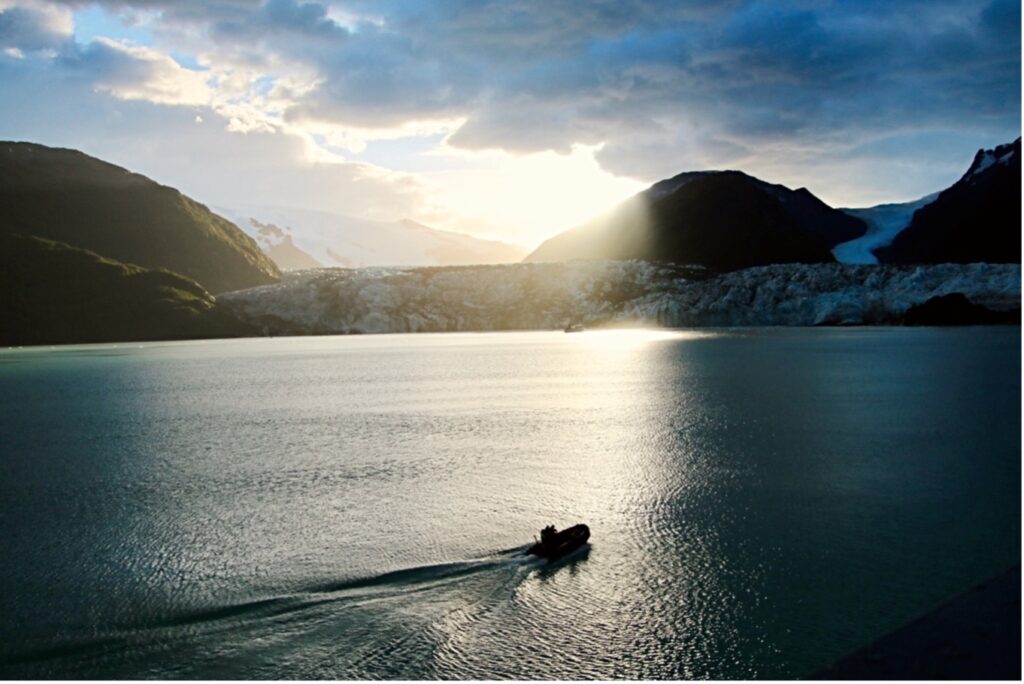
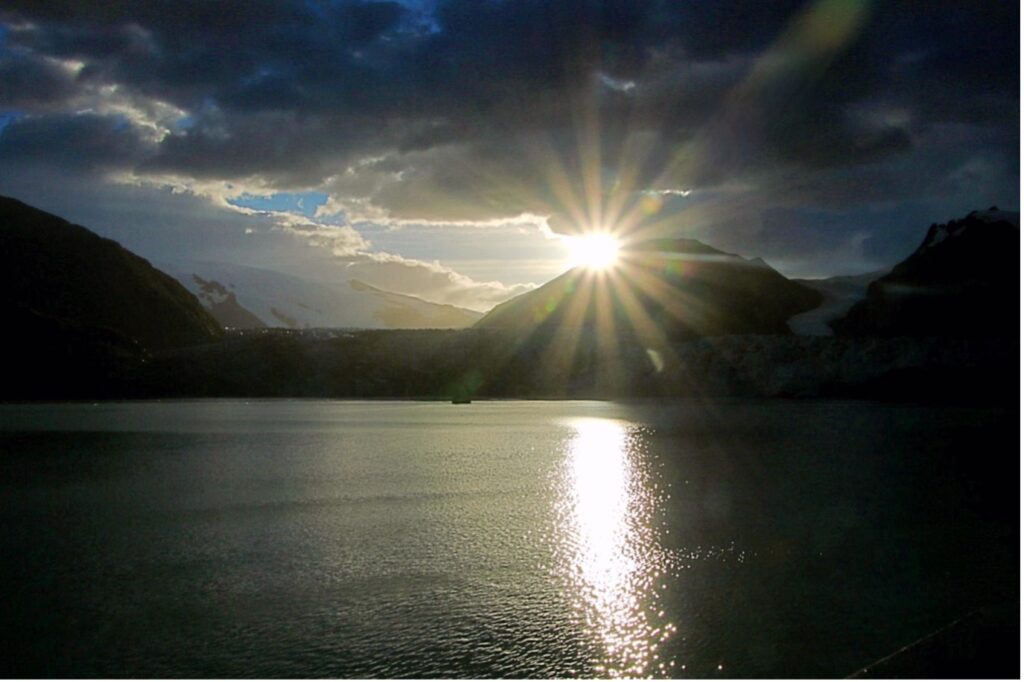
Pink Bear enjoyed some time on the bow for a little photo shoot. She was very happy to be out of cabin and getting some fresh air.
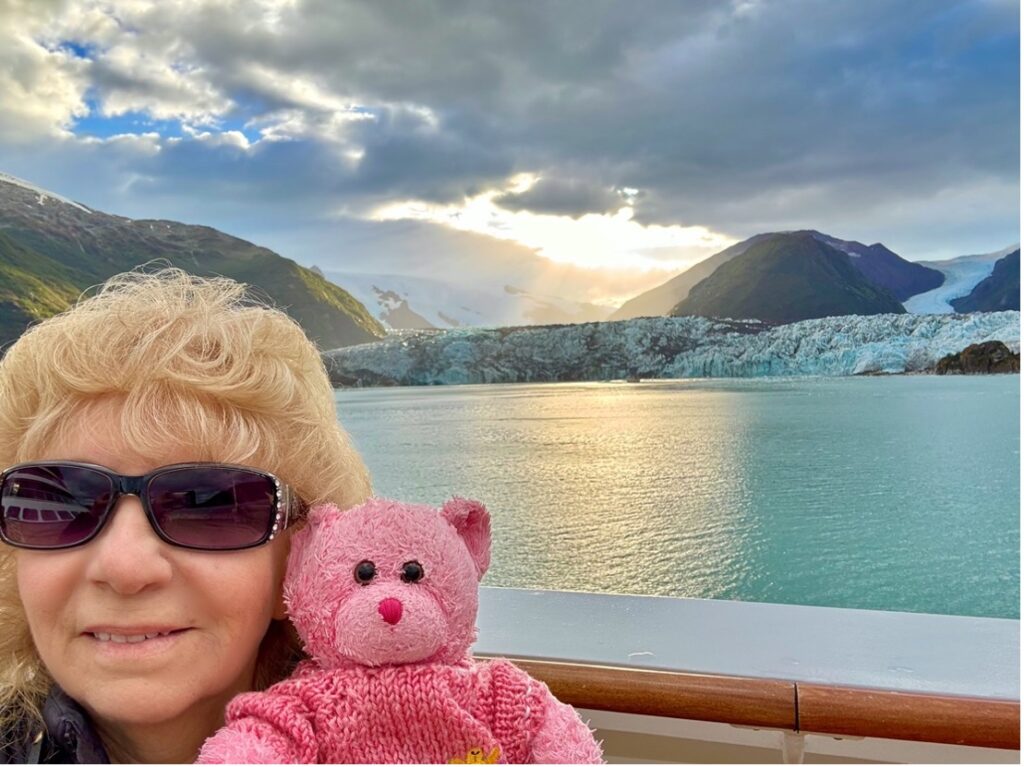
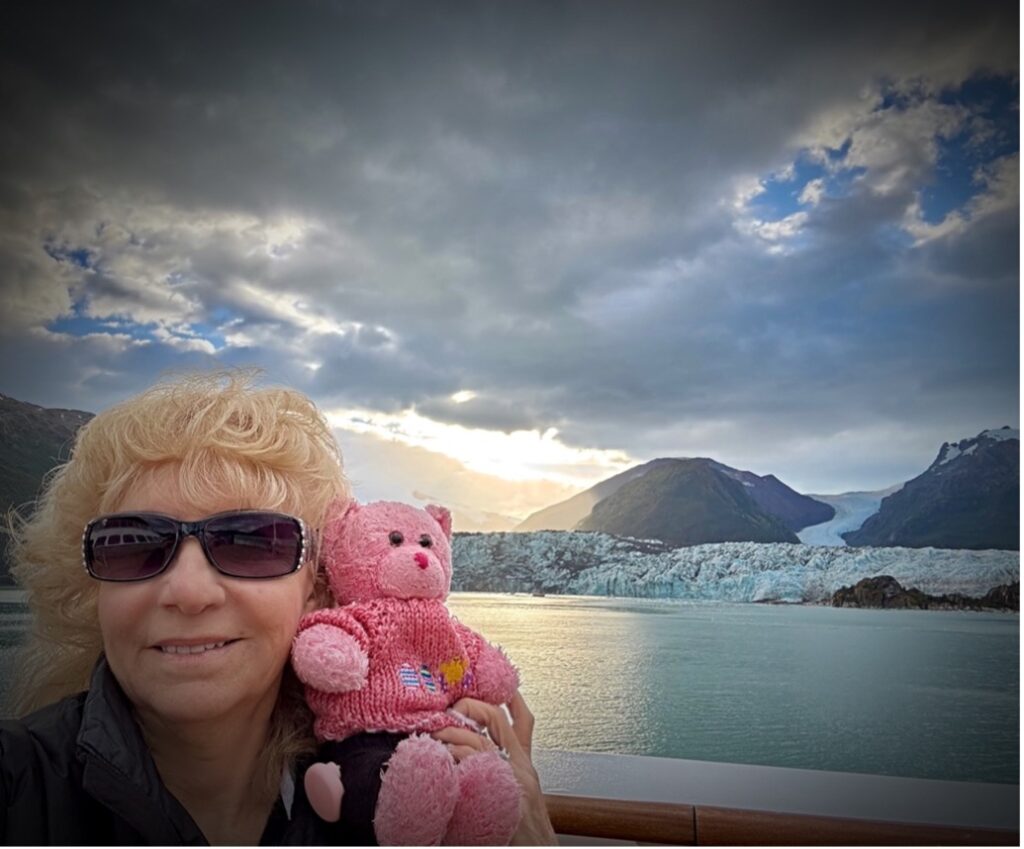
Before leaving the ship for our zodiac ride, we were blessed to witness some fantastic glacier calving.
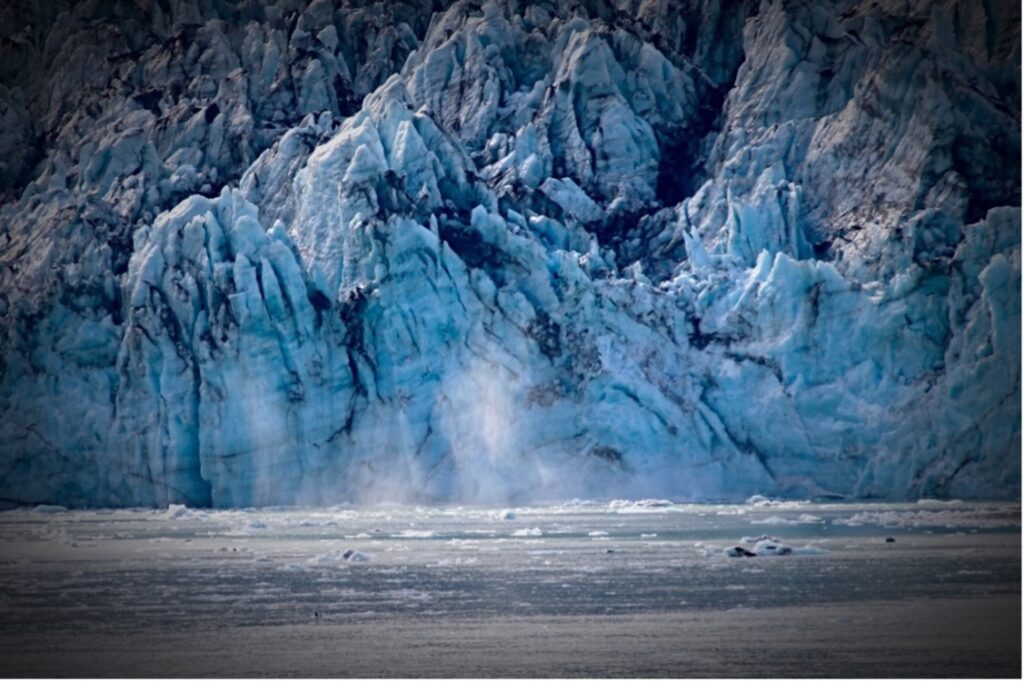
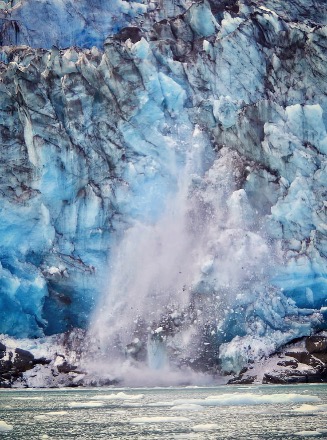
Skua Glacier
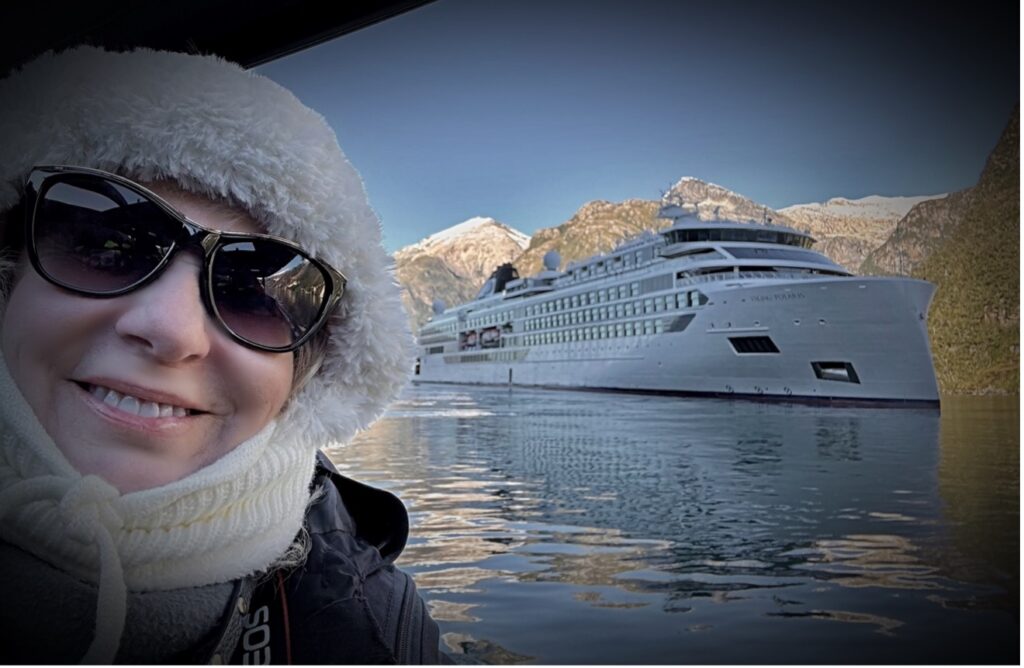
In the afternoon we once again donned our gear for a zodiac ride. As we glided through the fjord toward the glacier, the Polaris glistened in the distance.
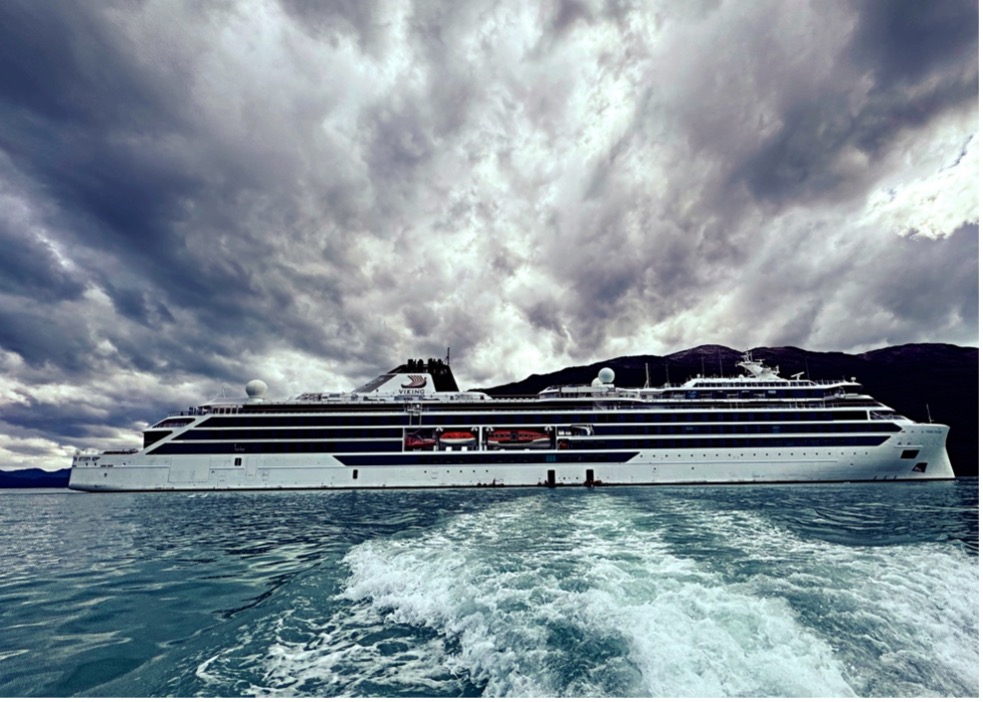
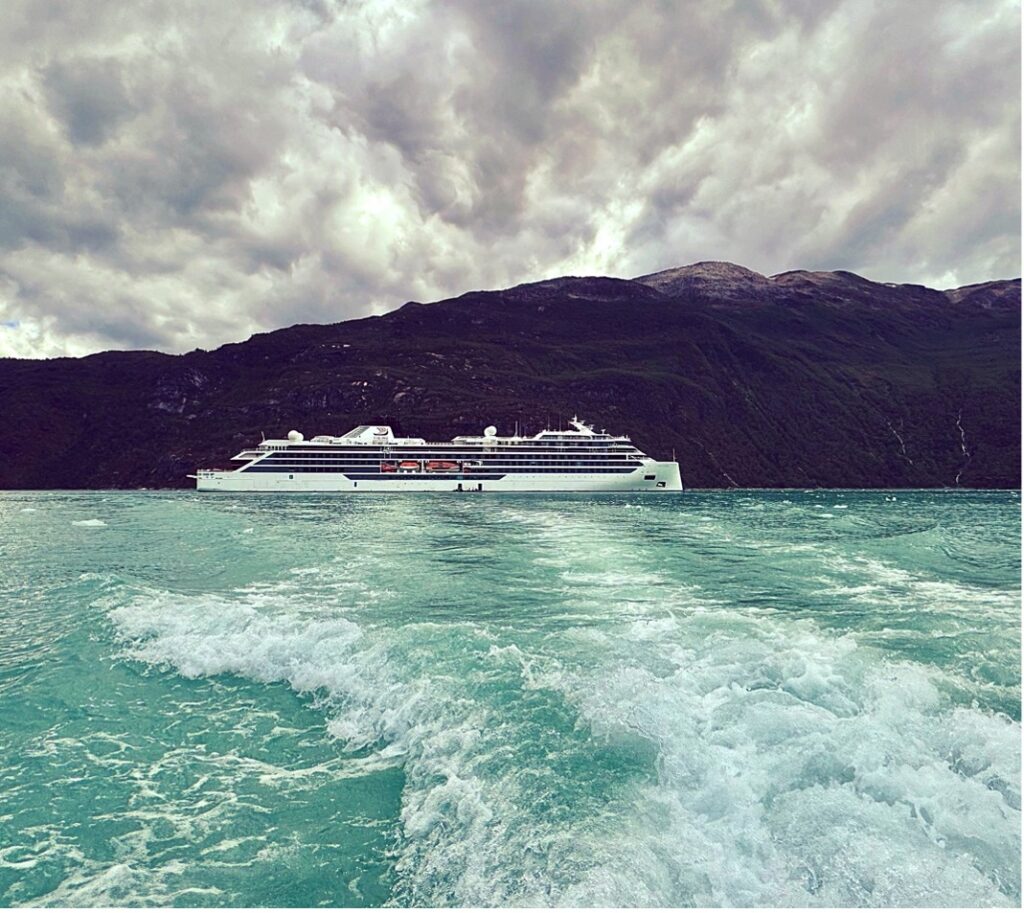
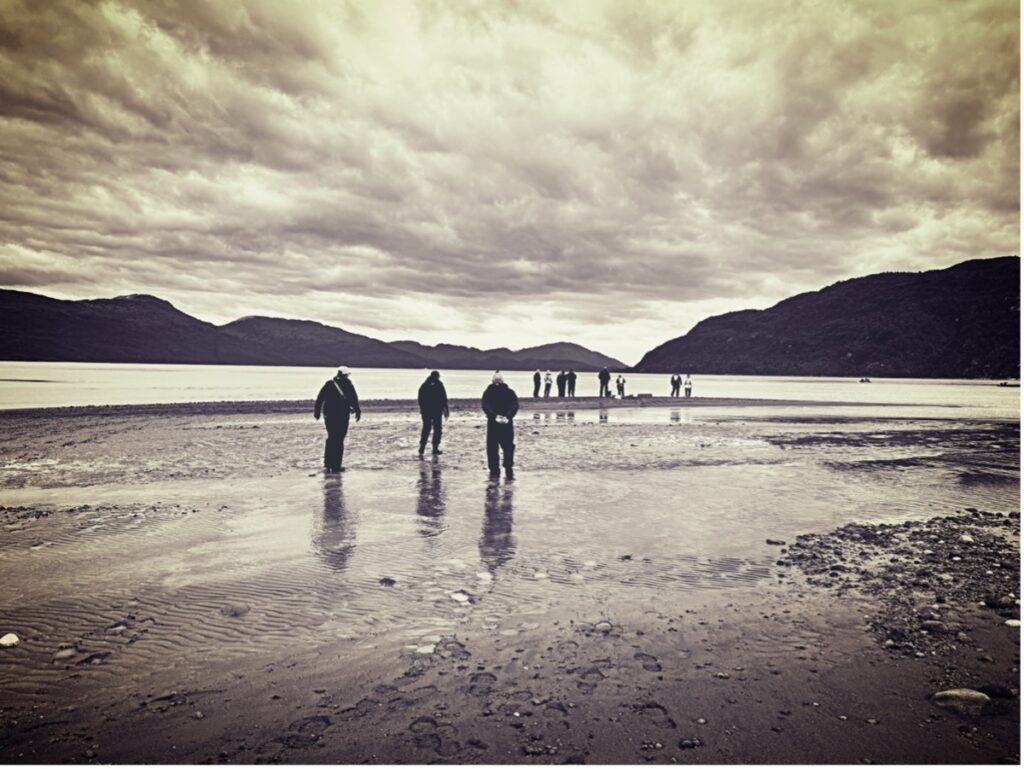
Since it was to be a wet landing, we needed our waterproof pants and boots. The weather God once again shined on us and for the first time Viking Polaris was able to have us land on a sandy spit next to the Glacier. I took my hat and gloves but being in the 50s with little wind they were not needed.
We arrived at the glacier and then crossed the large sand and rock field to get up close and personal. It was really an amazing experience
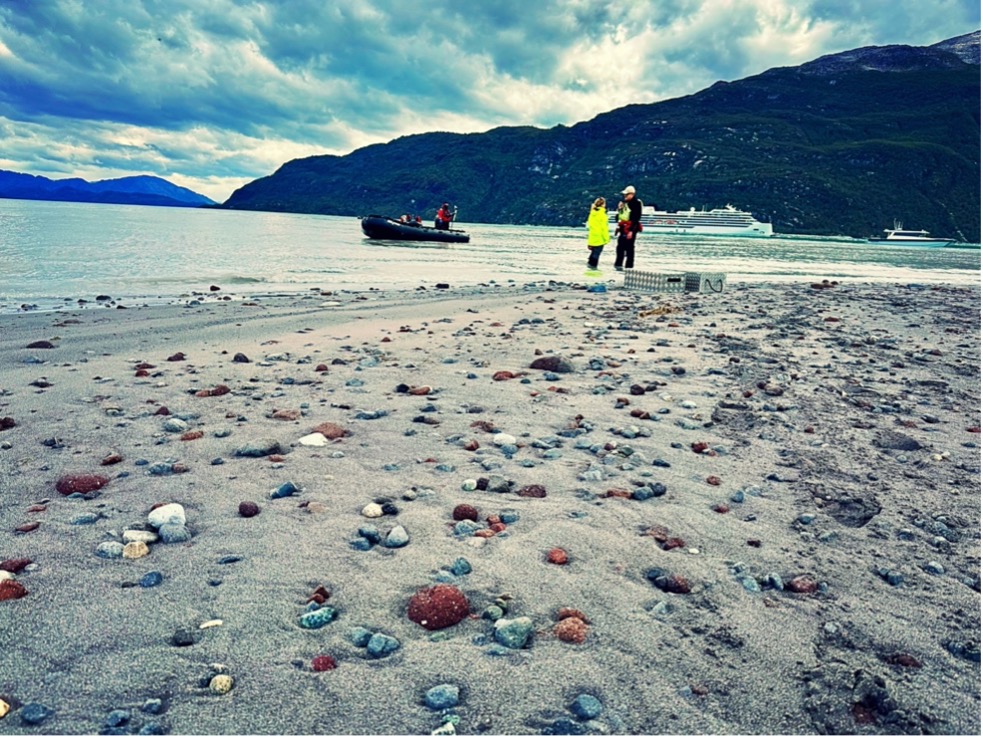
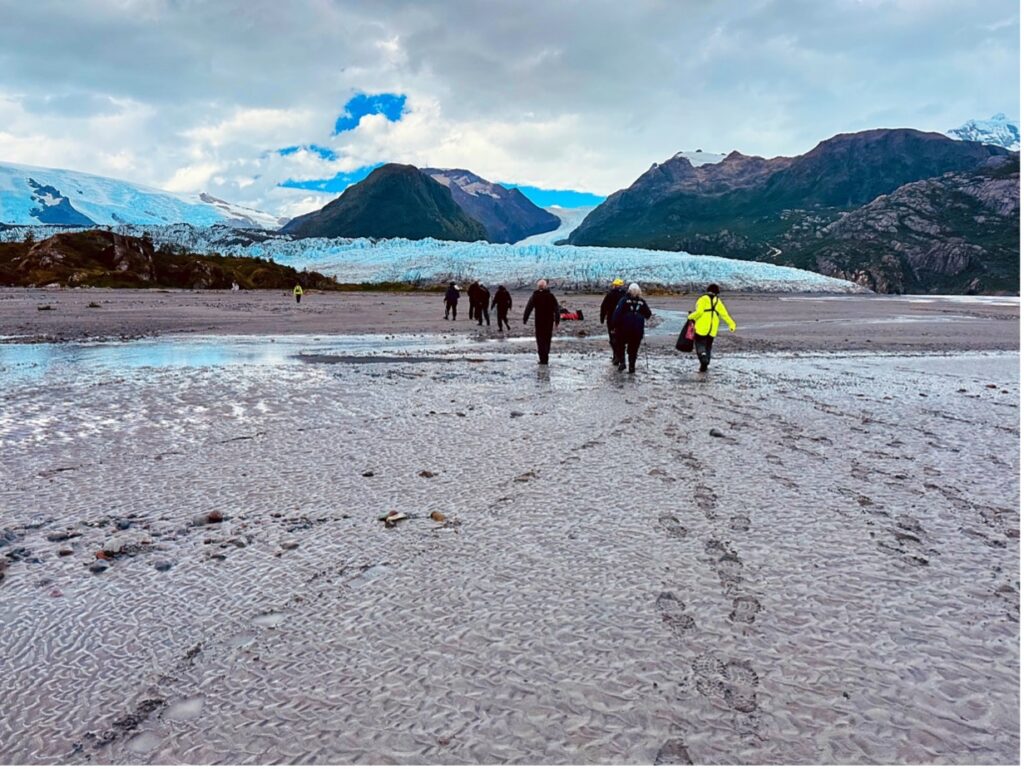
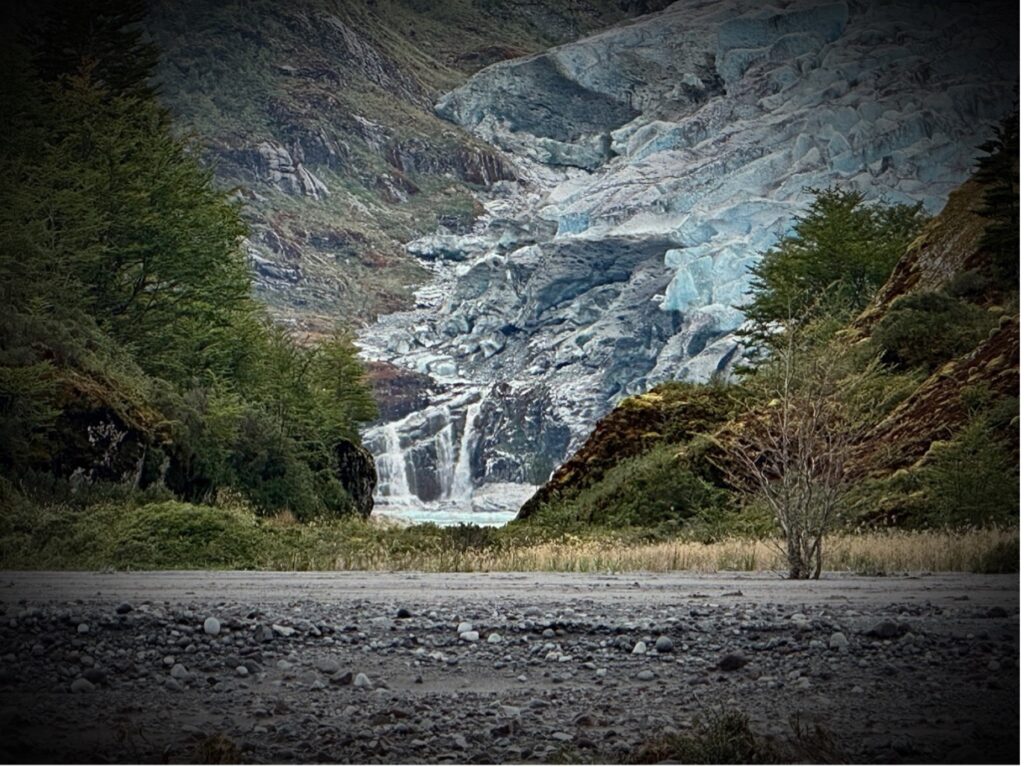
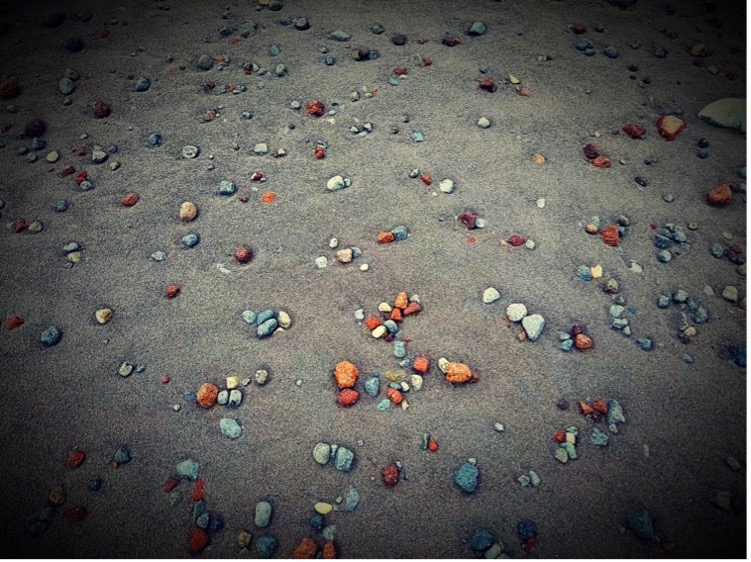
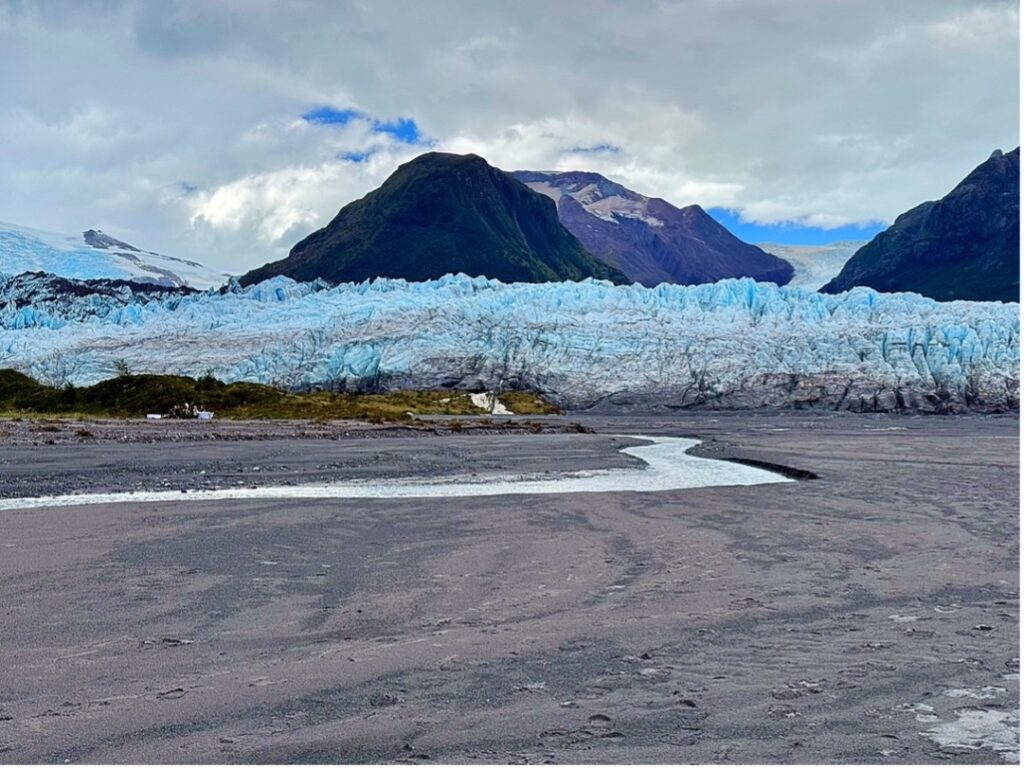
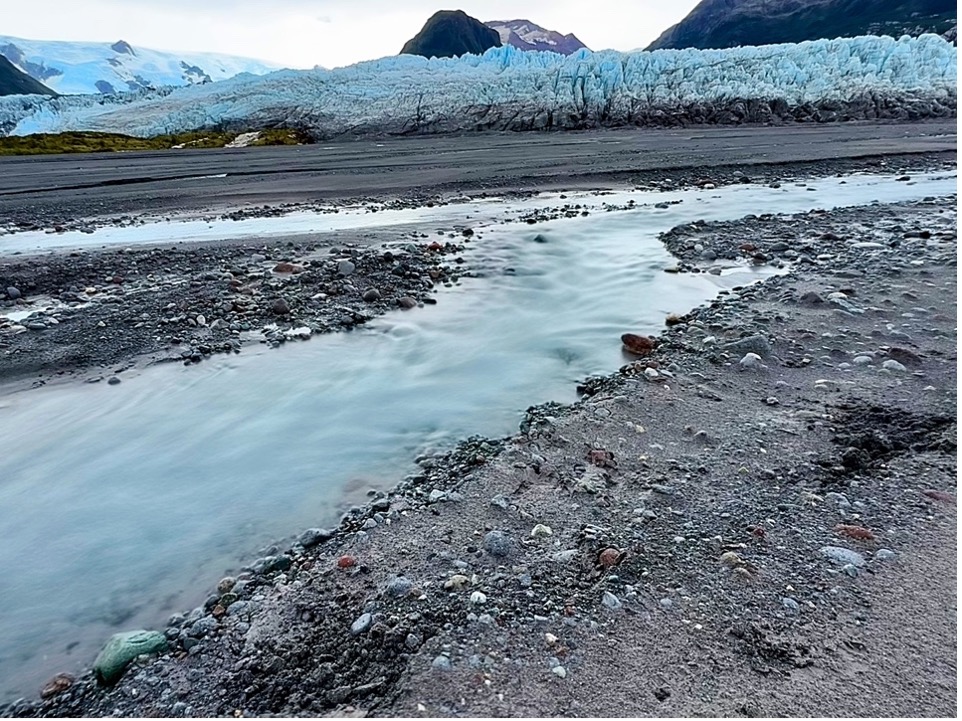
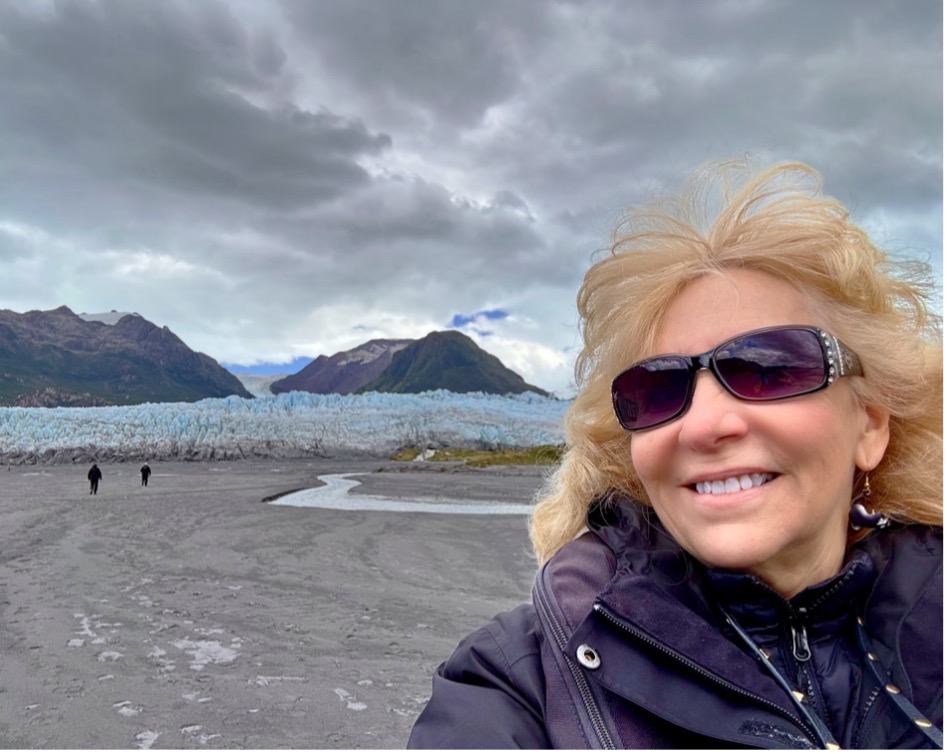
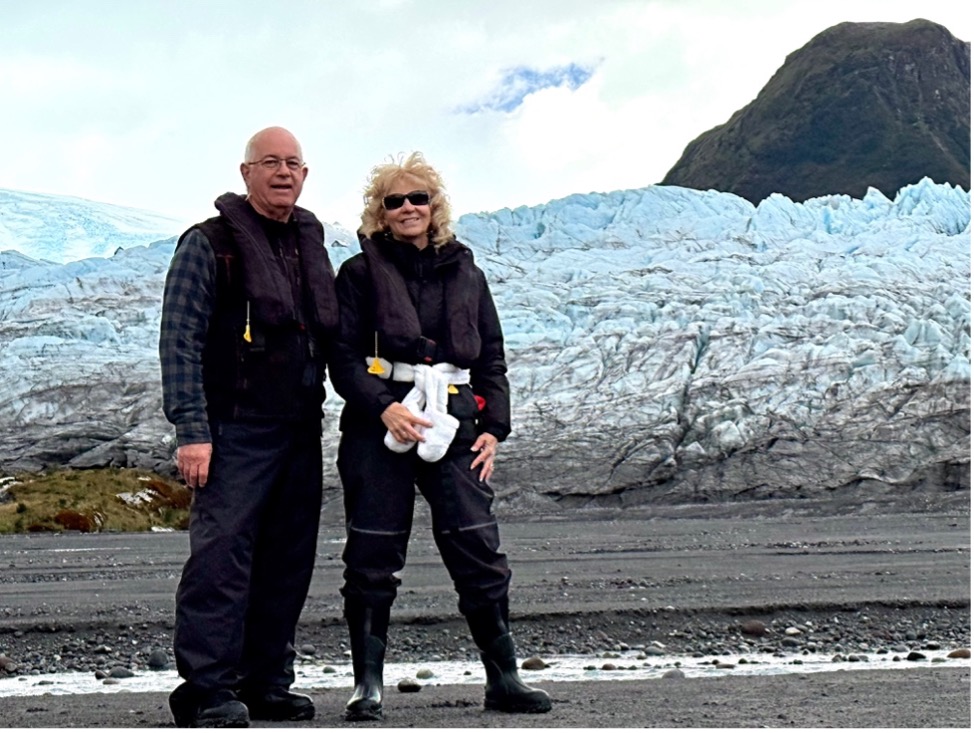
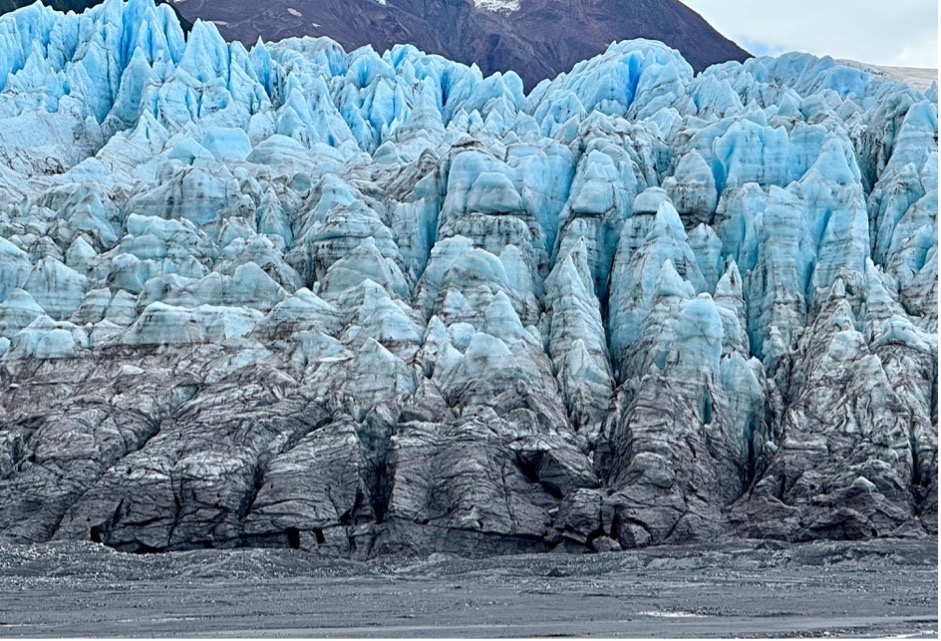
After spending time close to the glacier, we headed back to the Zodiac for our return to Polaris.
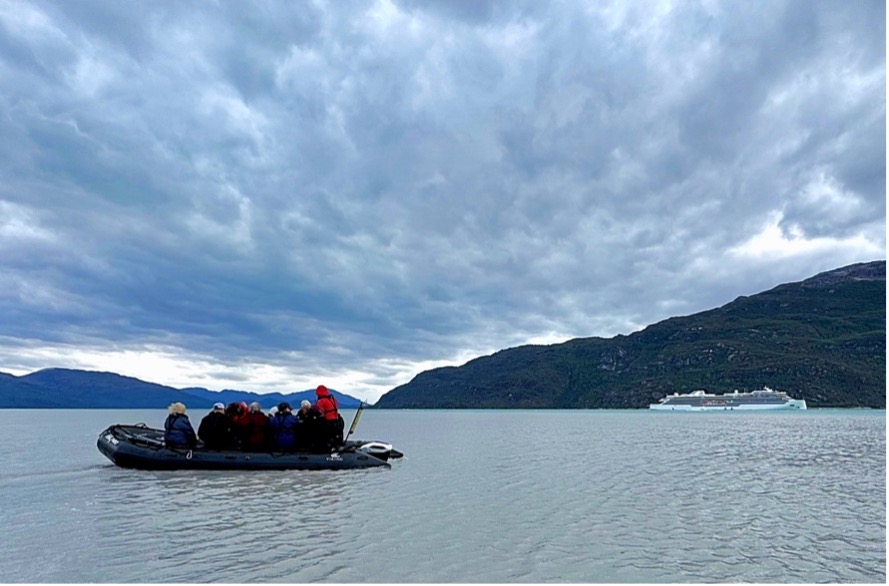
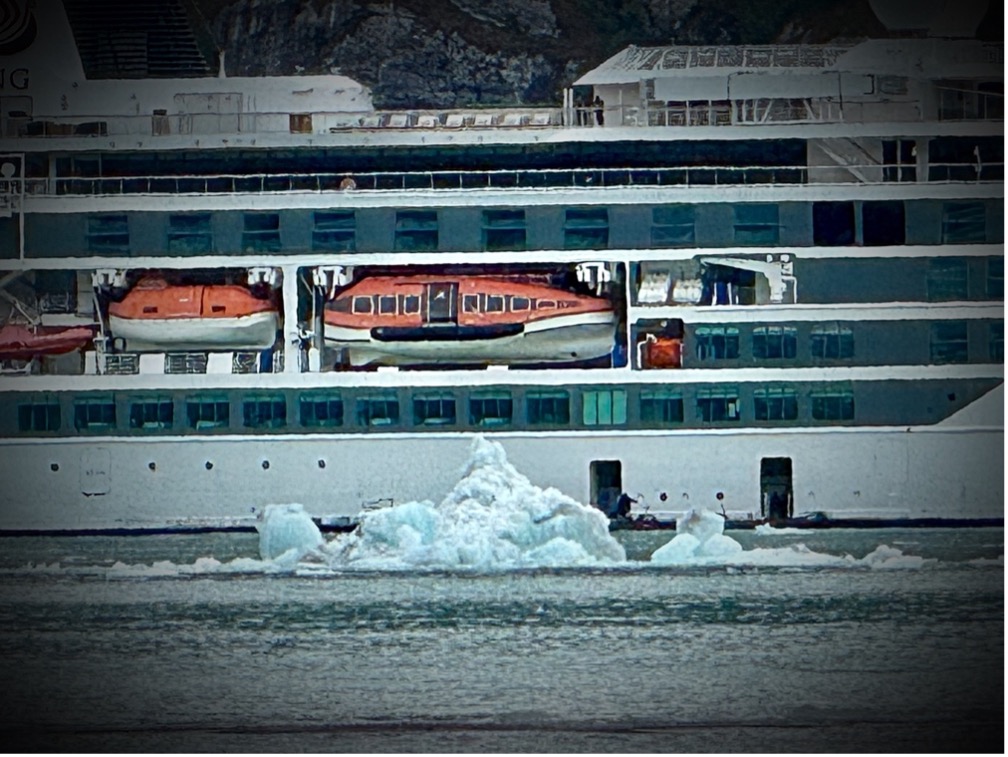
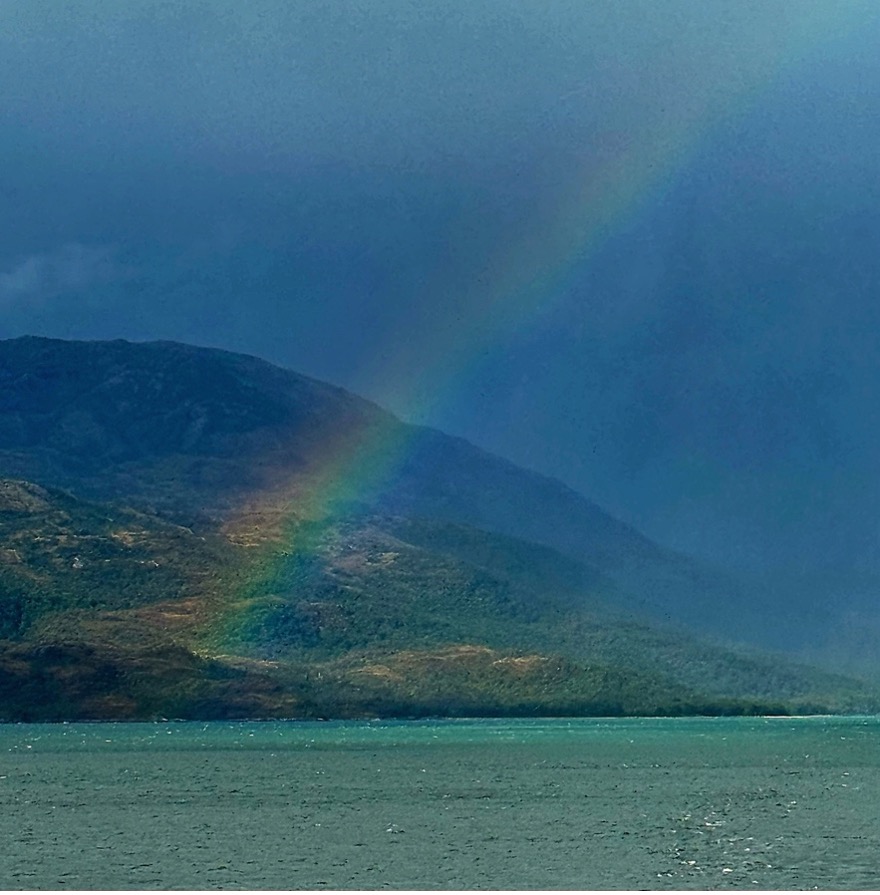
Back on the ship we had one final blessing for the day, a gorgeous rainbow as we left Amelia Fjord.
Pio XI
The Pío XI Glacier, also officially known as the Brüggen Glacier, is the longest glacier in the Southern Hemisphere outside of Antarctica. Located in southern Chile, it is the largest western outflow of the Southern Patagonian Ice Field. Unlike most glaciers worldwide that are retreating due to climate change, Pío XI has exhibited a history of massive, unpredictable surges. It was named by Spanish explorers after a Pope.
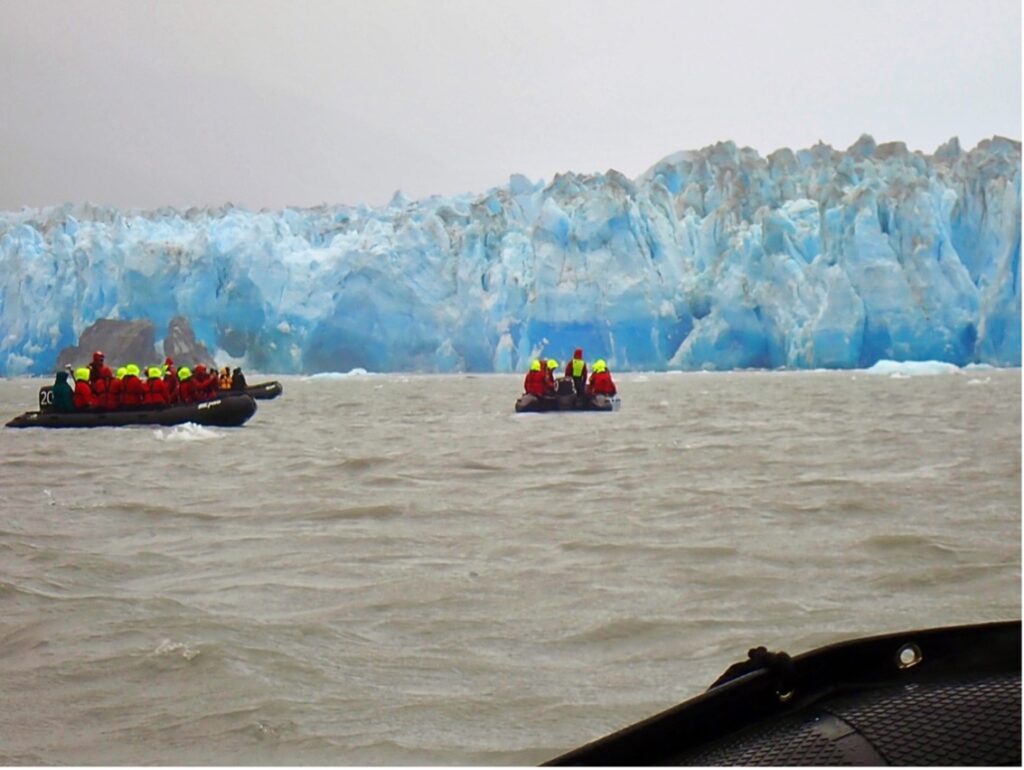
Weather in this area is typically windy and rainy and weather predictions for this day were no different. We arrived at the massive glacier to clouds and mist. We had a 9:45AM zodiac ride to the glacier. We once again donned our gear preparing for a wet ride. I brought my waterproof Olympus tough camera which turned out to be the right choice.
We proceeded to the Hangar and boarded our zodiac. As we started toward the glacier it was an awe-inspiring sight. As we drove, we witnessed amazing calving.
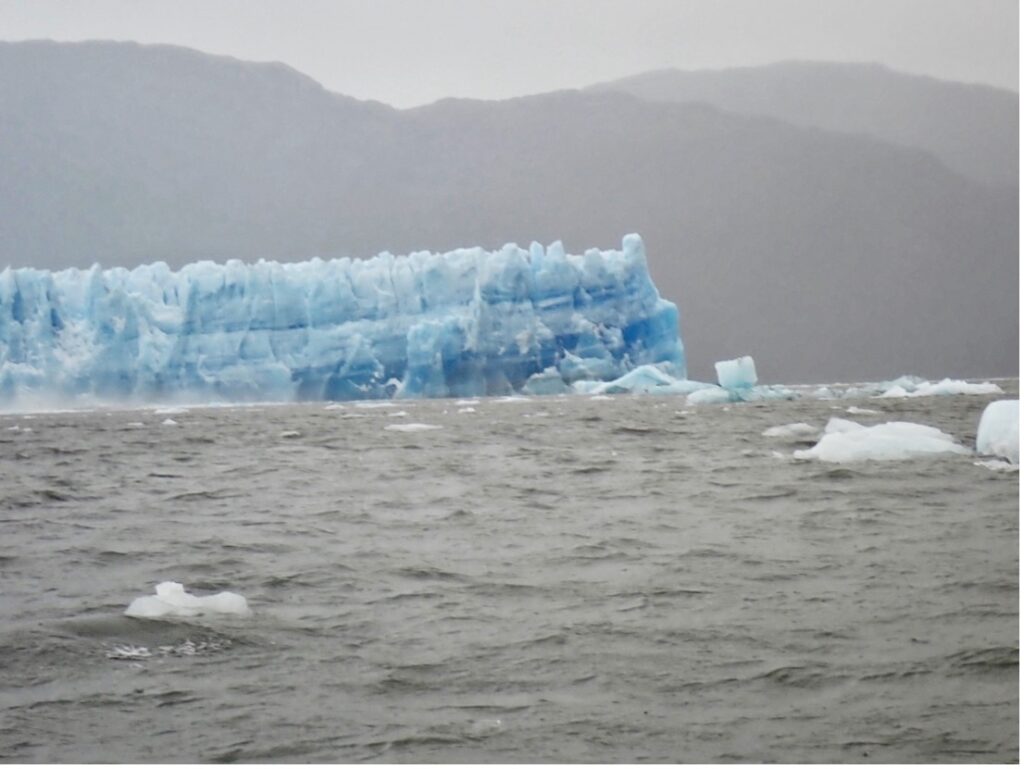
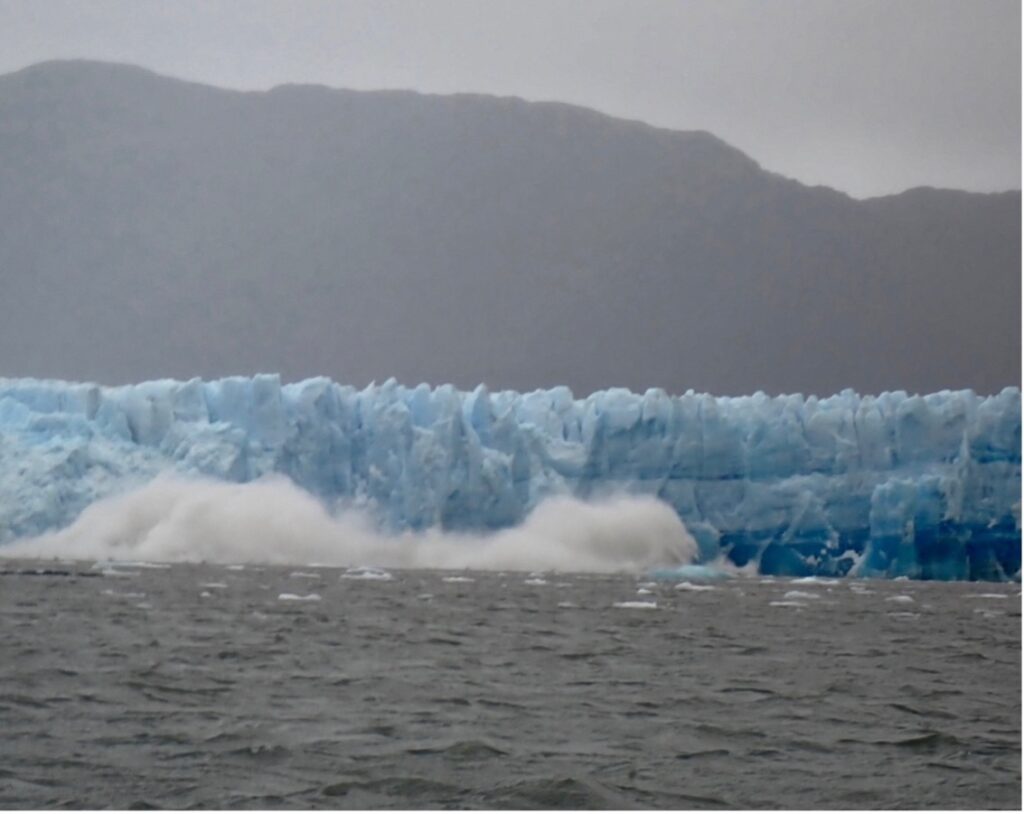
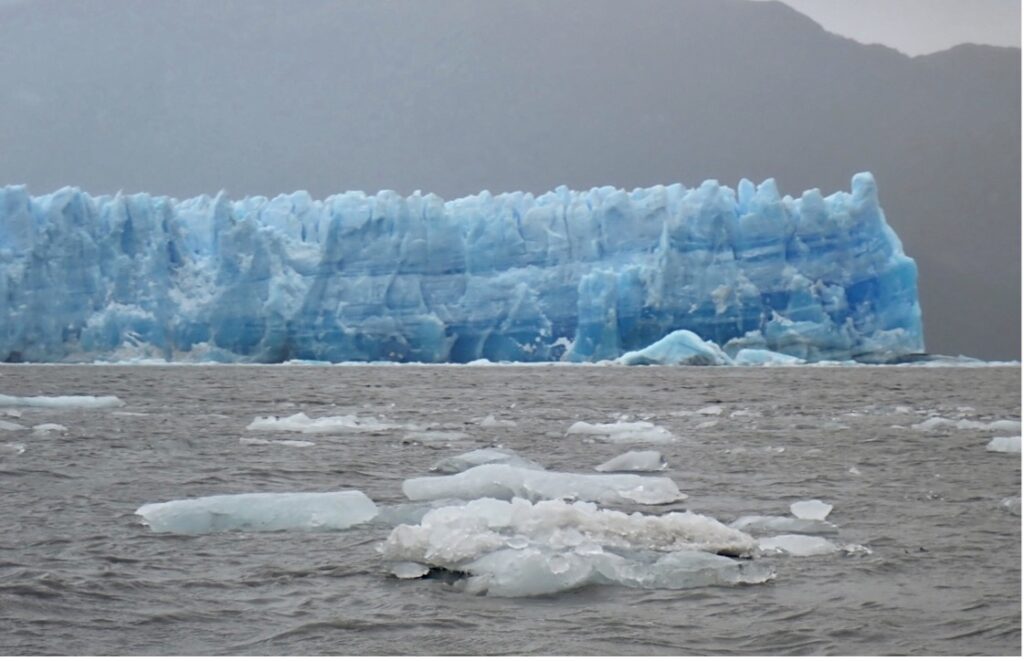
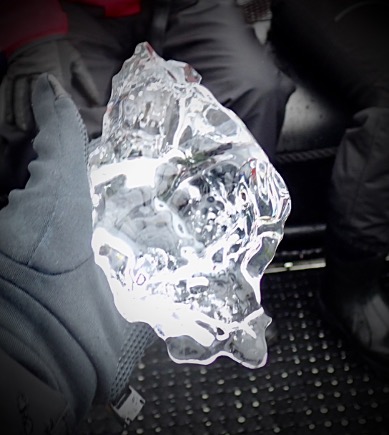
On the excursion we learned about black ice and got to hold a piece.
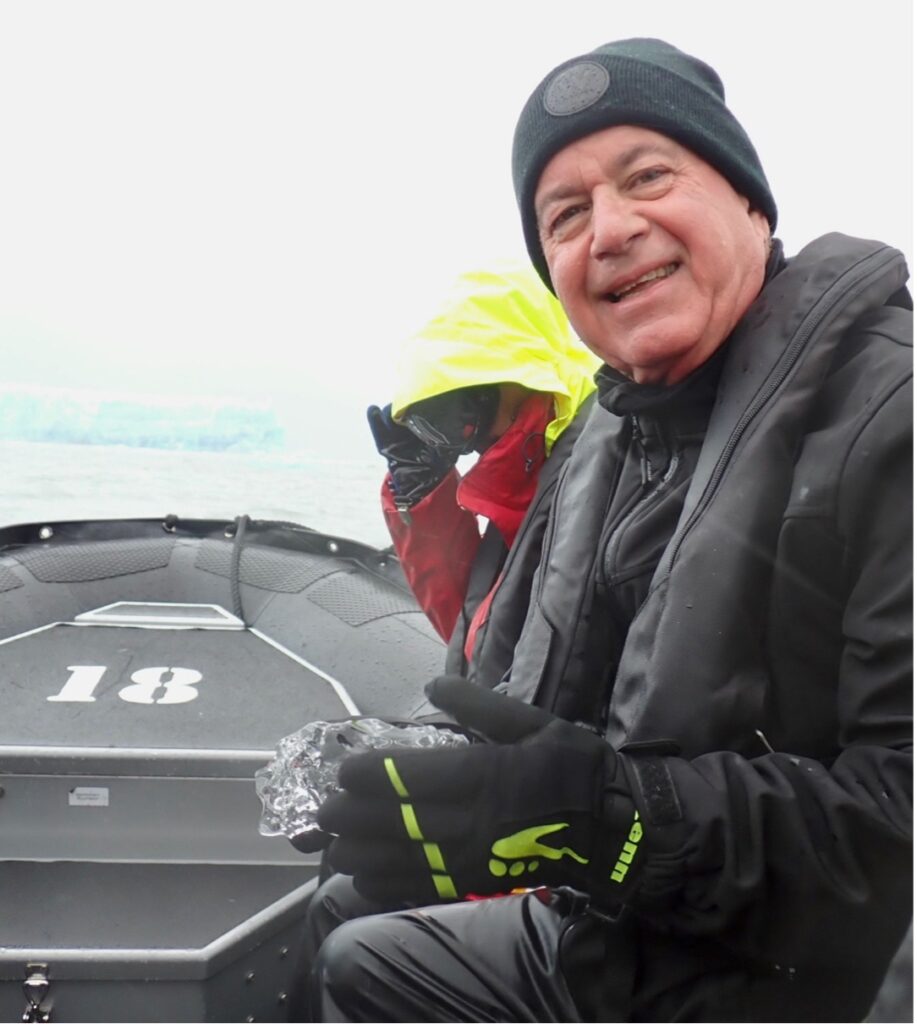
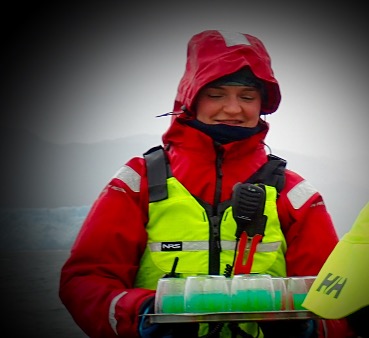
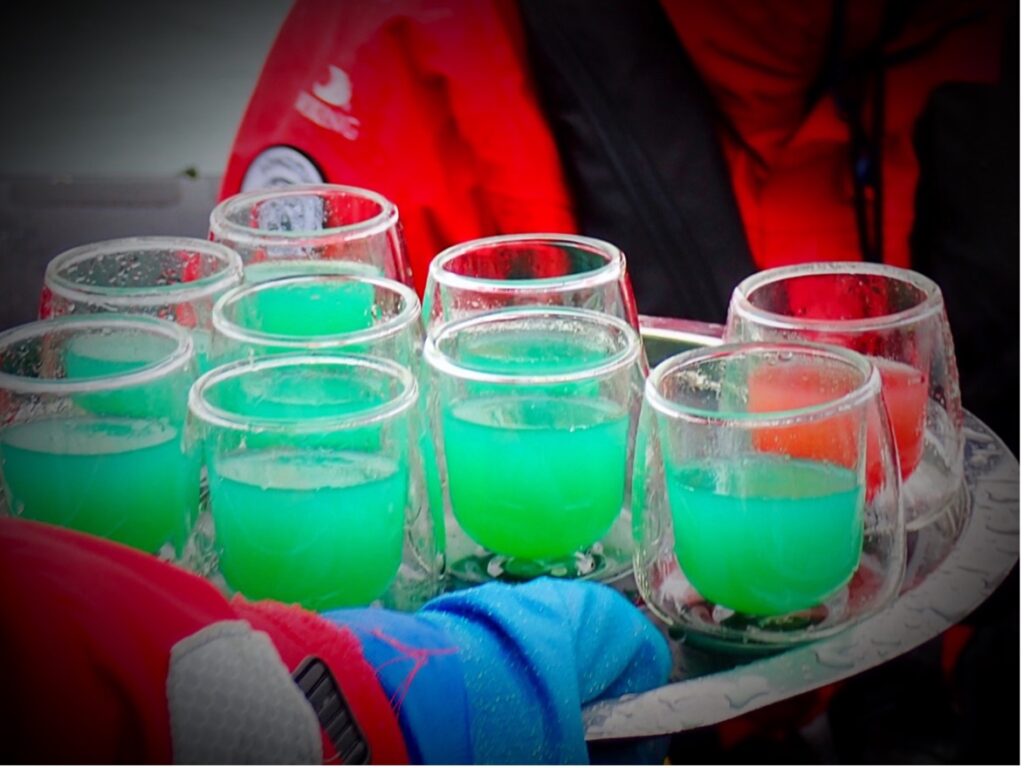
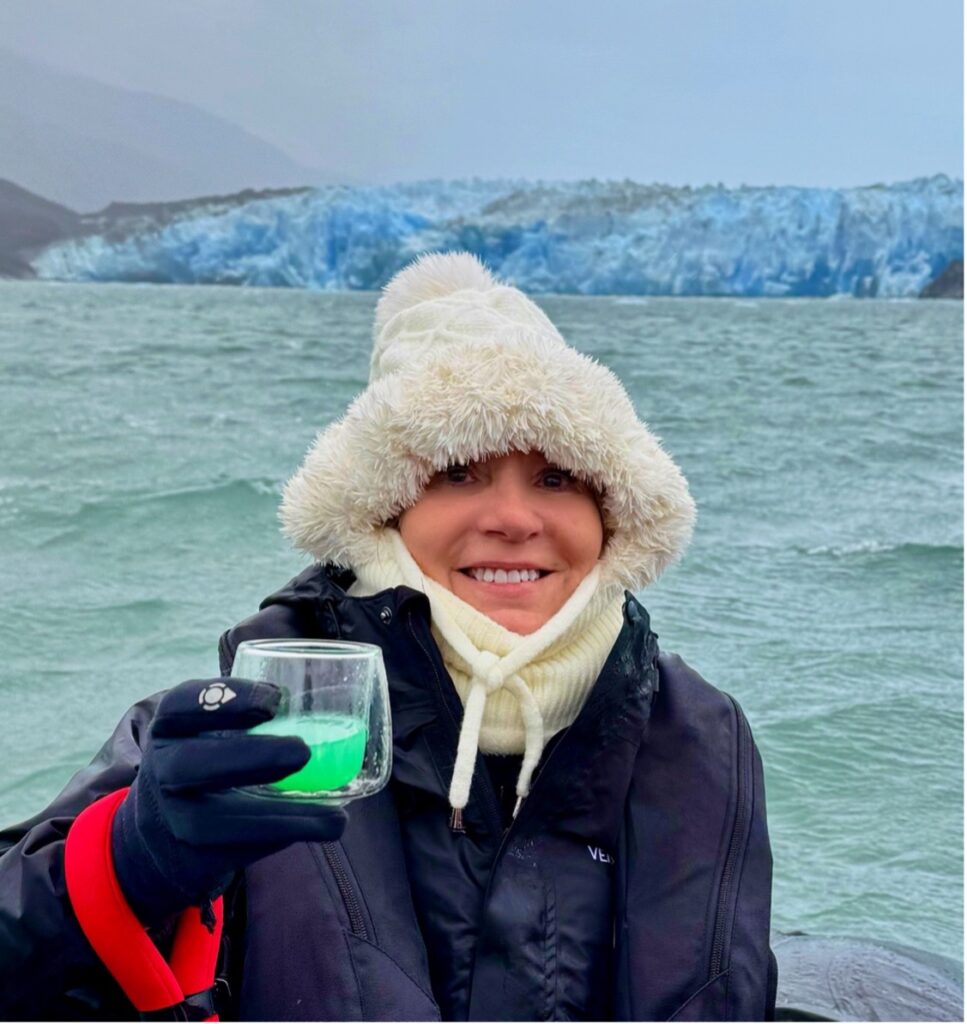
As we prepared to return to the ship we received one final surprise. We got to sip drinks at one of the largest glaciers in world.
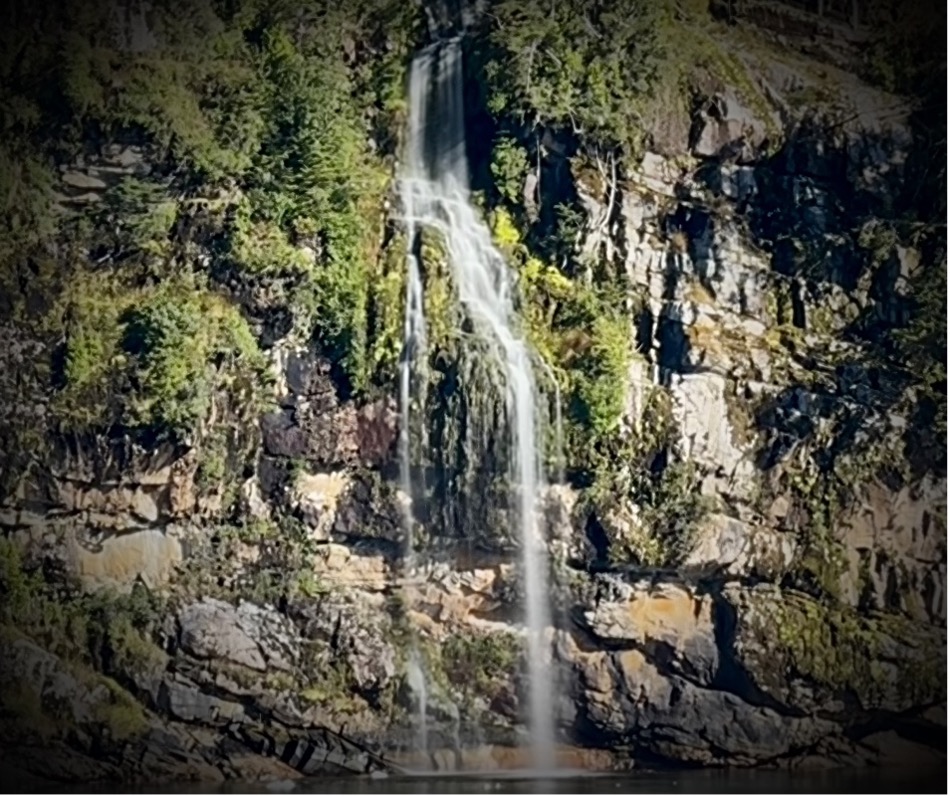
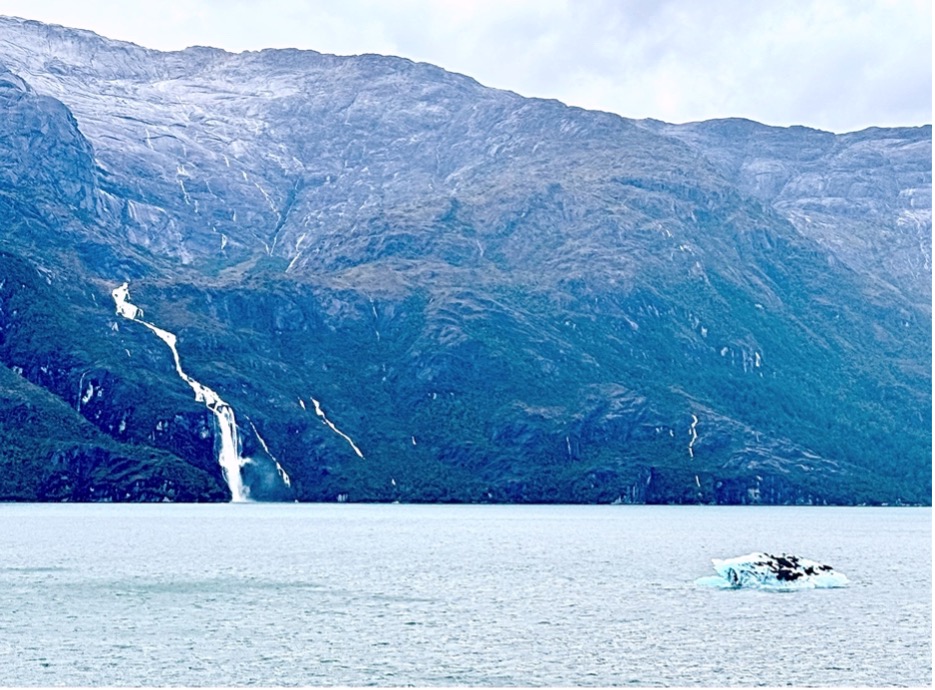
As we headed back to the Polaris, we saw a lovely waterfall and a great view of the ship.
Final Thoughts
When we booked our Viking Polaris expedition cruise, we knew Patagonia would be beautiful. What we did not fully appreciate was how different the experience would be from traditional cruising. Expedition travel is not about fixed schedules, elaborate entertainment, or checking destinations off a list. It is about flexibility, exploration, and taking advantage of whatever opportunities nature provides on a given day. During our time in the Chilean Fjords, plans changed repeatedly due to weather and conditions. A submarine dive was cancelled and rescheduled. The ship repositioned because of changing winds. Excursion details often evolved from one day to the next. Yet those adjustments became part of the adventure rather than a disappointment.
The glaciers themselves were spectacular. Garibaldi, Agostini, Amelia, and Pio XI each offered a different perspective on Patagonia’s incredible landscape. We explored them from Special Operations Boats, Zodiacs, the ship, and even from beneath the water in Ringo, one of the most unique travel experiences we have ever had.
Looking back, what made these excursions special was not simply seeing glaciers. It was the ability to experience them up close—to glide through ice-filled fjords, step ashore in remote wilderness, walk beside a glacier, and witness places that few travelers ever reach.For us, the glacier excursions were the heart of the Viking Polaris expedition experience and one of the highlights of our entire Patagonia journey. If you enjoy nature, photography, wildlife, and a little adventure, this is the type of travel that stays with you long after you return home.
Practical Tips
- Dress in layers, the weather is unpredictable
- Viking does a very good job assisting people into the zodiac do not be afraid if you have moderate ability, they will be there
- The landings could be rocky and a little wet, but Viking staff are there to help
- Mittens with a convertible flap are great for taking pictures
- A battery powered dual layer jacket was a great choice for outer wear
- Bring a waterproof camera and/or waterproof phone case it can be wet
Pink Bear Retirement Vacation Rating:
⭐ Glacier Excursions: 10/10
⭐ Scenic Beauty: 10/10
⭐ Adventure Level: Moderate
⭐ Retirement Comfort Level: 8/10
⭐ Submarine Experience: 10/10 (if your budget allows)
⭐ Pink Bear Approved: Absolutely, although she is still upset, she wasn’t allowed on Ringo. 🐻
You can read about our entire Viking Expedition to Chilean Fjords and our South American Adventure at: