
IN THIS BLOG
Why Journey to Wild Side: Inis Mor
Visiting the Aran Islands
A Little Background about the Islands
Inis Mor
A Little History
The Journey
Kilronan: The Town
A Little Background
Our Experience
Journey Across Inis Mor
Dun Aonghasa: The Fort
A Little Background
Our Experience
The Seven Churches
A Little Background
Our Experience
Pink Bear Retirement Vacation Rating
Final Thoughts
Tips
Why Journey to the Wild Side: Inis Mor
The Aran Islands offer a very different Ireland experience. Just off the coast of Galway, the islands feel more remote, rugged, and traditional than many of the places we visited on the mainland.
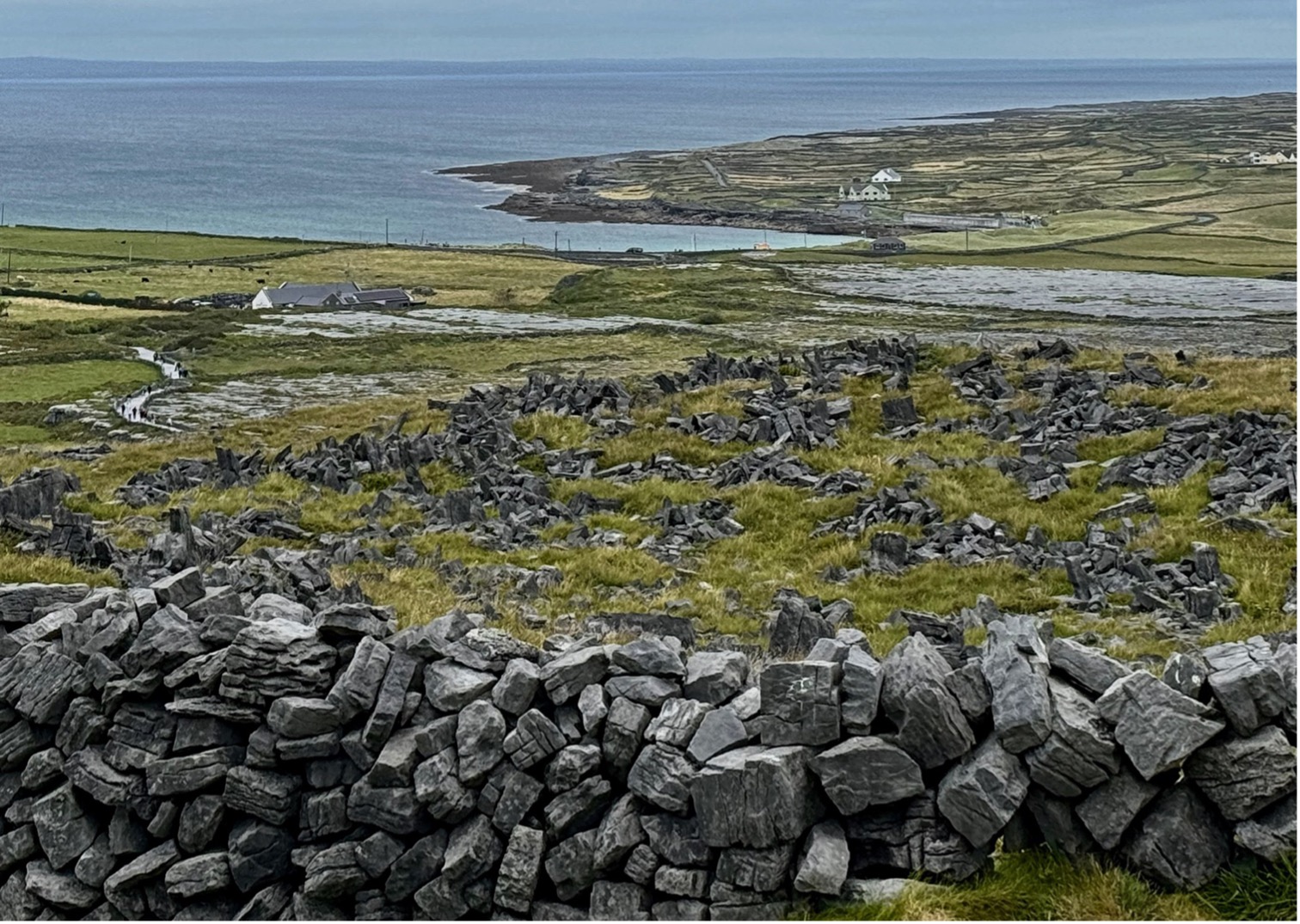
We chose to visit Inis Mór, the largest of the three Aran Islands. Stone walls crisscross the landscape, narrow roads wind between tiny villages, and ancient ruins sit dramatically above the Atlantic.
For us, the appeal was not simply seeing another famous attraction. It was the chance to leave the mainland behind for a few hours and experience a quieter, wilder side of Ireland.
Visiting the Aran Islands
A Little About the Islands
The Aran Islands are a group of three islands located in Galway Bay, off Ireland’s west coast. The islands—Inis Mór, Inis Meáin, and Inis Oírr—are known for their rugged landscapes, ancient sites, traditional Irish culture, and dramatic Atlantic scenery.
Although the islands share many similarities, each has its own personality. Inis Mór is the largest and most visited, with some of the islands’ most famous historic sites. Inis Meáin is quieter and less visited, while Inis Oírr, the smallest, is known for its charm and compact size.
Since we were visiting on a day trip, we chose Inis Mór, which offered a wonderful combination of scenery, history, and accessibility.
Inis Mor
A Little Background
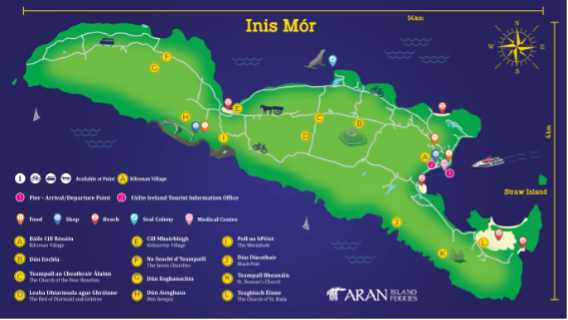
Inis Mór, meaning “Big Island,” is the largest of the three Aran Islands, stretching approximately 9 miles long and 2 miles wide.
The island is known for its dramatic Atlantic coastline, maze of dry-stone walls, ancient ruins, and strong Irish-speaking traditions. Its main village, Kilronan, is where most ferries arrive and where visitors will find shops, cafés, bicycle rentals, and transportation around the island.
Among its best-known historic sites is Dún Aonghasa, the prehistoric stone fort perched dramatically above the Atlantic. Other ancient sites, including the Seven Churches, are scattered across the island.
Despite its remote and rugged appearance, Inis Mór is small enough that visitors can experience many of its highlights on a day trip.
The Journey
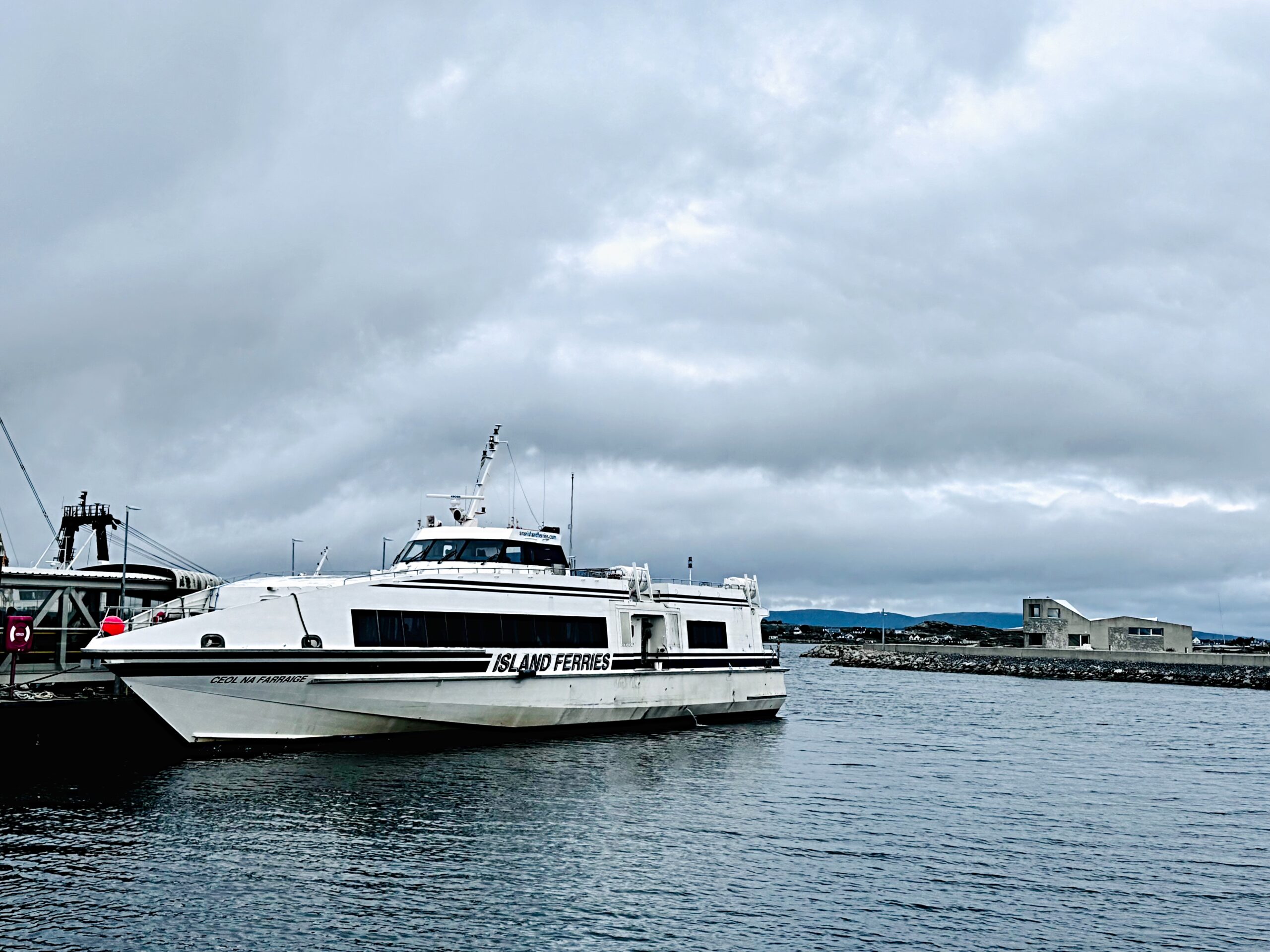
Visitors traveling to Inis Mór generally have two main ferry departure options from the Galway area: Rossaveel, west of Galway City, and Galway City itself on seasonal sailings. Rossaveel is the more established departure point and is served by shuttle transportation from Galway.
We traveled in August, when the Aran Islands are especially busy, so we purchased our ferry tickets in advance for a specific departure time. Our ferry was scheduled for 10:00 AM. Although passengers may sometimes be allowed to take an earlier ferry if space is available, we found that availability was limited during the busy summer season. If you are visiting in July or August, I would recommend booking your ferry in advance rather than counting on changing your departure time once you arrive.
We departed from Rossaveel. The trip from Galway to the ferry terminal took about an hour. After arriving at the terminal and boarding the ferry, we had another journey of roughly an hour across Galway Bay to Inis Mór.
Altogether, it was about two hours of travel from Galway before we stepped onto the island. That journey added to the experience. By the time we arrived, Inis Mór already felt removed from the mainland and very different from the Ireland we had been exploring.
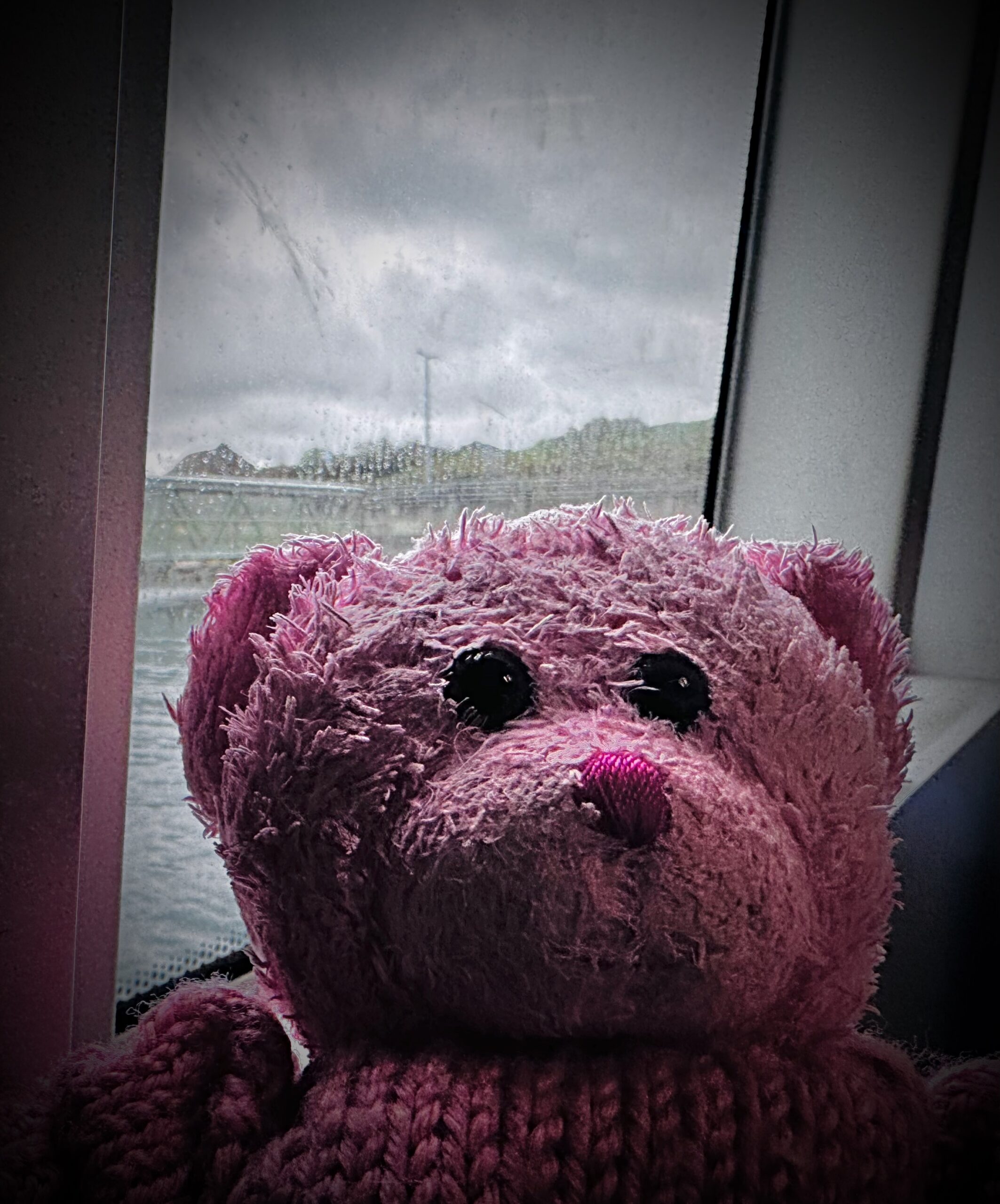
Our ferry to Inis More – and Pink Bear enjoying the ride
Kilronan: The Town
A Little Background
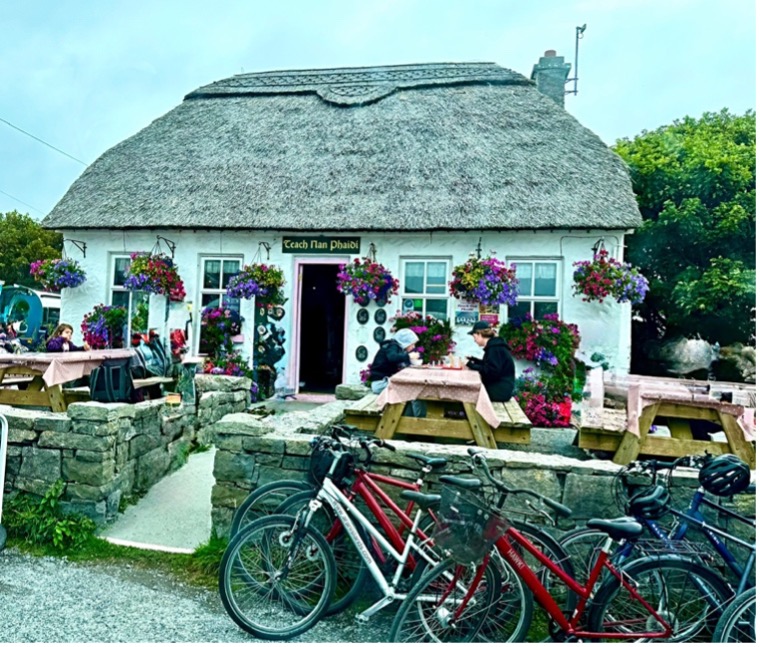
Kilronan is the main village on Inis Mór and the arrival point for most visitors traveling by ferry. Although it is the island’s largest settlement, it still feels very small and relaxed, with the harbor, shops, cafés, pubs, bike rentals, and tour transportation all clustered close together
The village serves as the starting point for exploring the rest of the island. Visitors can rent bicycles, join a local tour or simply spend some time walking around the harbor and village before heading farther into Inis Mór.
Our Experience
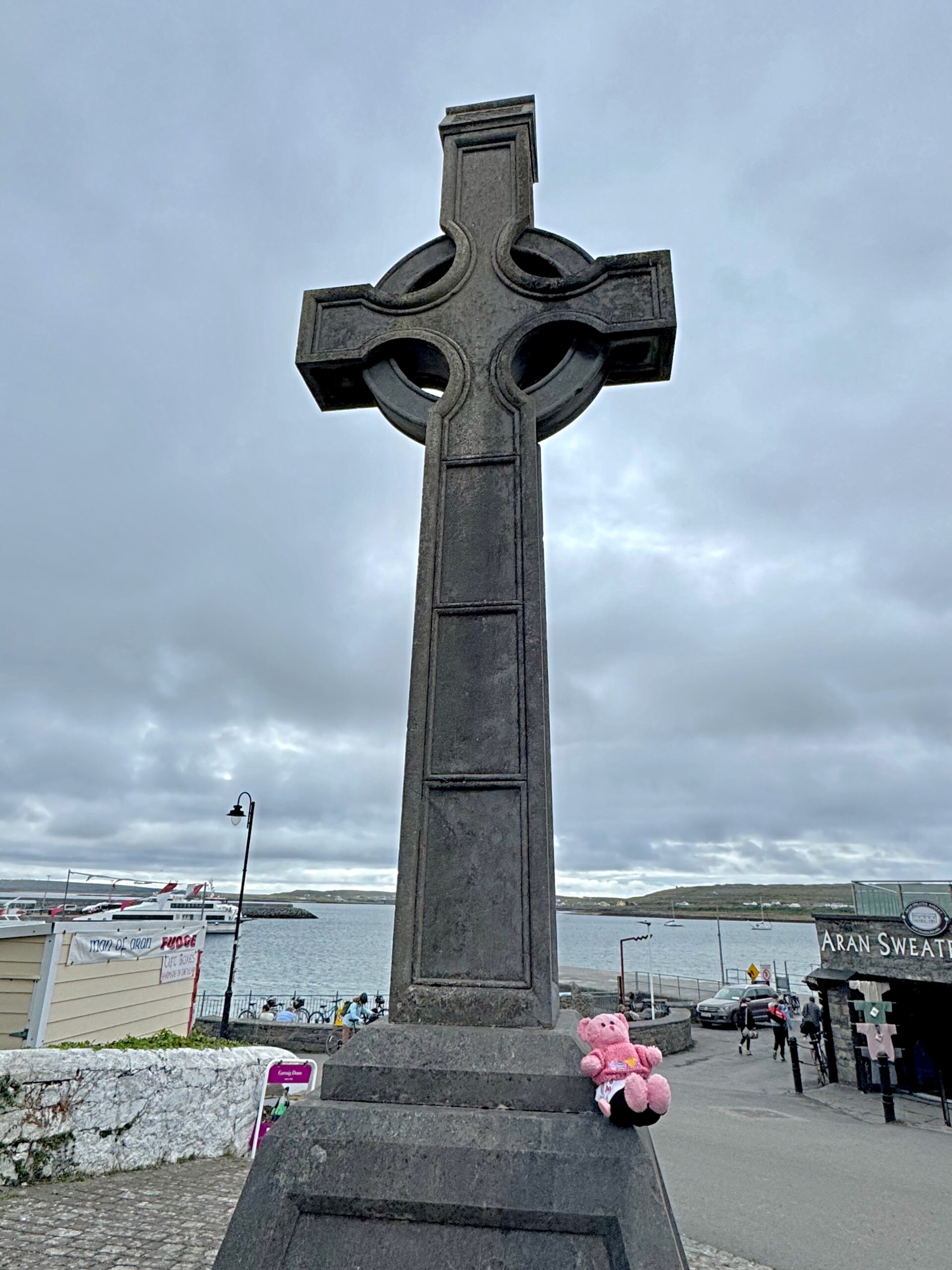
For us, Kilronan was our first real introduction to island life. After getting off the ferry, we had some time to walk around the small town before beginning our tour of Inis Mór.
Our guide, Derek, had arranged for a local driver to take us across the island to Dún Aonghasa. Along the way, our driver shared stories about life on Inis Mór and gave us a short, narrated tour of the island.
Arrival and Around the Town
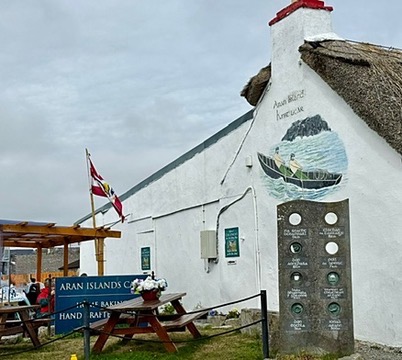
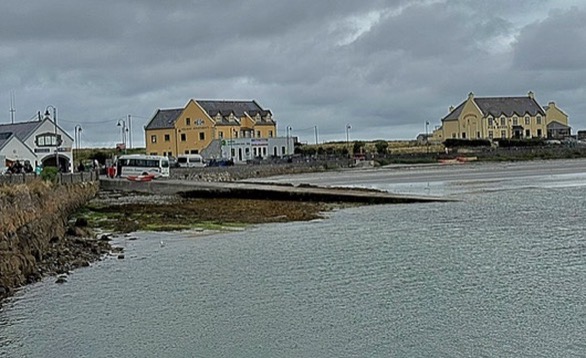
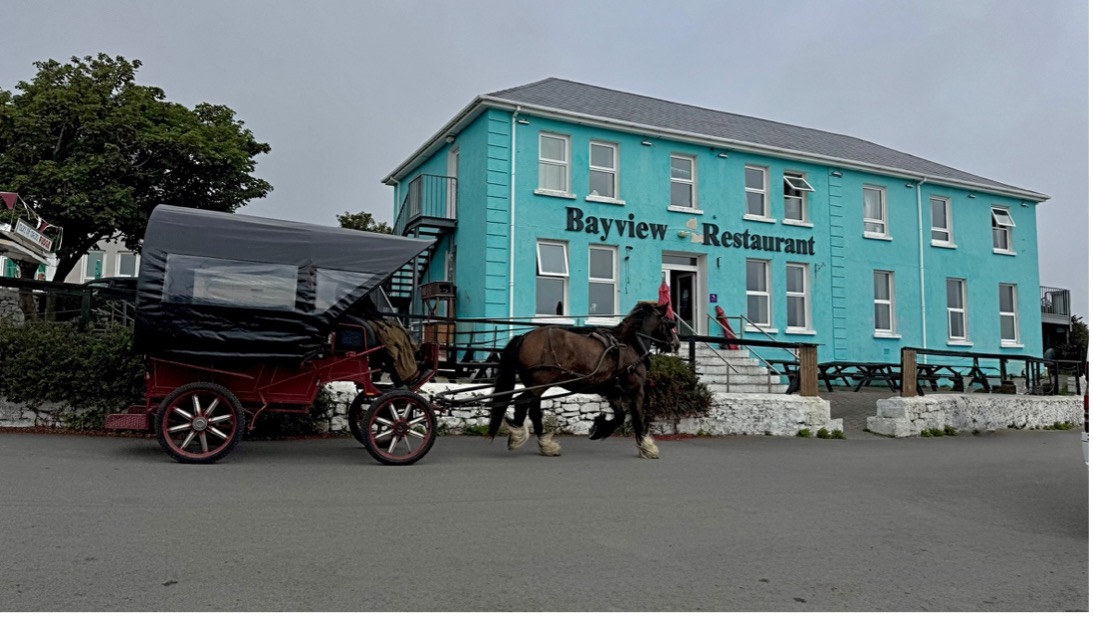
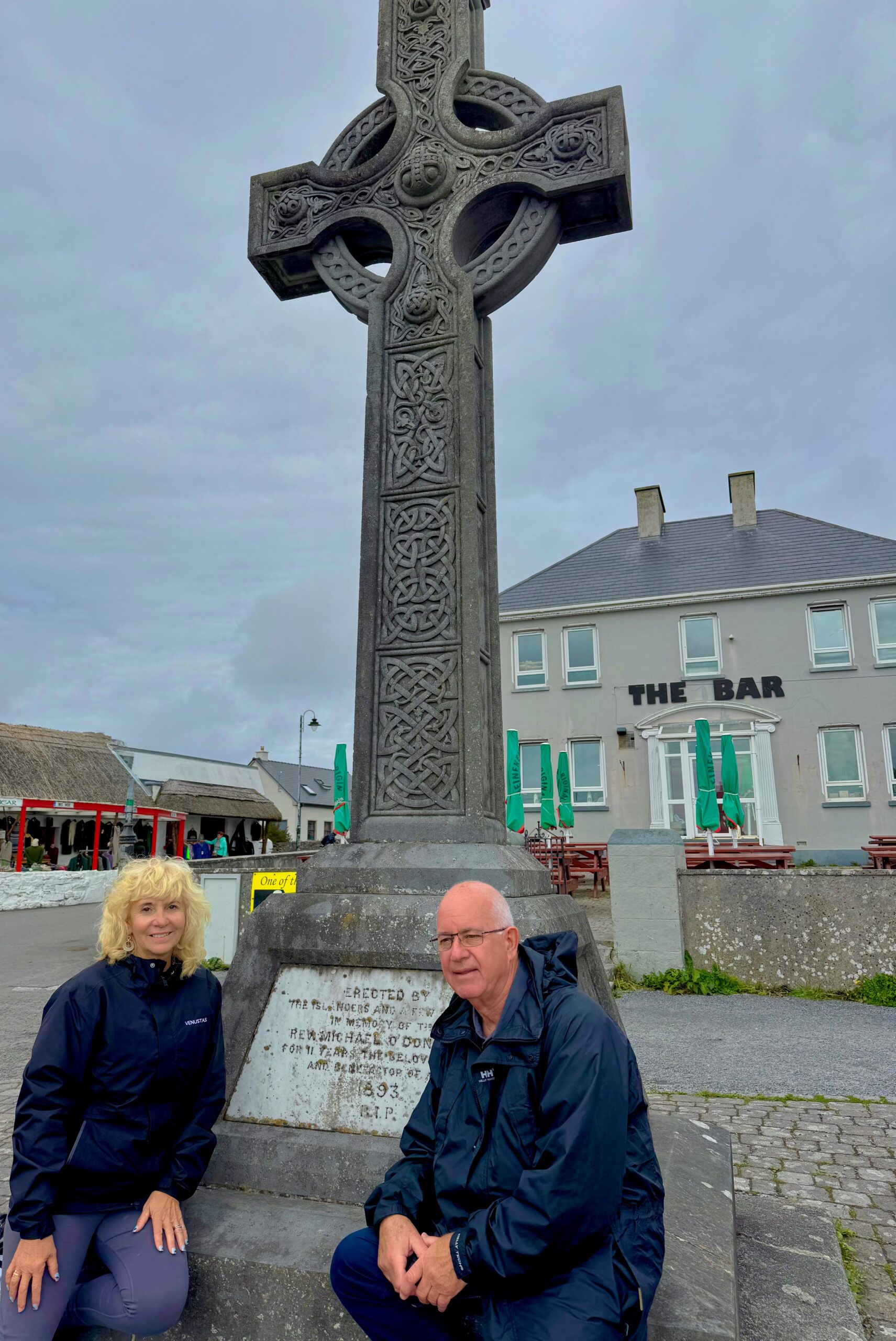
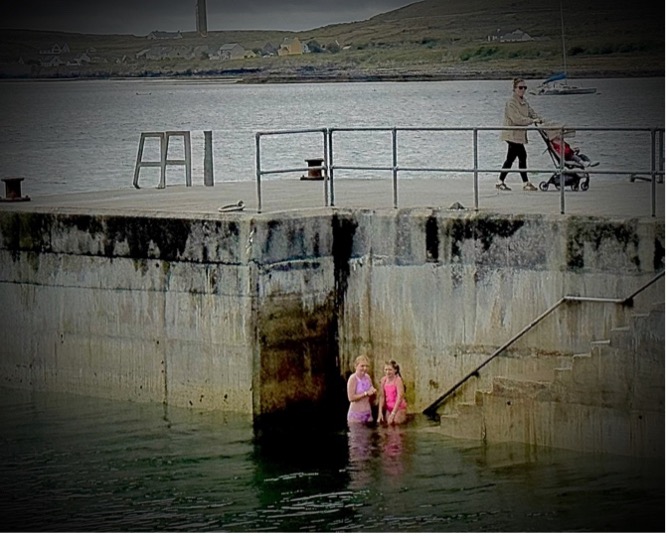
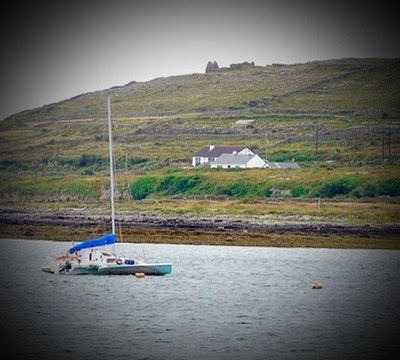
It is a popular place for boating and swimming even though it is cold.
Journey Across Inis Mor
After spending a little time in Kilronan, we climbed into a van with a local driver for our journey across the island toward Dún Aonghasa. The drive itself turned out to be one of the most interesting parts of the day.
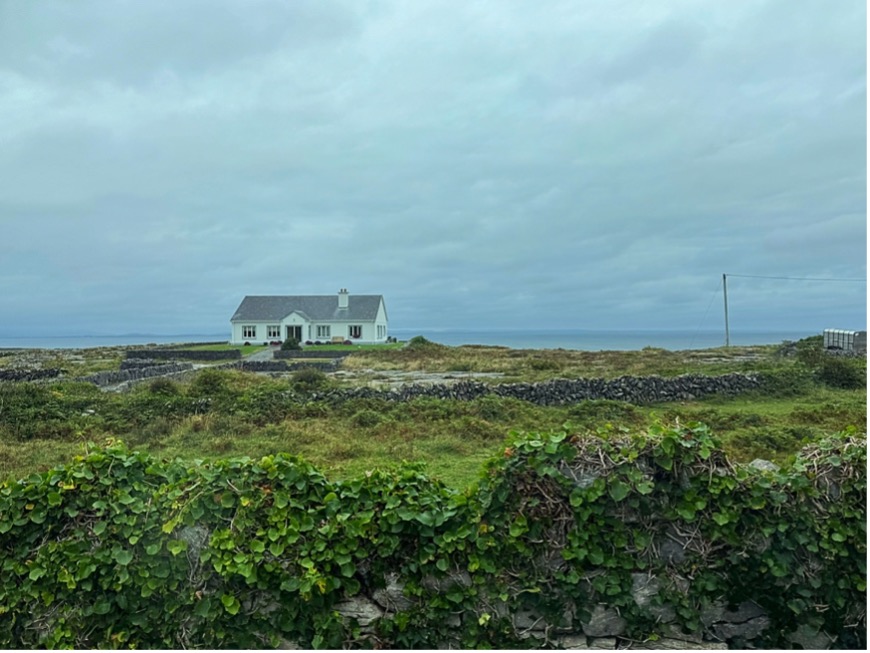
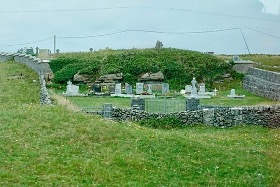
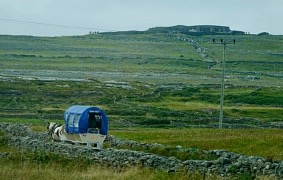
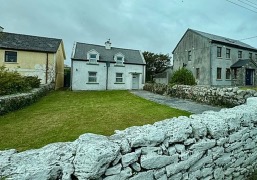
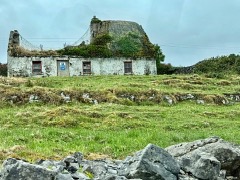
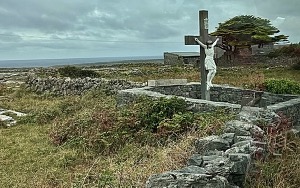
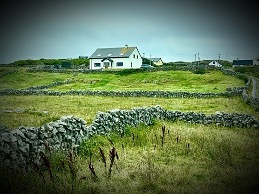
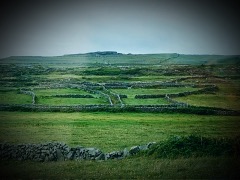
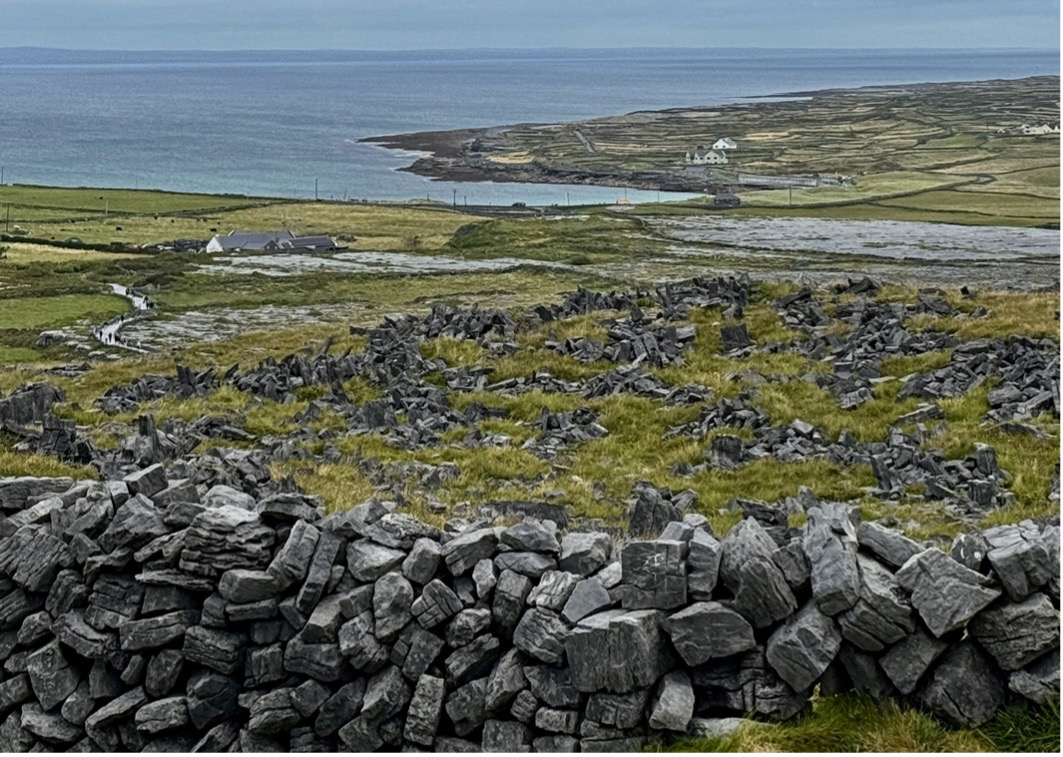
As we traveled along the narrow roads, we passed small homes, old stone walls, fields, churches, and stretches of rugged landscape that seemed almost untouched by time. Our driver grew up on the island and shared wonderful stories about what it was like to live there. He described a quieter and simpler way of life, where the community is small and people know one another. Listening to him while looking out at the landscape gave us a much better sense of Inis Mór than we would have gotten simply traveling from one attraction to another.
The landscape also helped explain why the Aran Islands have fascinated visitors for so long. In 1934, filmmaker Robert Flaherty released Man of Aran, which was filmed on Inis Mór and portrayed the difficult life of islanders living on the rocky land and along the Atlantic. Although some scenes were dramatized, the film became famous for its images of island life and introduced the Aran Islands to a much wider audience.
As we continued toward the fort, we began to understand what makes Inis Mór so special. It wasn’t one particular sight, but the combination of stone walls, tiny roads, scattered homes, ancient ruins, and the Atlantic always somewhere in the distance. The island really did feel like another world.
Dun Aonghasa: The Fort
A Little Background
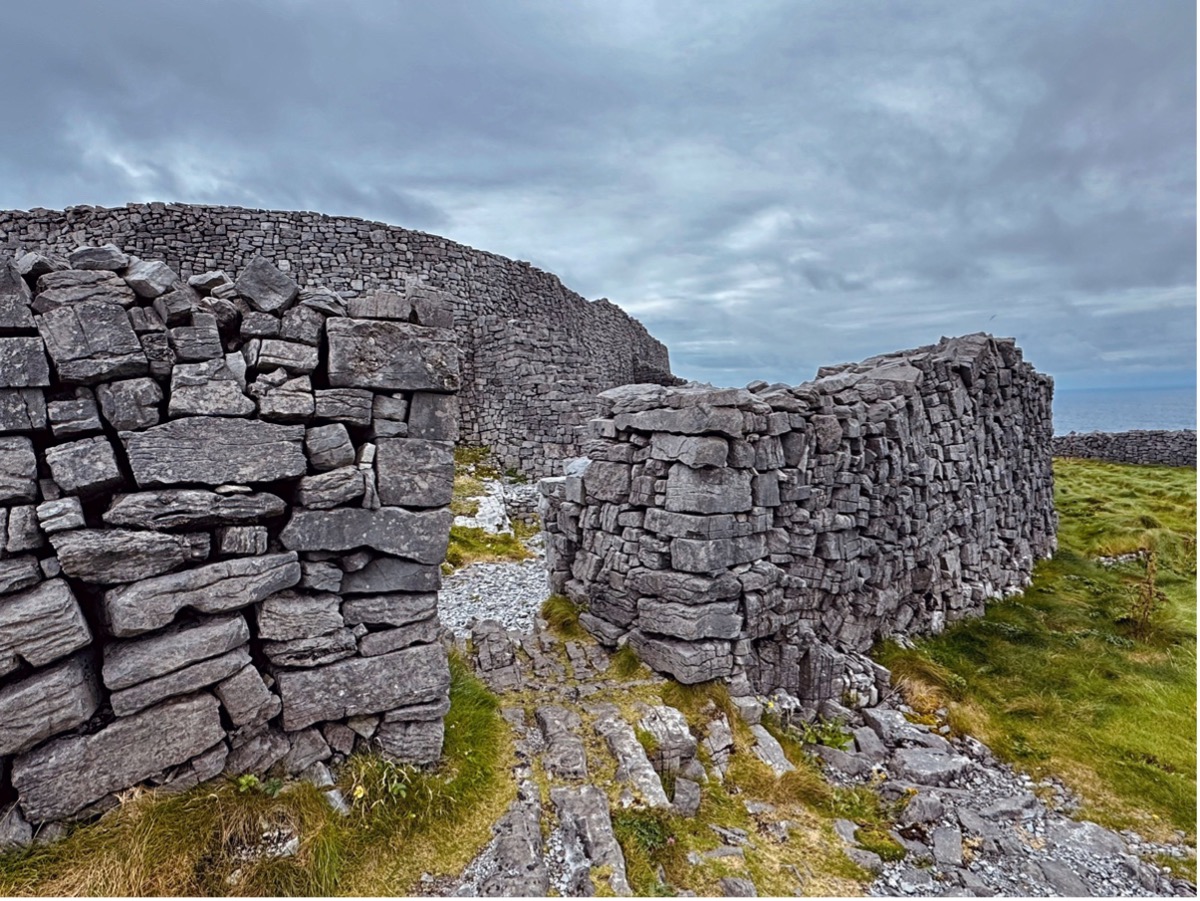
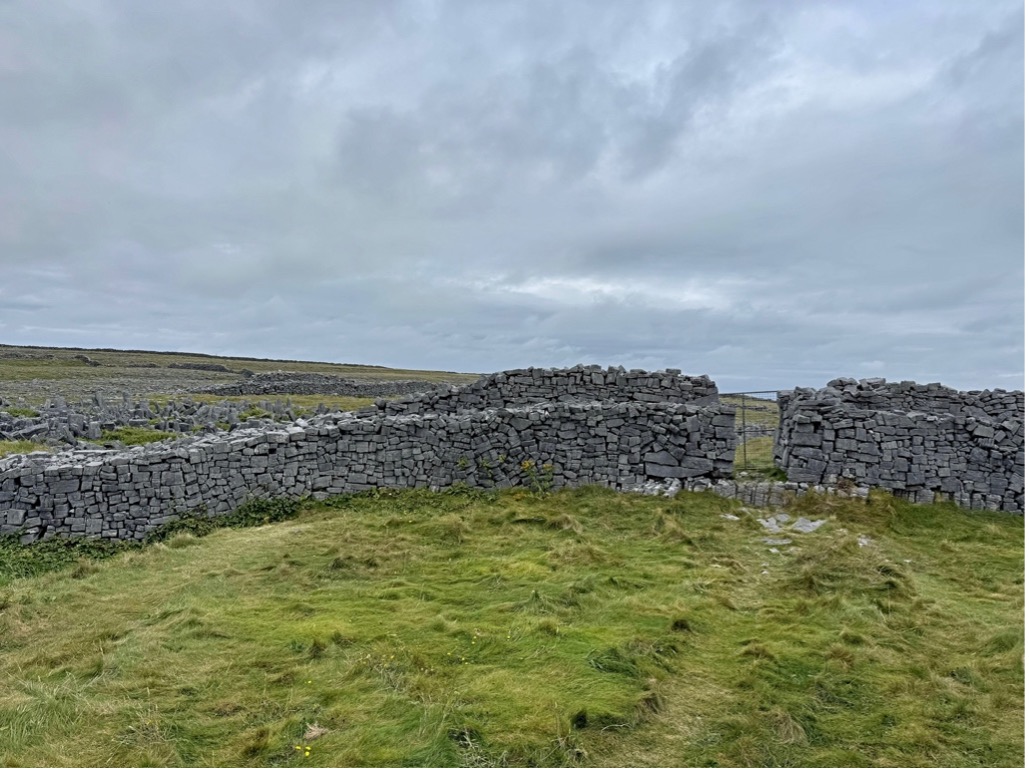
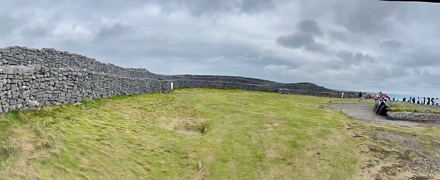
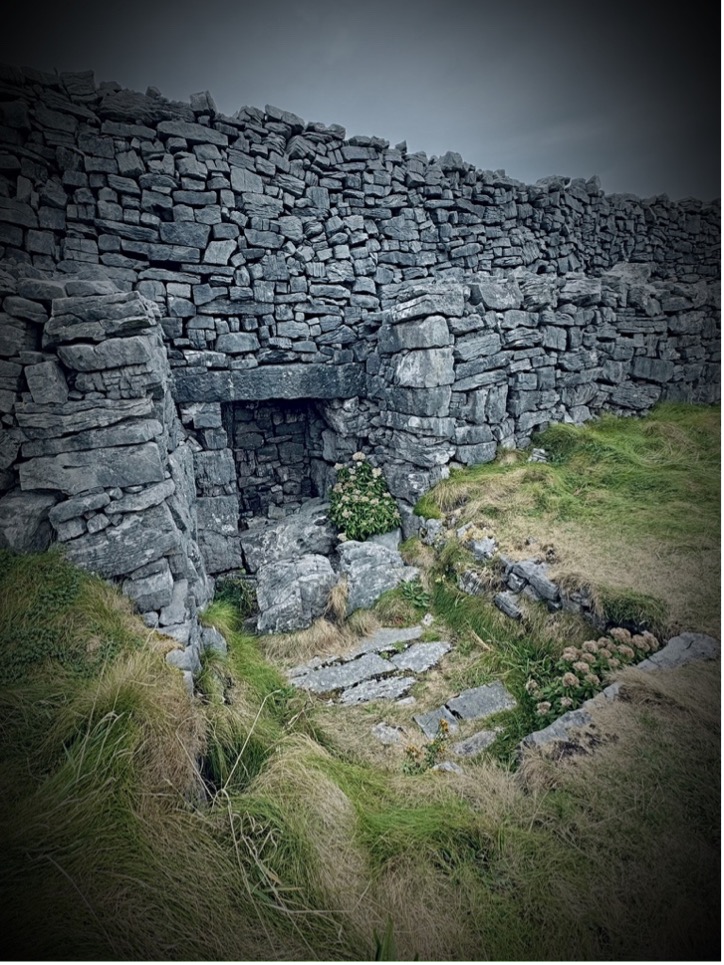
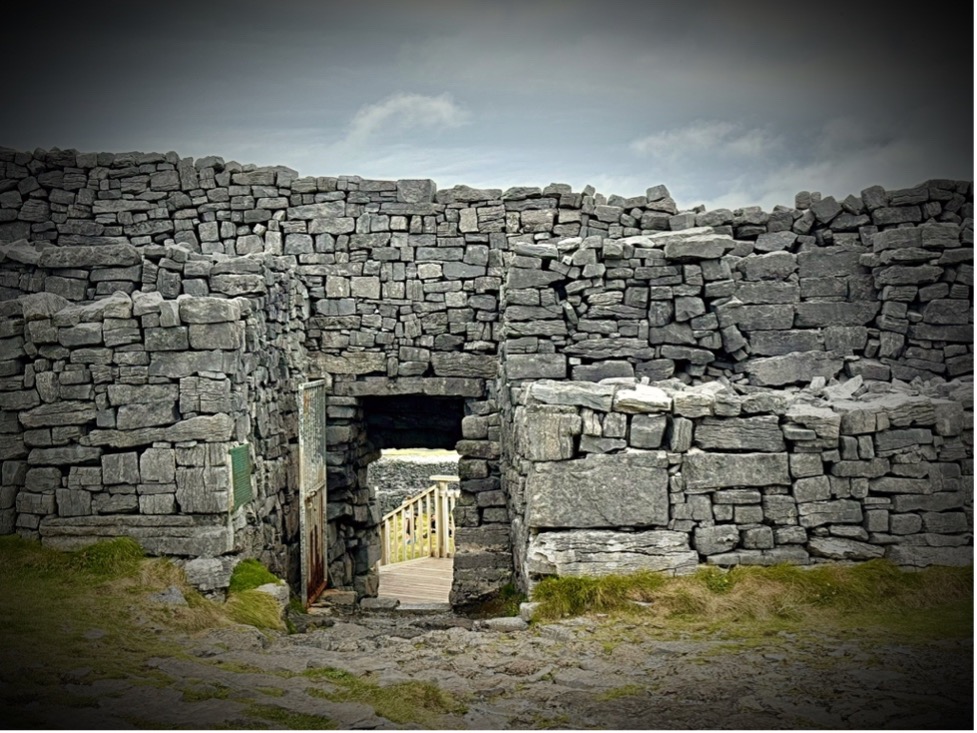
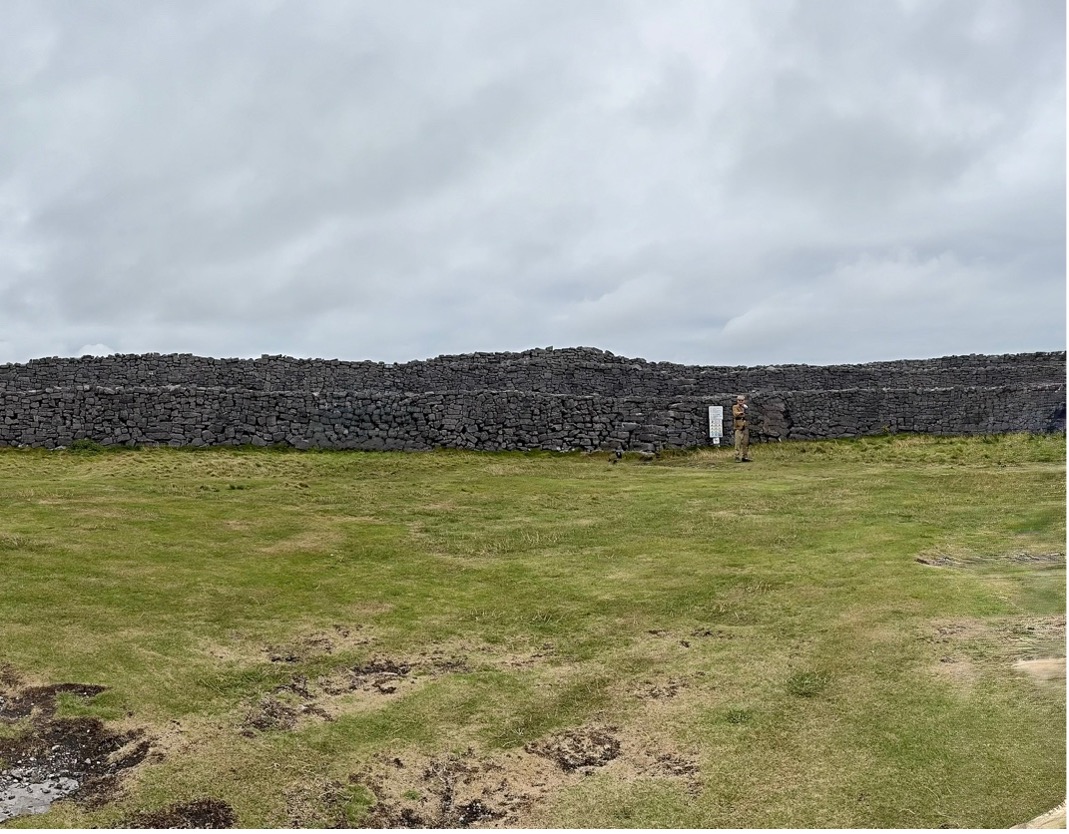
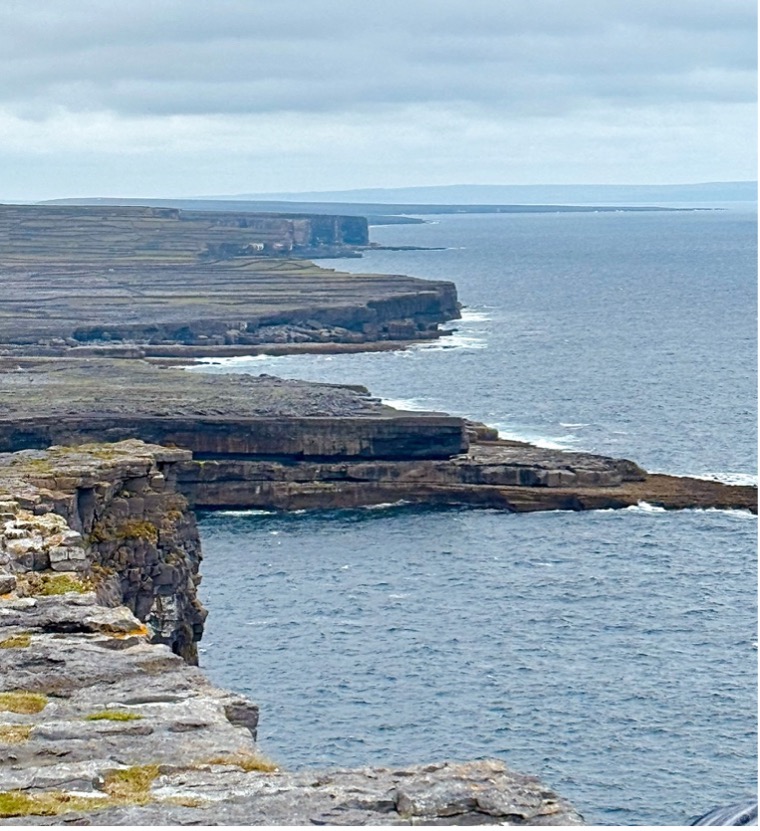
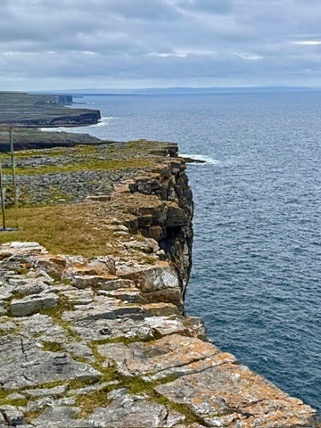
Dún Aonghasa is the most famous prehistoric fort on Inis Mór and one of the island’s most dramatic sights. Perched at the edge of a cliff high above the Atlantic Ocean, the semicircular stone fort is surrounded by massive dry-stone walls and overlooks some of the wildest scenery on the Aran Islands.
Archaeological evidence shows that people were living on this hilltop as early as around 1500 BC, with the first defensive walls constructed several centuries later. Over time, the site developed into an important fortified settlement. One of its most unusual defensive features is the chevaux-de-frise, a field of jagged upright stones placed outside the walls to make approaching the fort difficult.
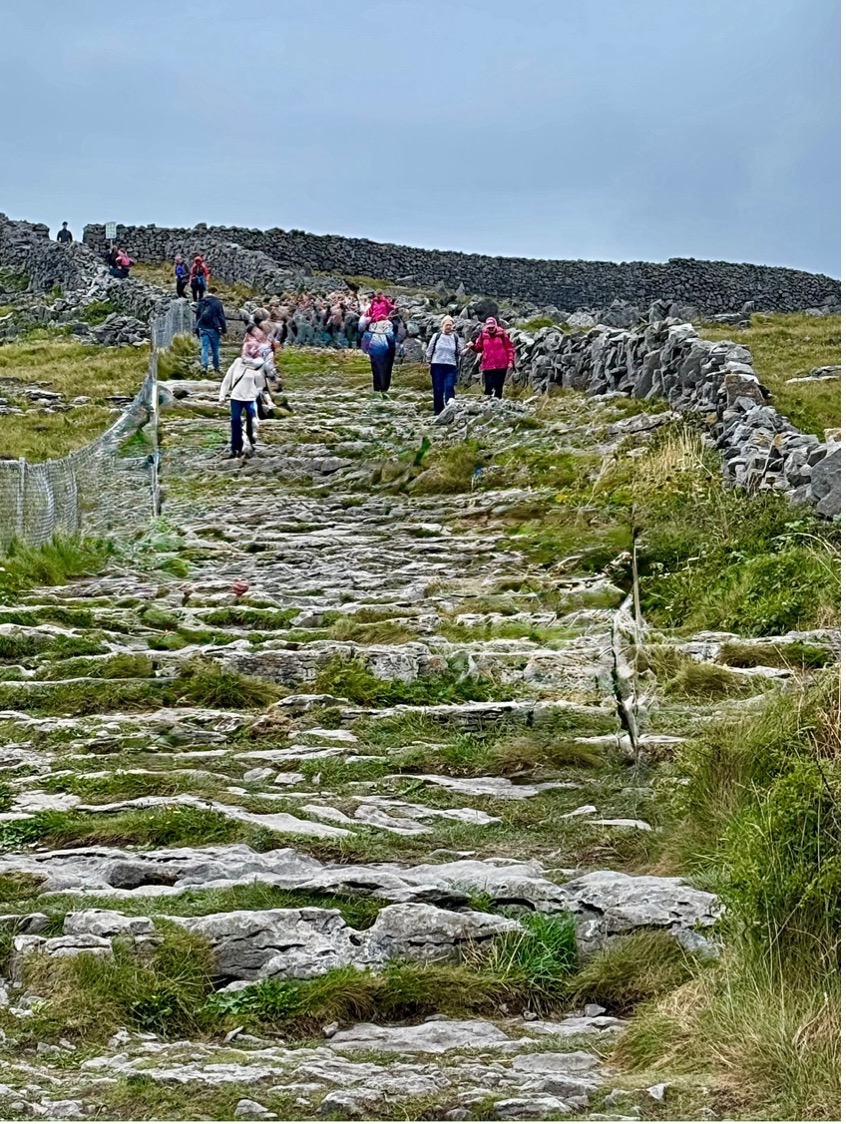
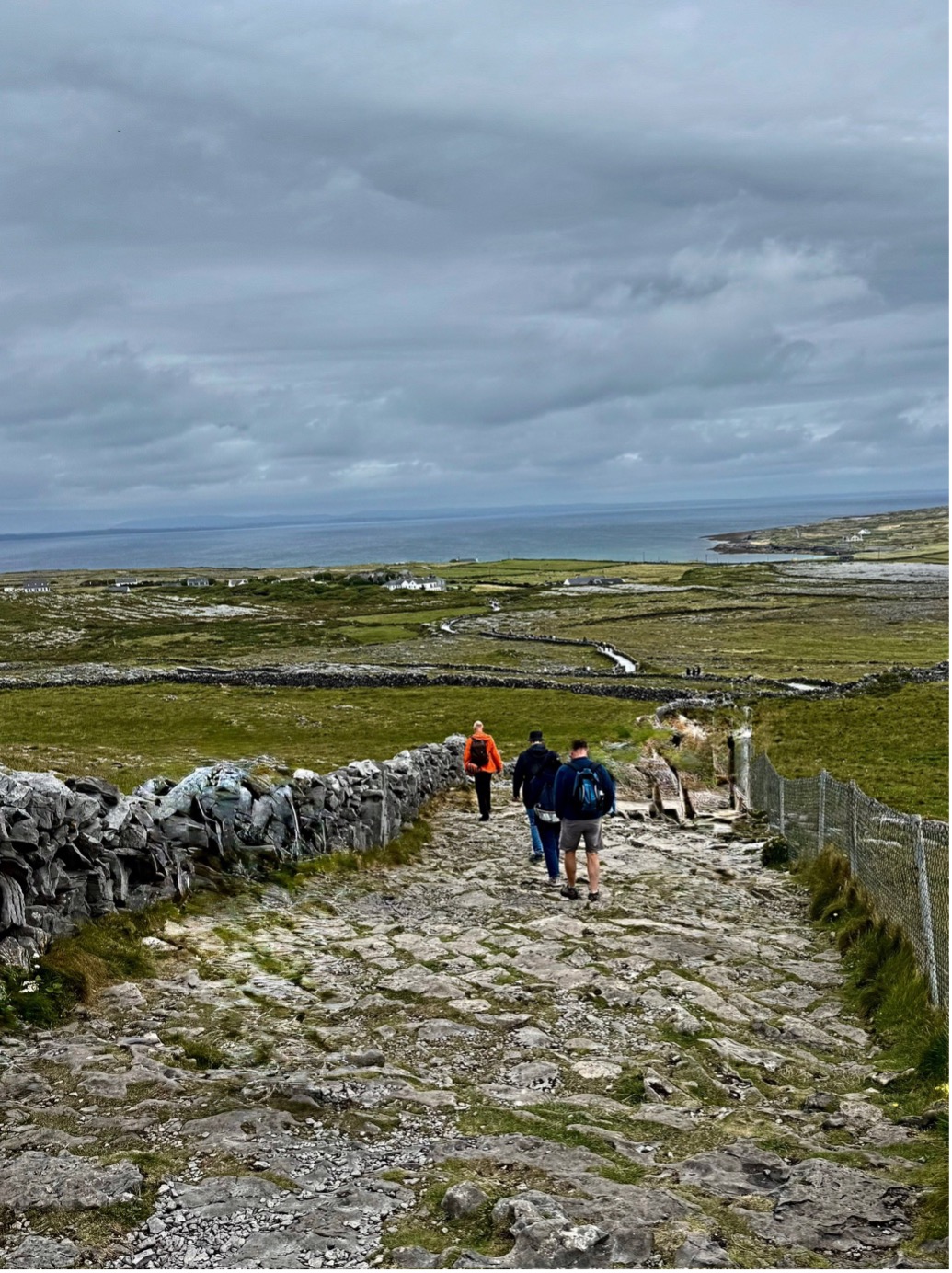
Reaching Dún Aonghasa requires some effort. The fort is about a 1-kilometer walk from the visitor center, and the path climbs steadily uphill. Parts of the route are rough and rocky, particularly near the top, so good walking shoes are important. Heritage Ireland classifies access to the site as challenging and notes that the walk includes uneven terrain.
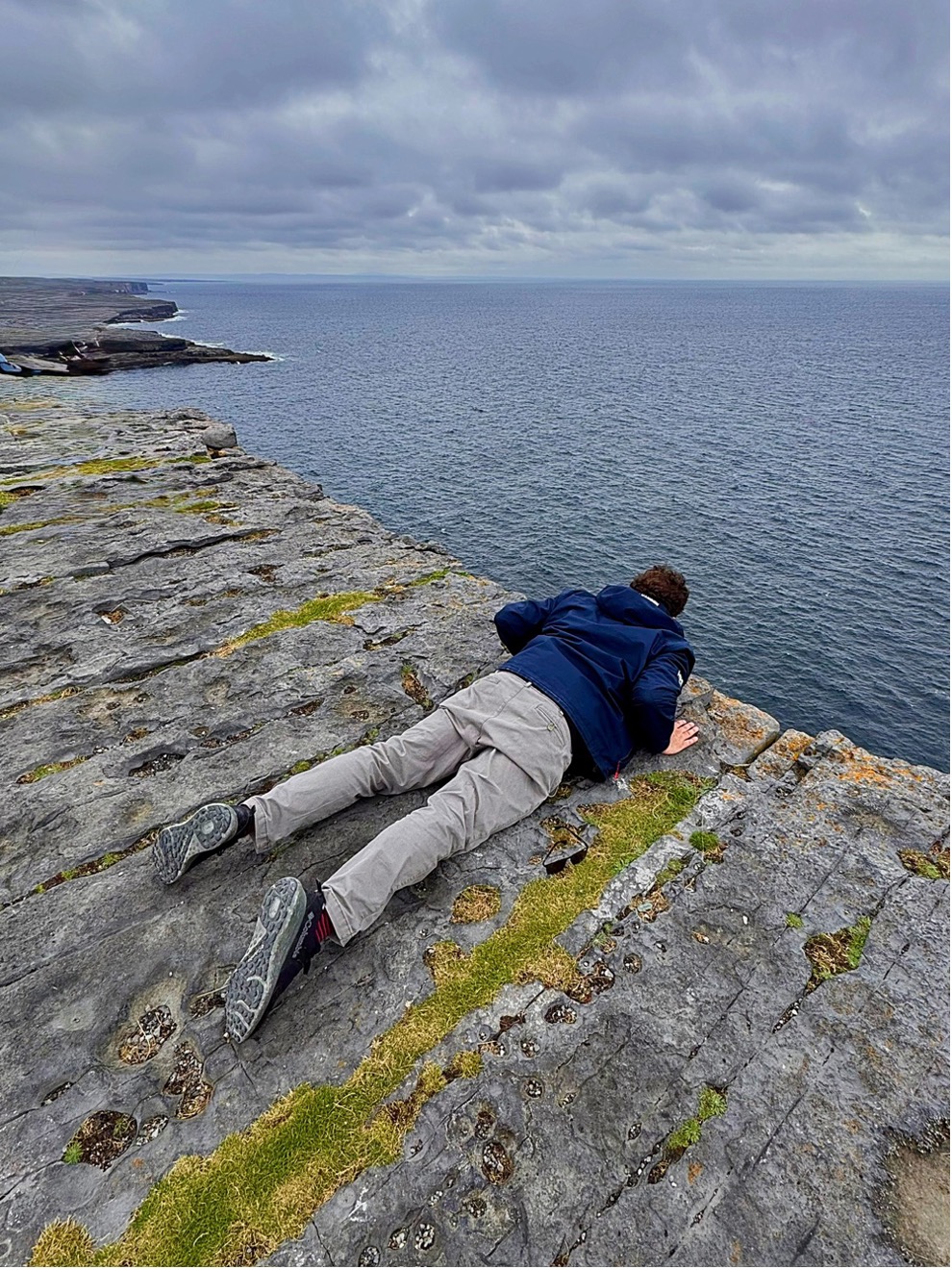
Visitors with significant mobility or walking limitations should be aware that reaching the fort may be difficult or, for some, not practical. There is also no fence or barrier along the cliff edge once you reach the top.
Our Experience
After our short tour of the island, we arrived at the small village at the base of the climb to Dún Aonghasa. The area had a couple of places to eat, along with some lovely shops selling local crafts. There were also horse-drawn carriages available for rides around the area.
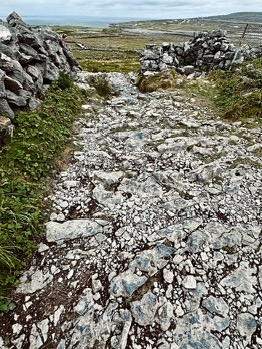
We started our climb on a paved path, but before long the trail became rough and unpaved. The final stretch was the most difficult, with a rocky climb leading up toward the fort. We took our time and stopped several times along the way.
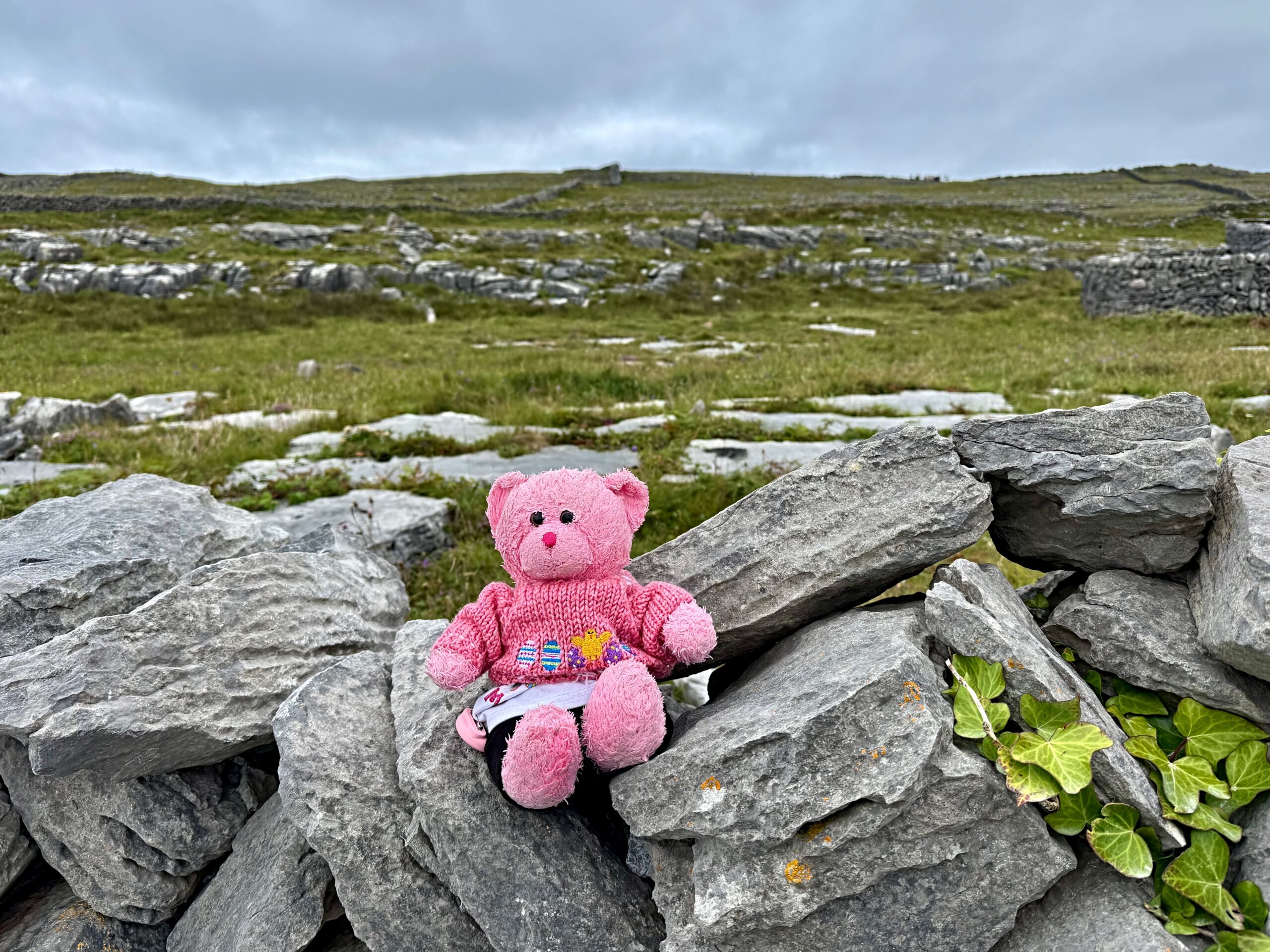
We had also brought along a painted shell with a message from a local Girl Scout troop in New Jersey. As part of one of their activities, the girls leave shells for people to find and carry to new places. Pink Bear was very happy to tuck the shell behind one of the stones along the trail. Interestingly, when we looked for it on our way back down, it was already gone. Someone had picked it up, which was exactly the idea—the shell was continuing its journey somewhere else in the world.
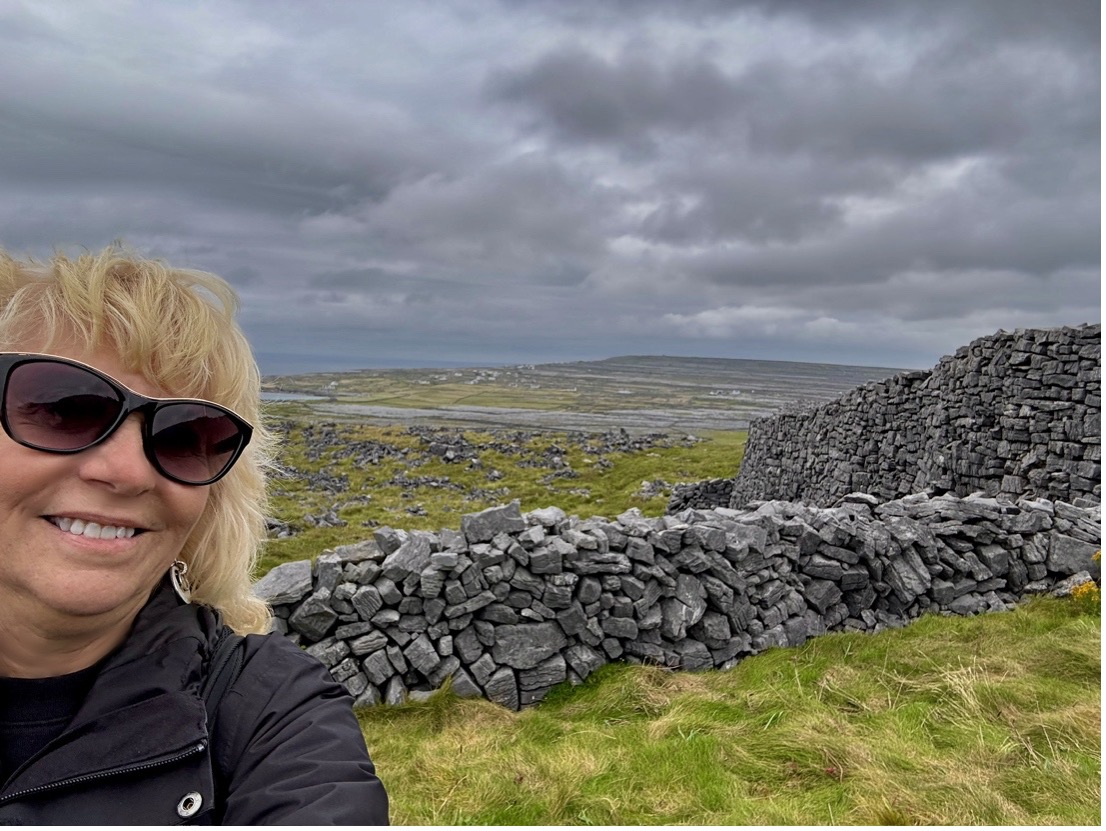
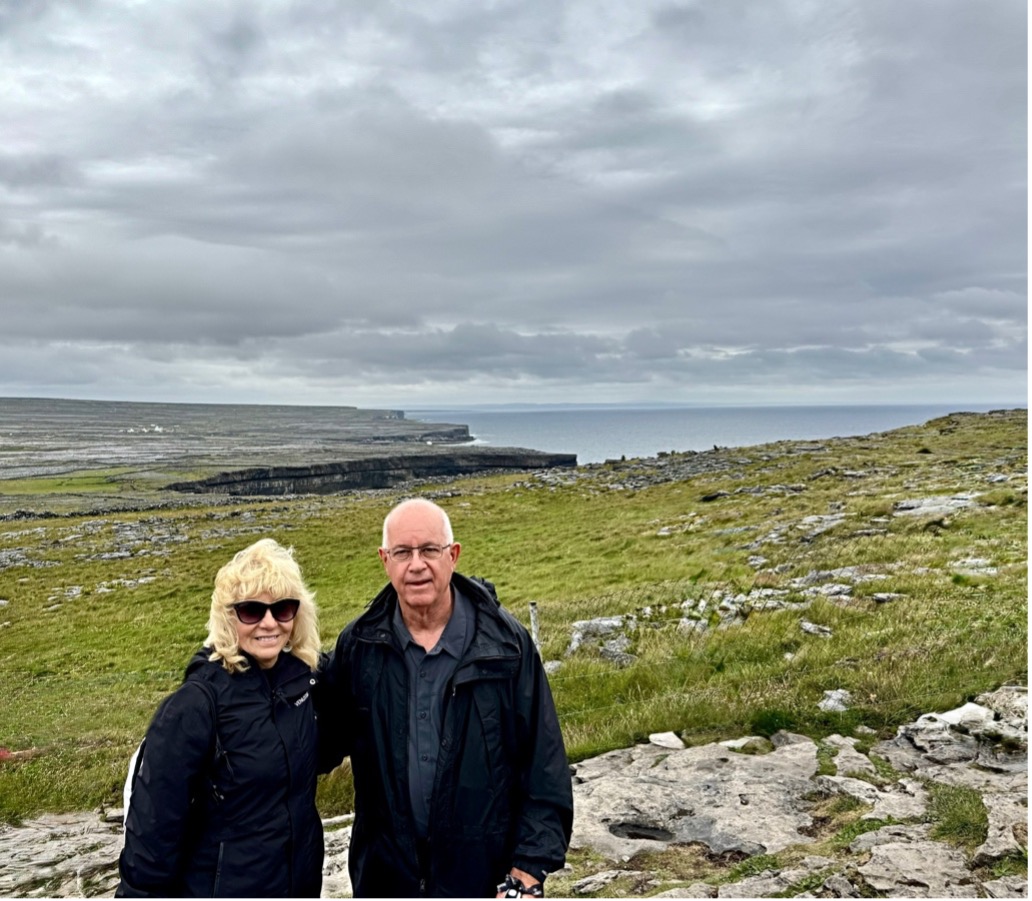
Arriving at Dún Aonghasa felt almost surreal. Standing among the ancient stone walls, with the wild Atlantic stretching out beyond the cliffs, it truly felt as though we had stepped back in time.
Our guide, Derek, explained some of the history of the fort as we walked around and explored the site. The views were spectacular and, for us, every bit worth the climb.
We spent about half an hour at the fort before beginning the walk back down.
The Approach
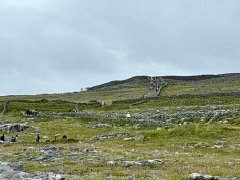
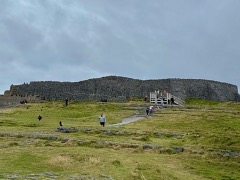
Pink Bear was excited to help Tom leave a shell!
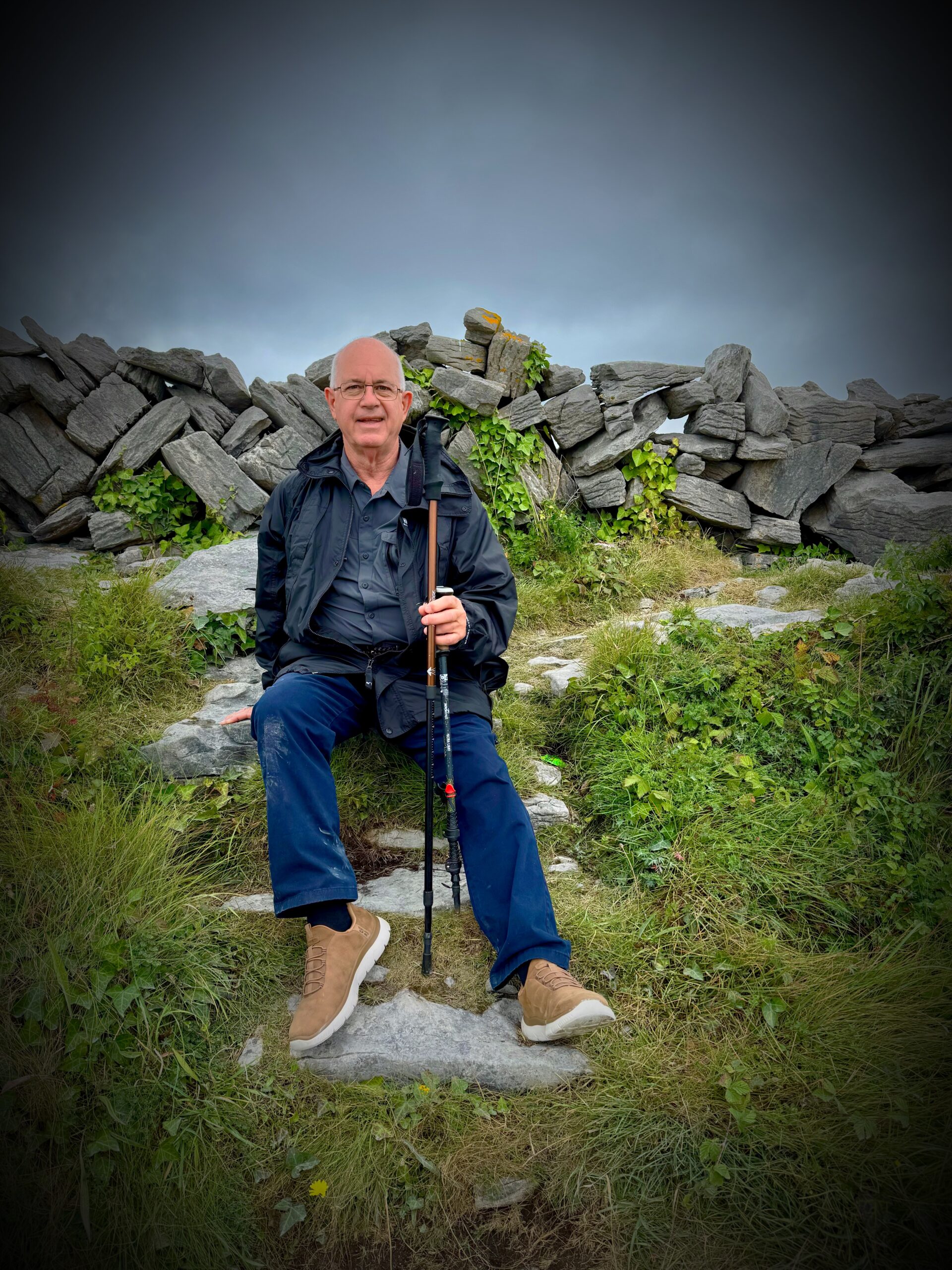
The Climb: Starting Out on the Paved Trail.
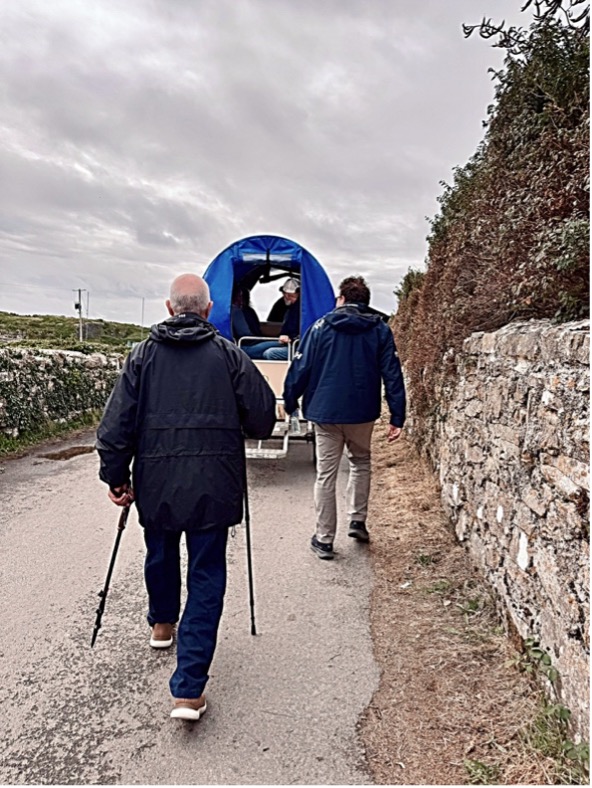
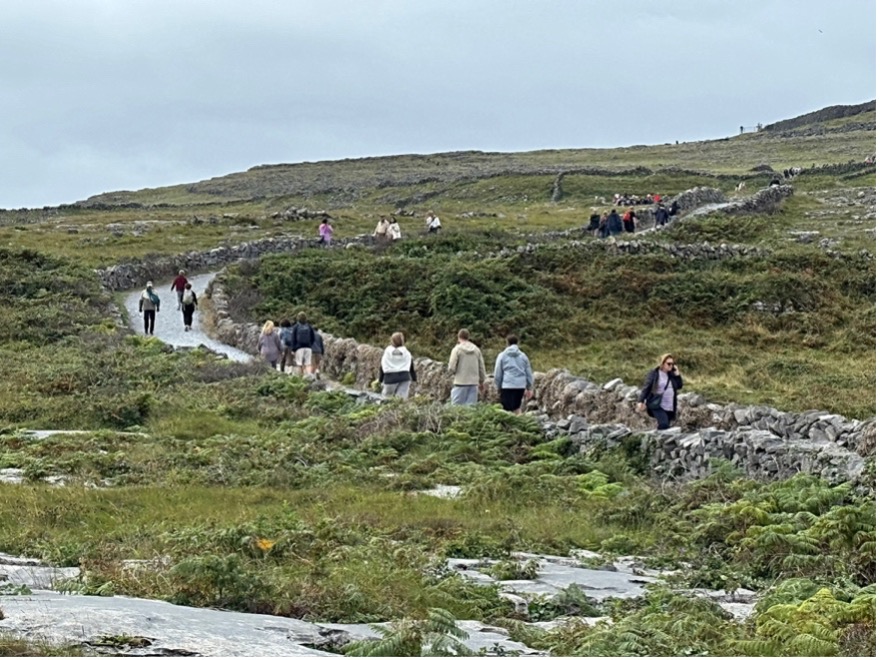
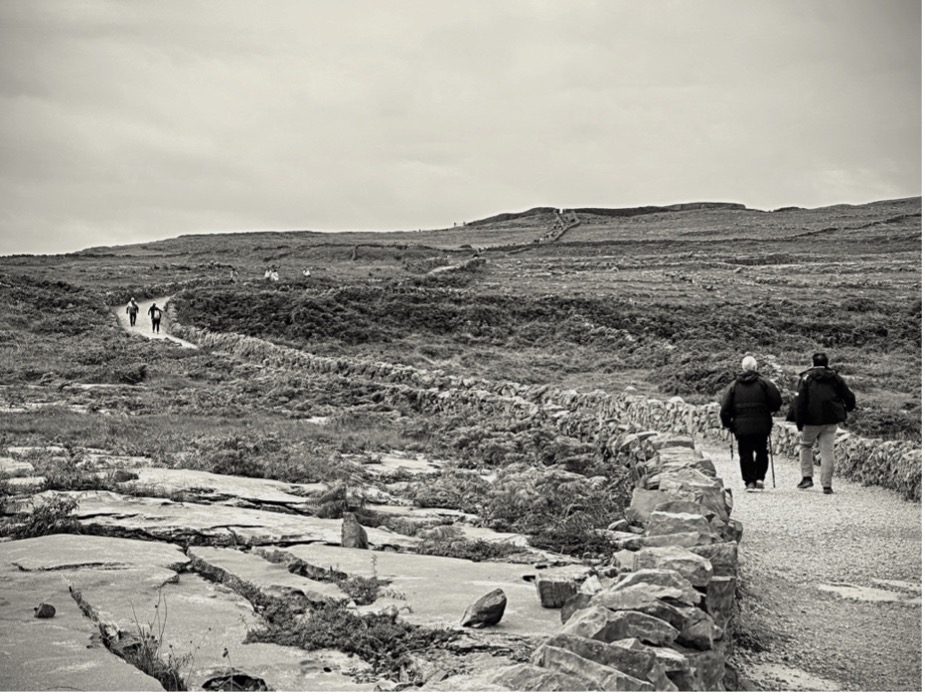
The Trail Becomes Rougher.
The Fort
View at the Top
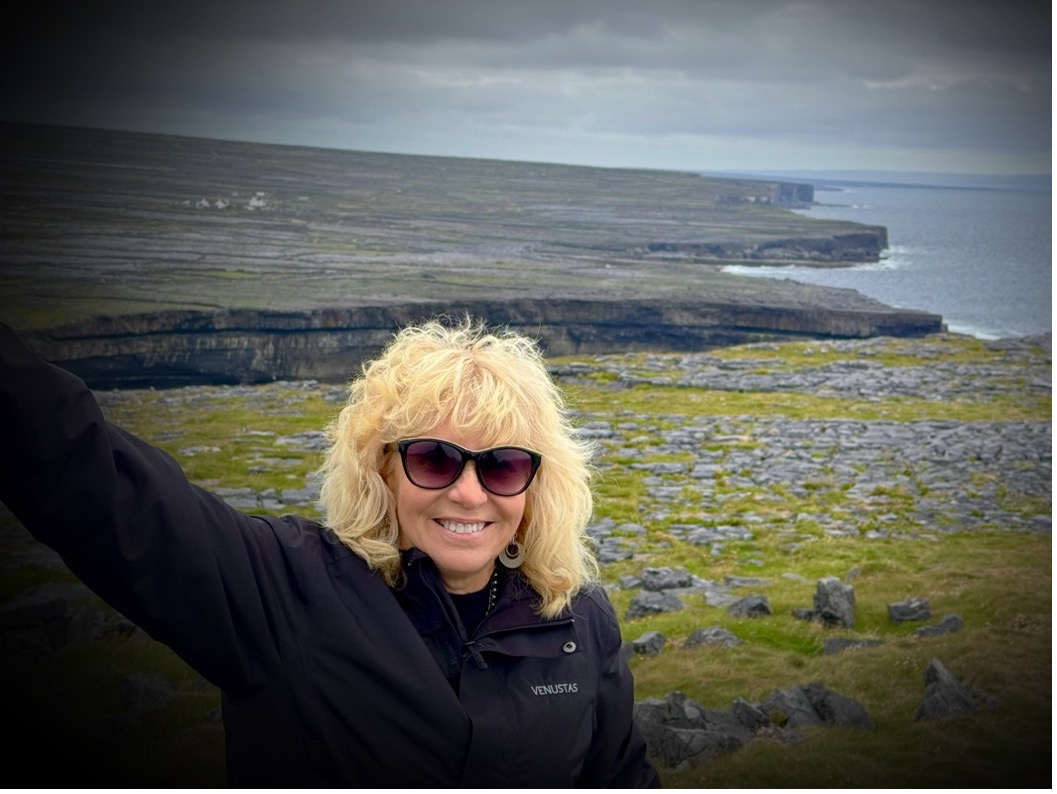
Derek explaining how to look over the cliff!
The Seven Churches
A Little Background
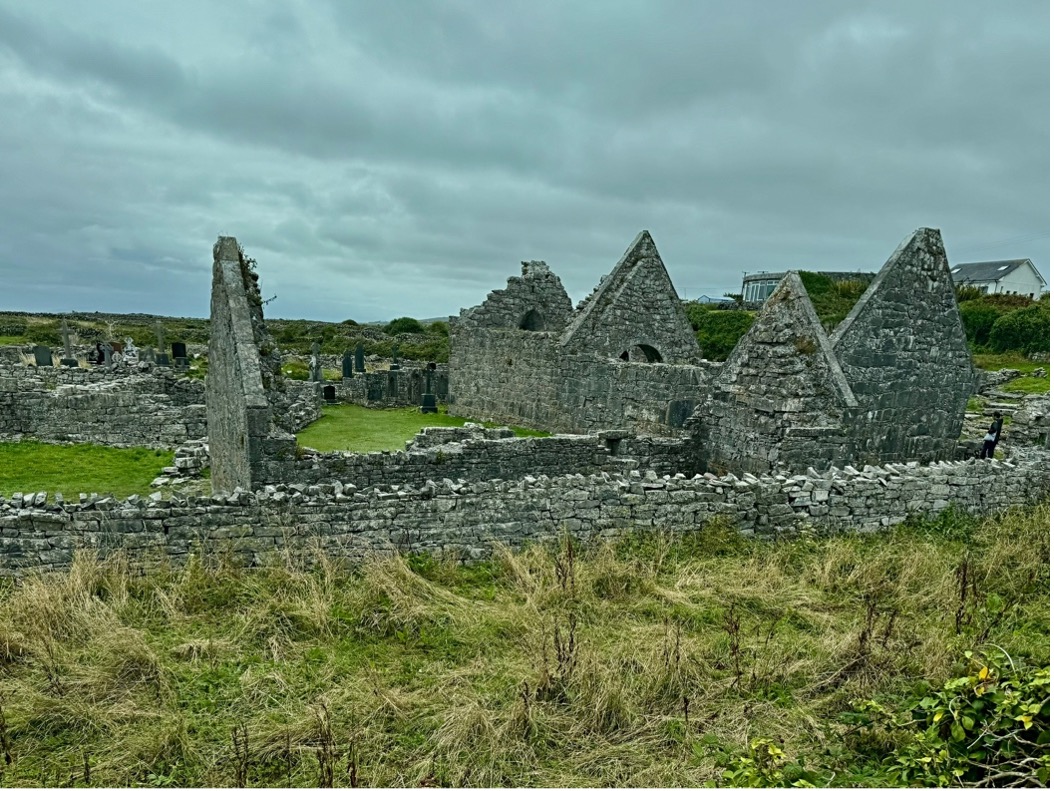
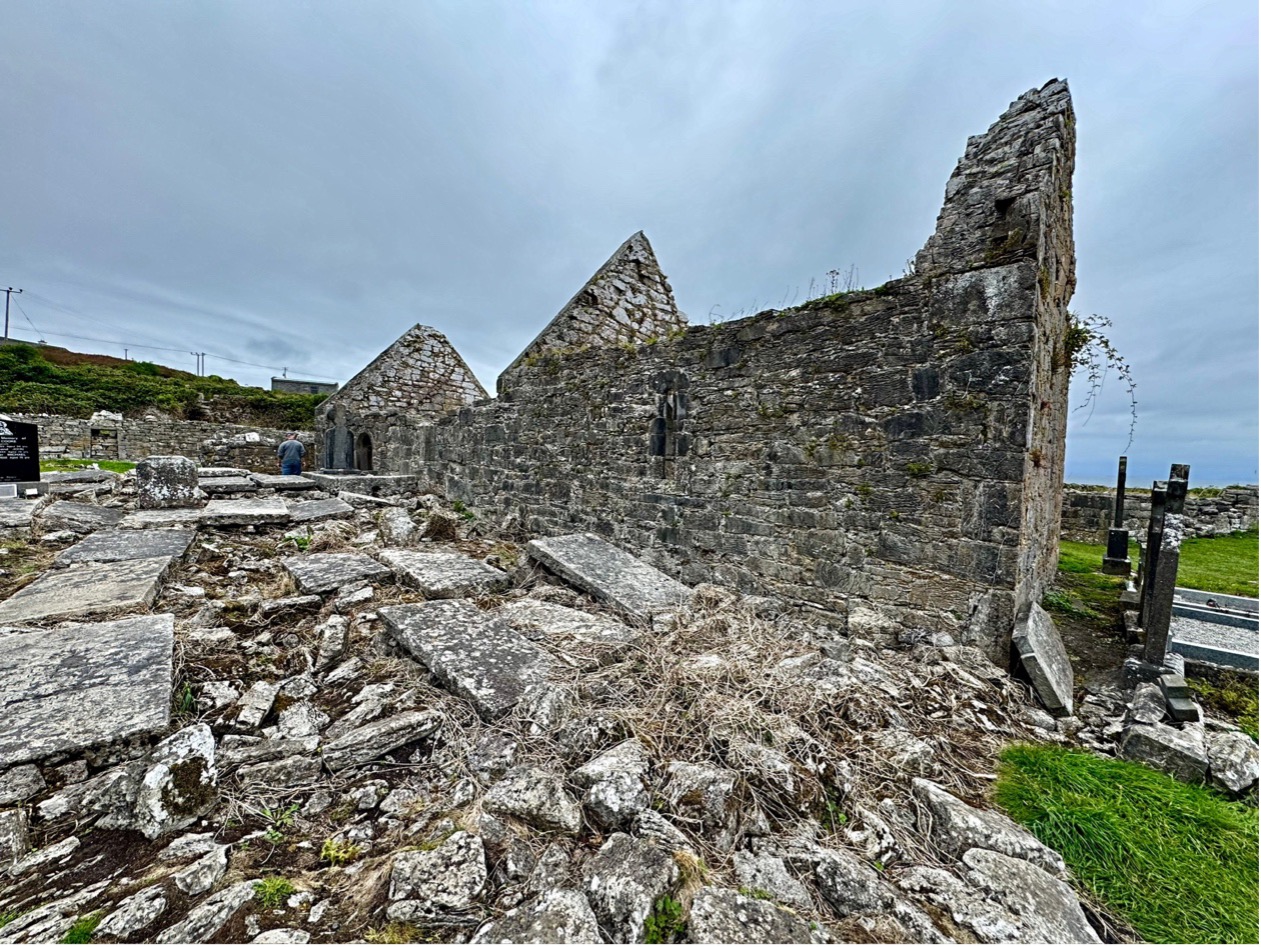
Despite its name, the Seven Churches, or Na Seacht dTeampaill, does not actually contain seven churches. Today, the site includes the ruins of two churches along with the remains of other religious and domestic buildings. It was once one of the most important monastic settlements and pilgrimage sites on the west coast of Ireland.
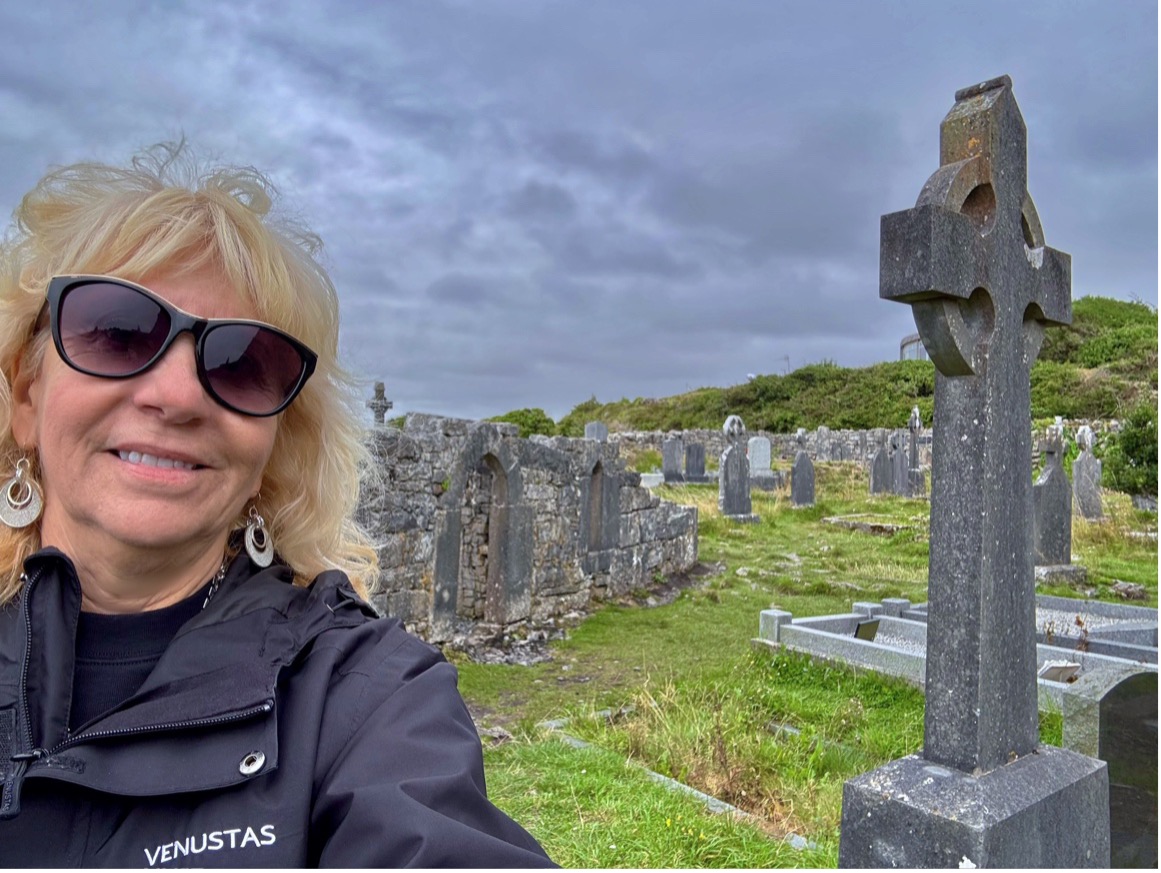
The largest building is Teampall Bhreacáin, or St. Brecan’s Church, parts of which date back to the early medieval period and were expanded over several centuries. The site also contains ancient graves, carved stones and crosses, reminders of the religious importance of the Aran Islands during the Middle Ages.
Our Experience
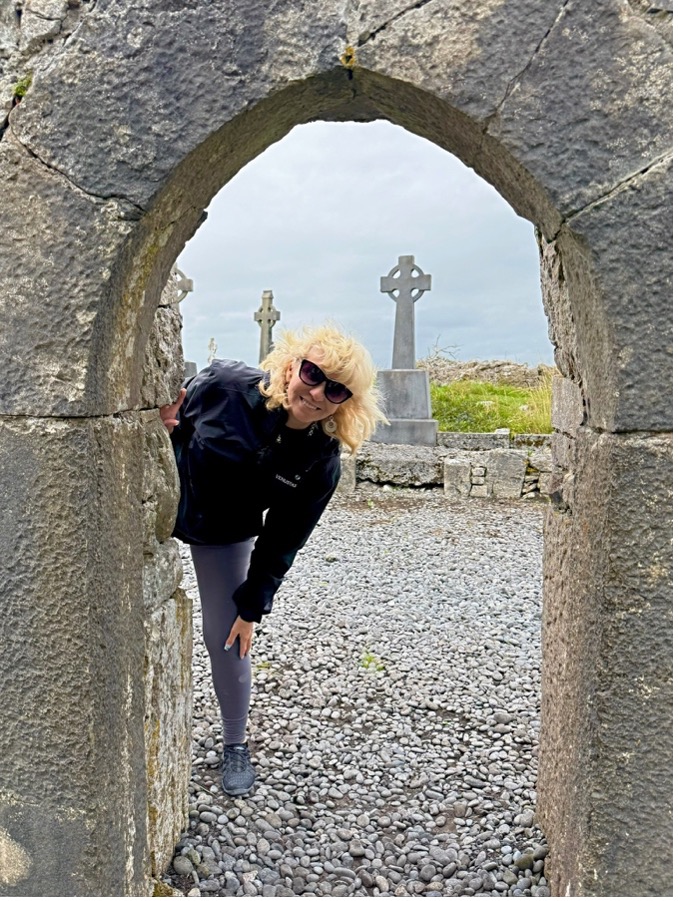
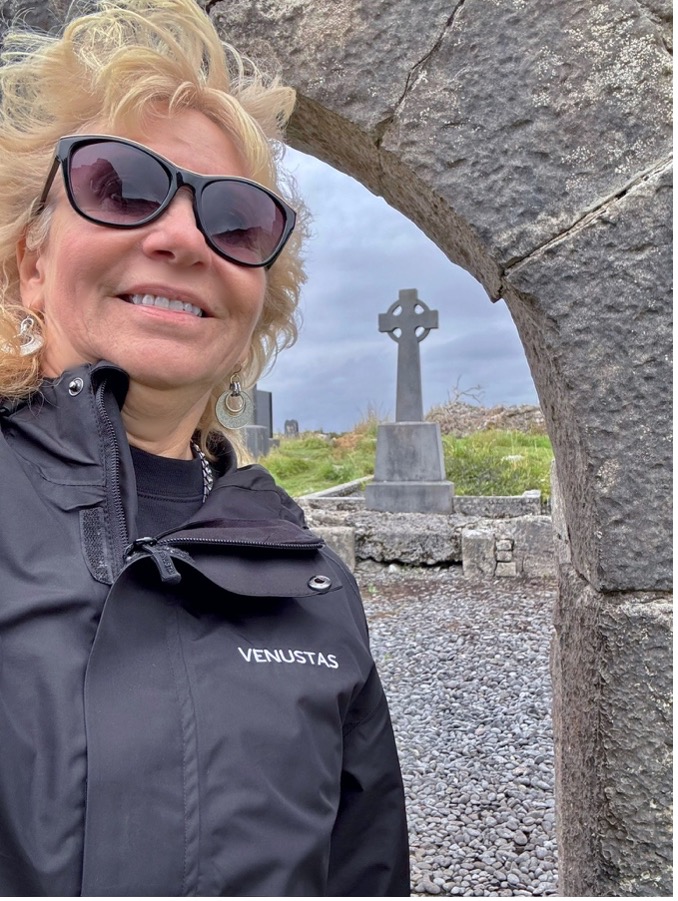
On our way back from Dún Aonghasa, our guide stopped at the Seven Churches. It was a brief but interesting stop. We walked among the ruins for about 15 minutes, took a few pictures, and had enough time to get a good feel for the site. Because it is fairly compact, 15 minutes was enough for us.
Pink Bear Retirement Vacation Rating
🧸
⭐️ Ferry to the Islands – 5/5. An affordable way to get to the islands. You can also take a short plane ride, but the ferry is less costly if you are not in a hurry
⭐️ Inis Mor – 5/5 A magnificent, wild place that showcases the rugged beauty of Ireland. In addition to its historic sites and dramatic scenery, Kilronan has shops and restaurants, and there are plenty of opportunities to explore the island on foot.
⭐️ Dun Aonghasa: The Fort – 5/5 An unforgettable experience for visitors who are comfortable with a fairly strenuous walk over uneven terrain. The climb may not be practical for those with significant mobility or walking limitations
Final Thoughts
The Aran Islands gave us a very different experience from the rest of our Ireland journey. Inis Mór felt quieter, wilder, and somehow more removed from the modern world. From the moment we left the mainland, there was a sense that we were heading somewhere special.
Some of our favorite moments were not necessarily the major sights. Riding across the island with a local driver, listening to stories about life there, and passing the endless stone walls and scattered homes gave us a real sense of the island and its people. The landscape felt rugged and simple, with the Atlantic never very far away.
Dún Aonghasa was the highlight of the day. The climb was challenging but reaching the ancient fort and looking out over the cliffs and Atlantic was unforgettable. Standing there among the stone walls really did feel like stepping back in time.
For us, the Aran Islands were absolutely worth the journey from Galway. Inis Mór was not just another sightseeing stop—it gave us a glimpse of a very different side of Ireland. If you have the time, enjoy dramatic scenery, and want to experience somewhere that feels truly unique, I would add the Aran Islands to an Ireland itinerary.
Tips
- The ferry is one of the most economical ways to reach the Aran Islands. There are two main departure points from the Galway area. Rossaveel is farther from Galway City but closer to Inis Mór, resulting in a shorter ferry ride.
- Wear comfortable, sturdy walking shoes if you plan to make the climb to Dún Aonghasa.
- The trail becomes very uneven and rocky in places. A walking stick or trekking poles may be helpful, particularly on the upper part of the climb.
- We were very happy with our private guide, Derek from ToursByLocals, and would recommend him without hesitation.
- Be prepared for changing weather. Showers are always possible, so a raincoat and layers are advisable, particularly along Ireland’s west coast.
- Leave a little time for shopping. Kilronan and the area near Dún Aonghasa have shops selling wool items and locally made crafts, making the island a good place to pick up something to bring home.