O’Grady Family’s Day Trip from Dublin to Northern Ireland Without a Car

IN THIS BLOG

  • Our Day Trip to Northern Ireland: Belfast, Carrick-a-Rede, Giant’s Causeway, Dunluce Castle
    • Transportation: Logistics of a Day Trip from Dublin Without a Car
    • Overview
  • Belfast
    • A Little History
    • Our Experience
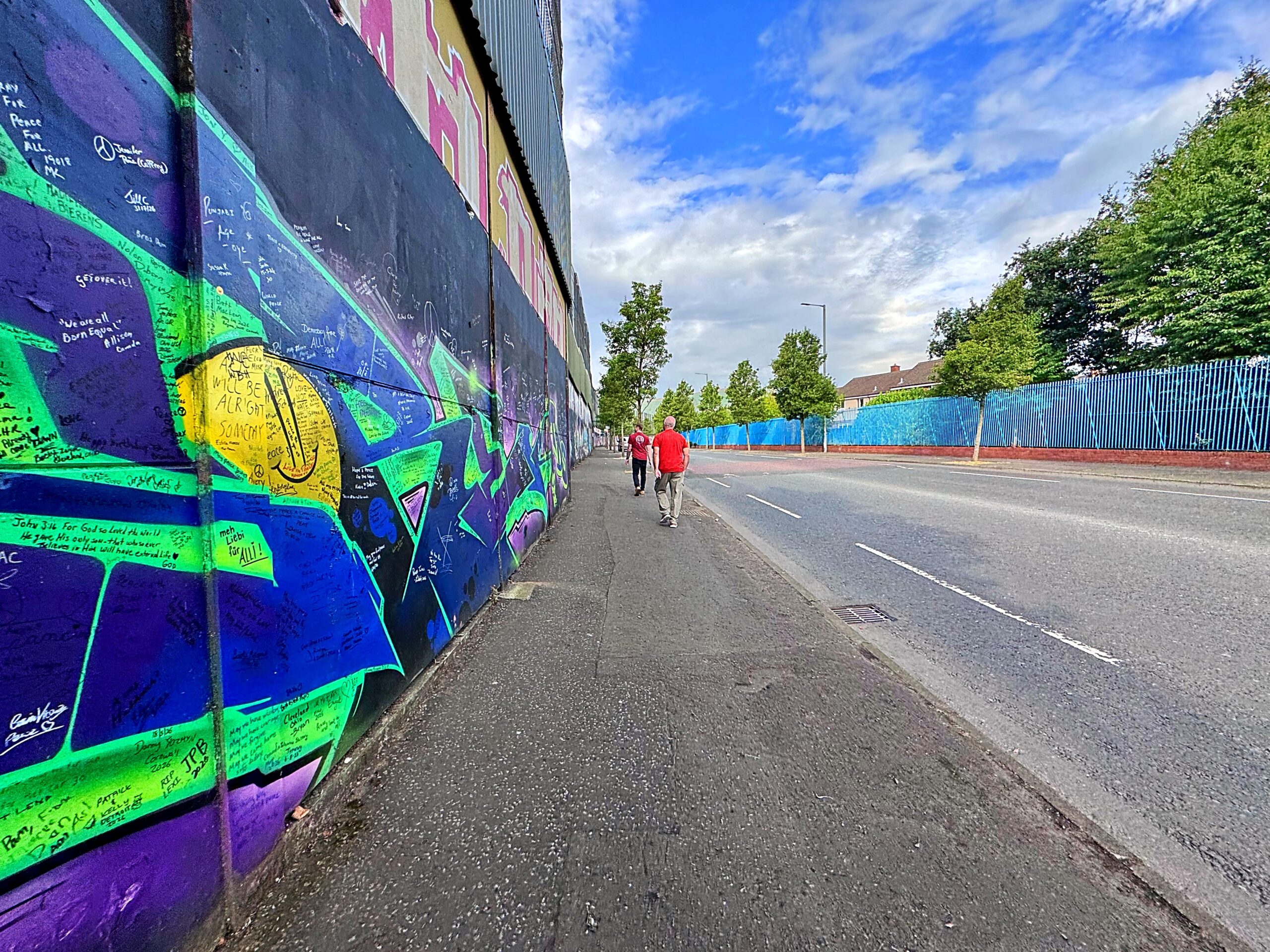
    • The Peace Wall
  • Carrick-a-Rede
    • A Little Background
    • Exploring Carrick-a-Rede
    • Our Experience
  • Giant’s Causeway
    • A Little History
    • Exploring the Giant’s Causeway
    • Our Experience
  • Dunluce Castle
    • A Little Background
    • Exploring the Castle
    • Our Experience
  • Pink Bear Retirement Vacation Rating
  • Final Thoughts
  • Tips

Our Day Trip to Northern Ireland: Belfast, Carrick-a-Rede, Giant’s Causeway, Dunluce Castle

Transportation:  Logistics of a Day Trip from Dublin Without a Car

With a surname like O’Grady, it is not surprising that Ireland was on our bucket list. The funny thing is that we are mostly Italian. Our surname comes from Tom’s grandfather, who was Irish. But we love being Irish, even if just in part. We were all so excited to finally be visiting the birthplace of our ancestors, even Pink Bear. This day trip to Northern Ireland is part of our larger family journey through Ireland. You can read about the entire journey on our Ireland Page of Pink Bear’s Retirement Adventures.

One of the biggest challenges we faced planning our Ireland journey was transportation. We wanted the freedom to see more than the major cities, but we had no desire to rent a car and tackle unfamiliar roads ourselves. At the same time, spending the day on a large tour bus with dozens of other people wasn’t exactly our idea of independent travel.

Northern Ireland seemed like an especially difficult place to visit from Dublin without a car — until we discovered another option. We hired a private guide for the day and were able to visit some of Northern Ireland’s most memorable sights at our own pace, without driving, without a big bus, and without spending a fortune.

Of course, private tours can be expensive, so throughout our travels we try to find guides who offer the personal experience we want at a reasonable price. If you have been following our adventures, you know we like Tours by Locals. After reviewing the available tours, we decided to book the same guide for all of our day trips out of Dublin. We chose Brian Hennessy of Dubh Linn Tours. Brian was an excellent guide — very personable and knowledgeable, and he provided just the right amount of information throughout the day.

Overview

Our day trip from Dublin to Northern Ireland combined four very different experiences. It was a day filled with beautiful scenery and meaningful history. We began with a drive through Belfast and a brief but significant stop at the Peace Wall. From there, we continued to Carrick-a-Rede to cross the famous rope bridge and take in the gorgeous coastal vistas, including a distant glimpse of Scotland. After traversing the bridge, we journeyed to the extraordinary landscape of Giant’s Causeway. Our final stop was the dramatic Dunluce Castle, perched high above the coast and filled with centuries of history.

Each stop felt completely different, which made the day especially enjoyable. Belfast was intense and emotional, Carrick-a-Rede was exciting and beautiful, Giant’s Causeway felt almost otherworldly, and Dunluce Castle provided a wonderful historic finish to the day. Together, they made for an incredible introduction to Northern Ireland — a place with its own complicated history and identity yet still sharing so much of the beauty and character we experienced throughout the island of Ireland.

Belfast

A Little History

Belfast’s history is inseparable from the long and complicated relationship between Ireland and Great Britain. For centuries, Ireland was governed by Britain, and tensions grew between those who wanted Ireland to govern itself and those who wished to remain part of the United Kingdom. These divisions were particularly strong in the north, where a large Protestant and Unionist population had close ties to Britain.

In 1921, Ireland was partitioned. Most of the island later became the independent Republic of Ireland, while six northern counties remained part of the United Kingdom as Northern Ireland. Within Northern Ireland, many Protestants identified as British and supported remaining in the United Kingdom, while many Catholics identified as Irish and favored a united Ireland. Catholics also experienced discrimination in areas such as housing, employment and political representation.

By the late 1960s, growing civil rights protests and longstanding tensions erupted into a violent period known as The Troubles. For roughly three decades, Northern Ireland experienced bombings, shootings and conflict involving republican and loyalist paramilitary groups, British security forces and civilians. Belfast was at the center of much of this turmoil, and neighborhoods became sharply divided along Catholic/Nationalist and Protestant/Unionist lines.

A major turning point came with the Good Friday Agreement, also called the Belfast Agreement, signed on April 10, 1998. The agreement established a system in which Unionists and Nationalists would share political power and recognized the right of the people of Northern Ireland to identify as British, Irish or both. It helped bring an end to most of the violence associated with The Troubles and marked the beginning of a new period of peace and reconciliation.

Today, Belfast is a dramatically different city, but reminders of this difficult past remain. Perhaps none is more striking than the Peace Walls that still separate some historically Catholic and Protestant neighborhoods — which was one of the reasons our visit to the Peace Wall was so meaningful.

Our Experience

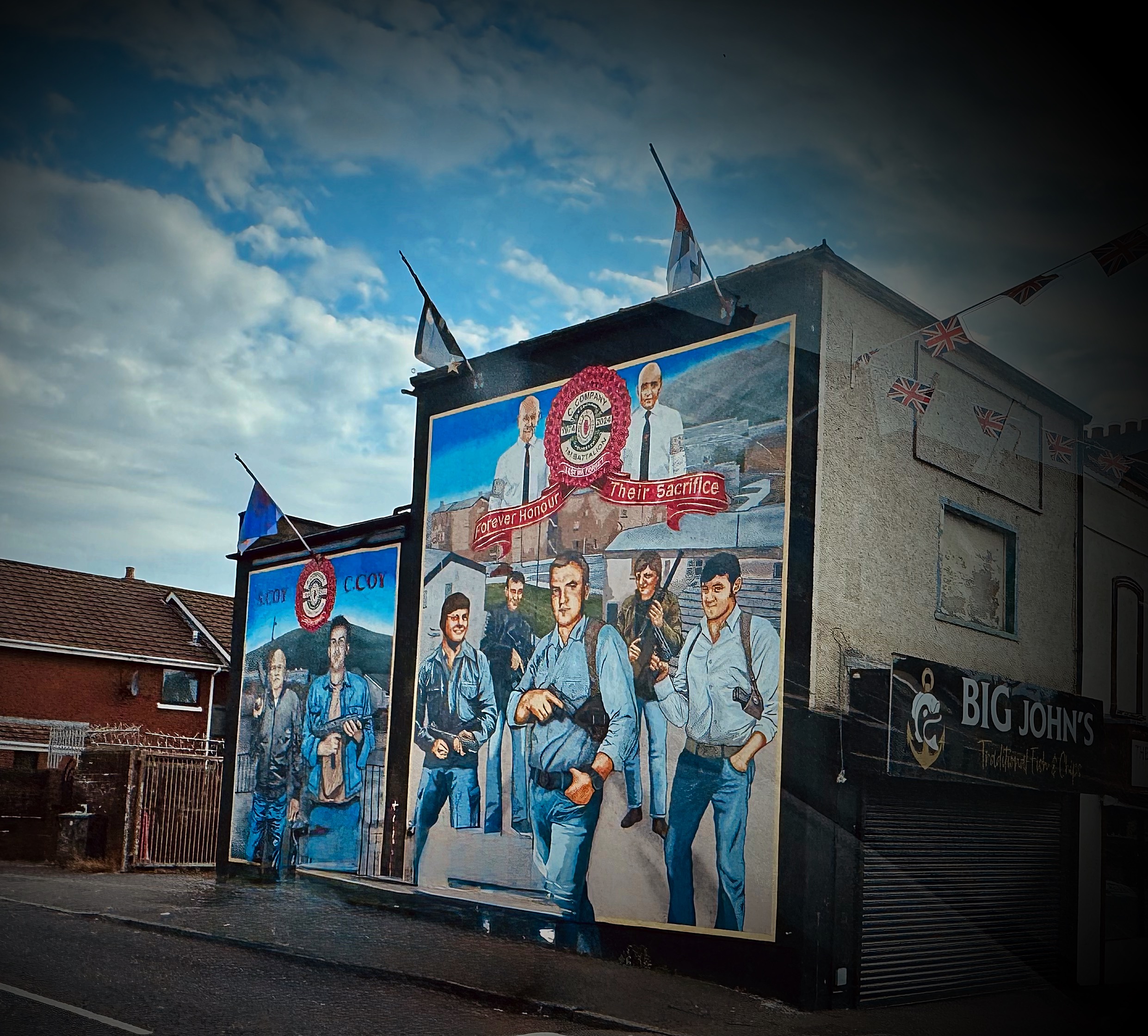
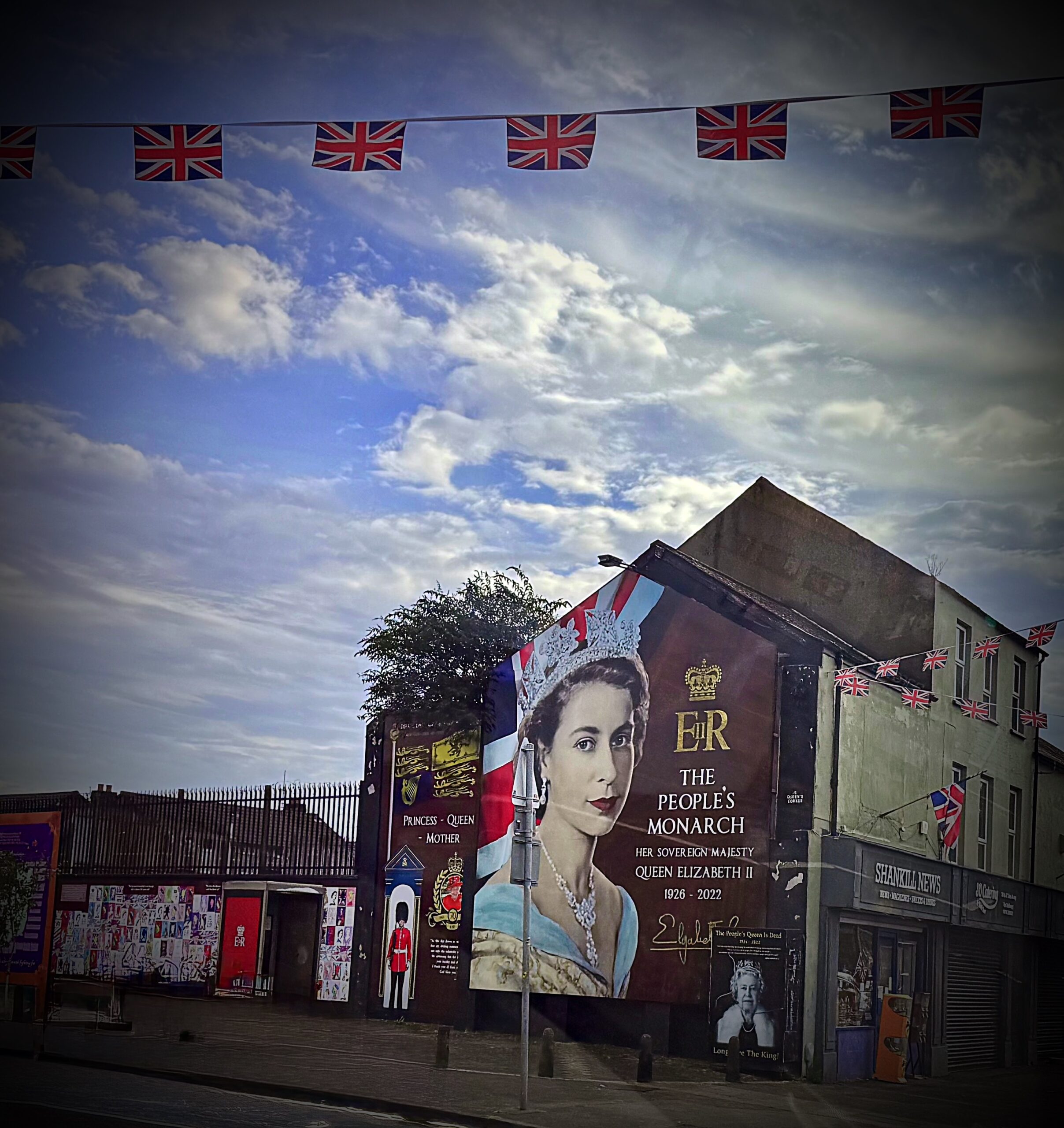
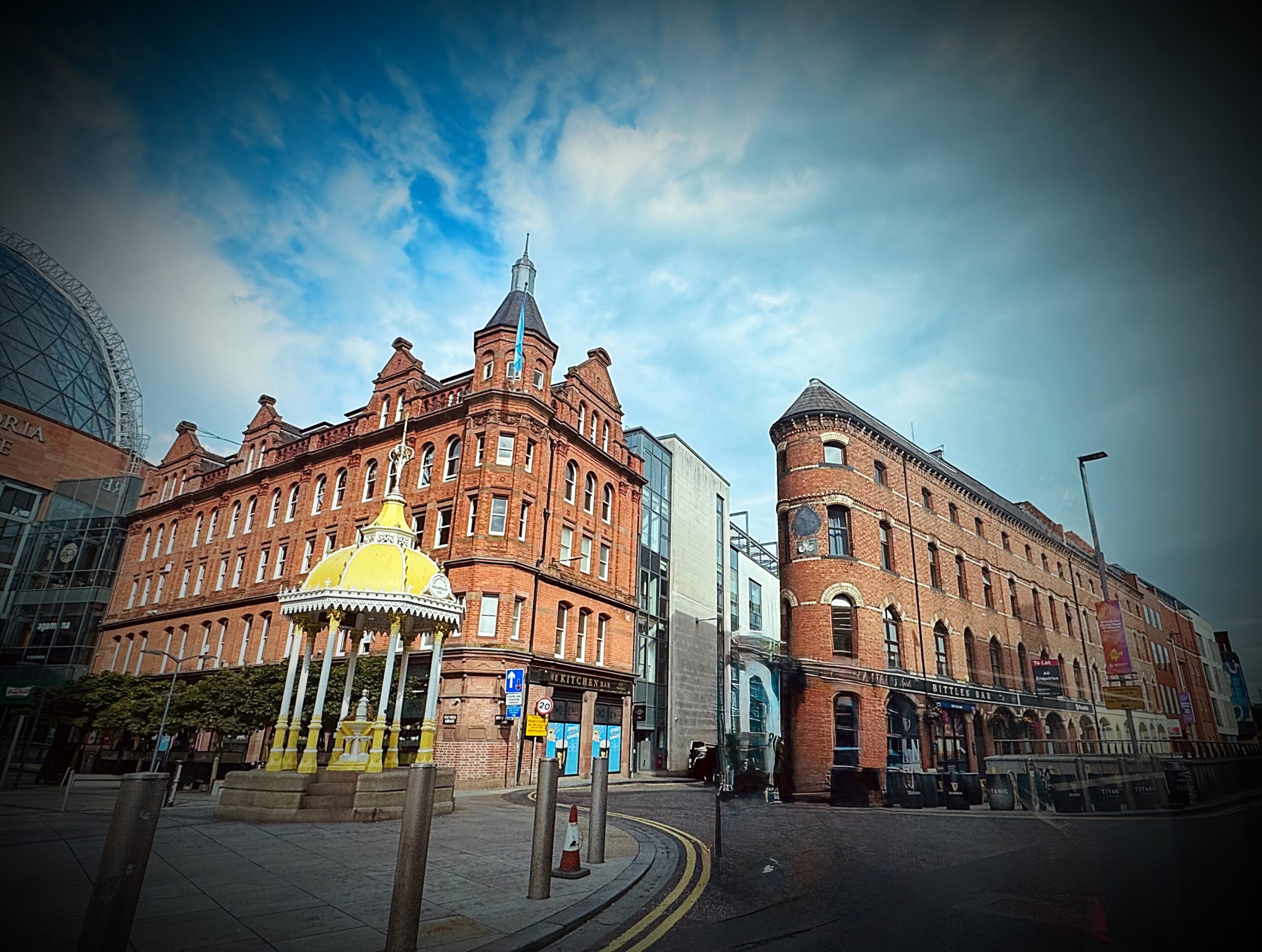
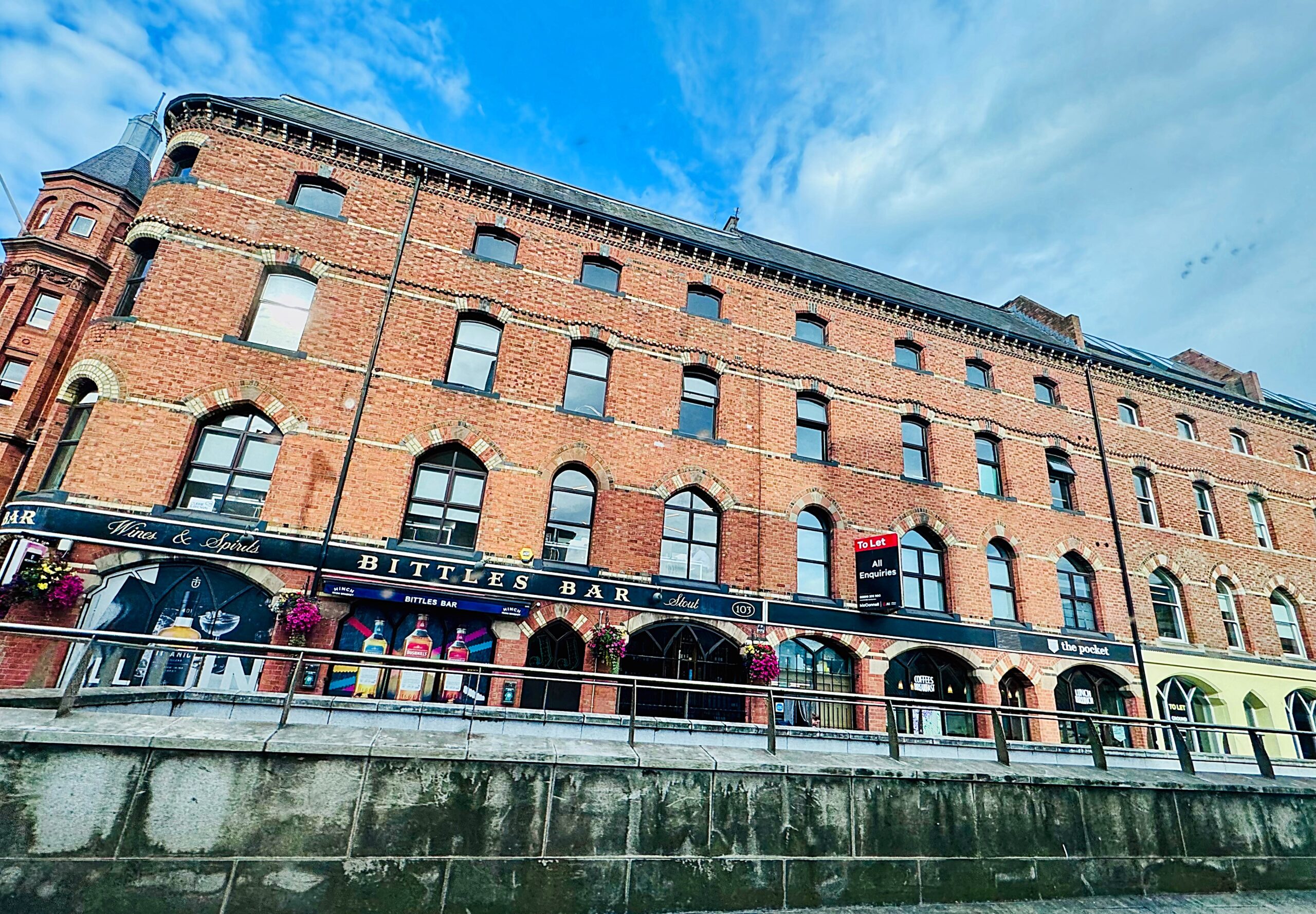
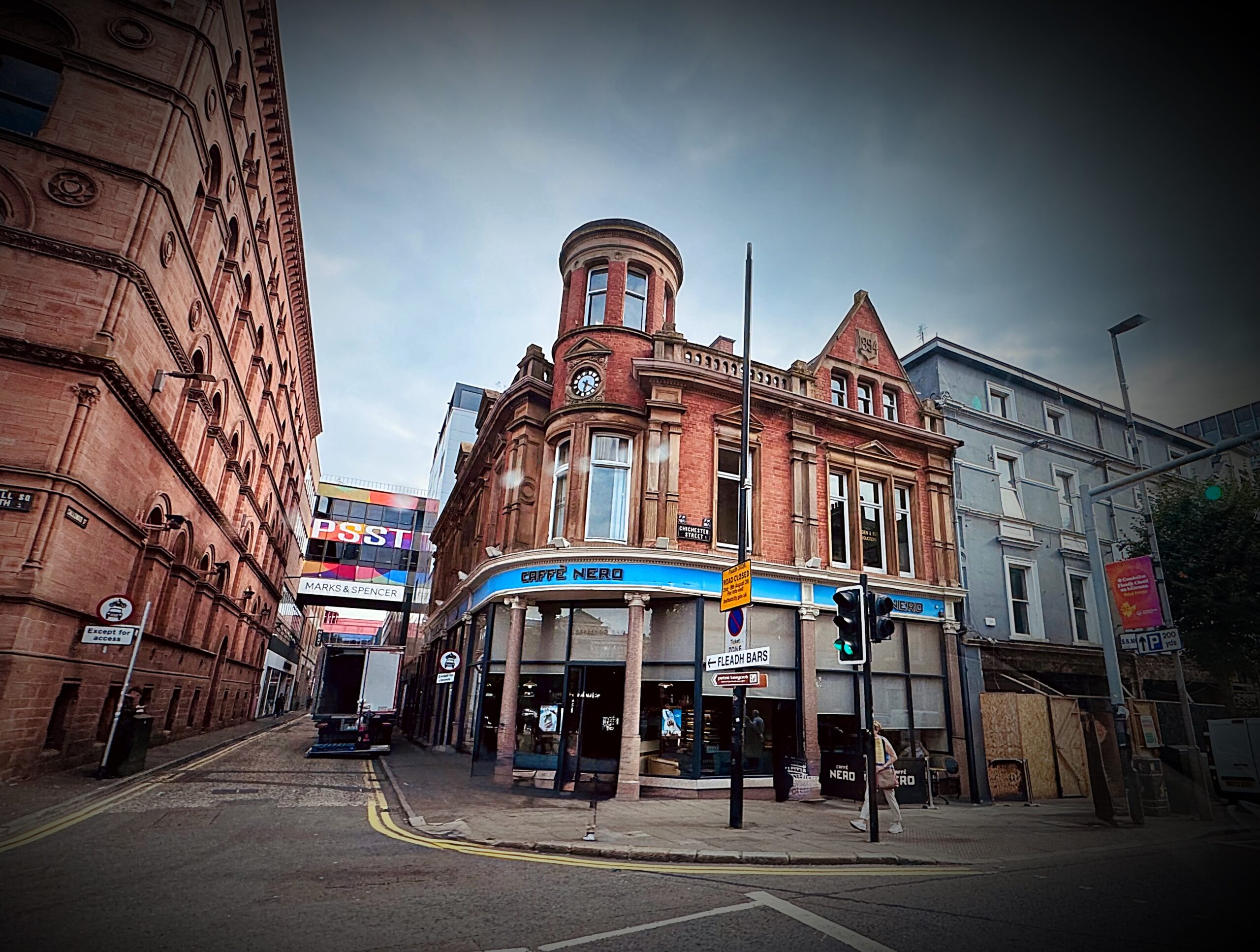
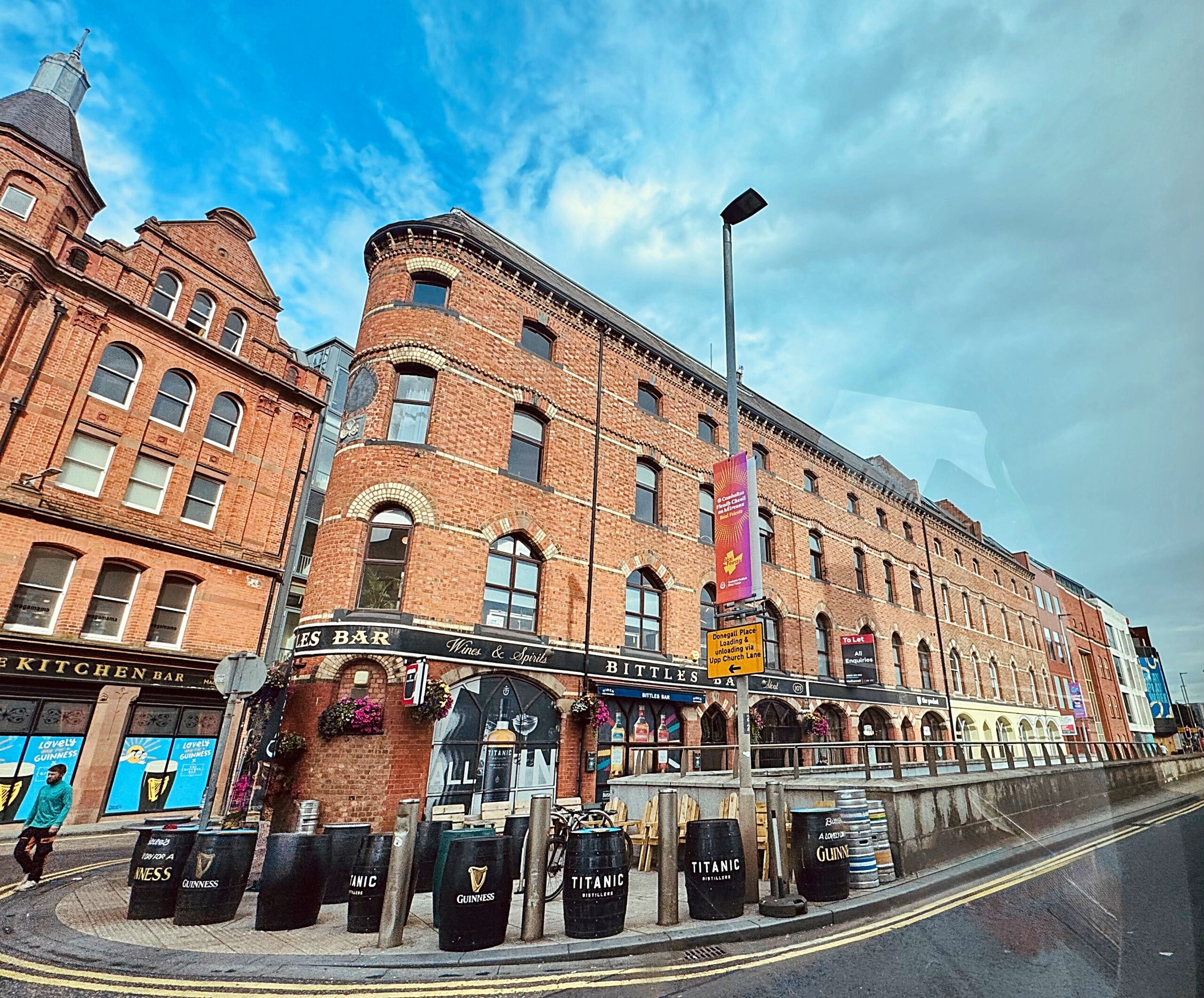
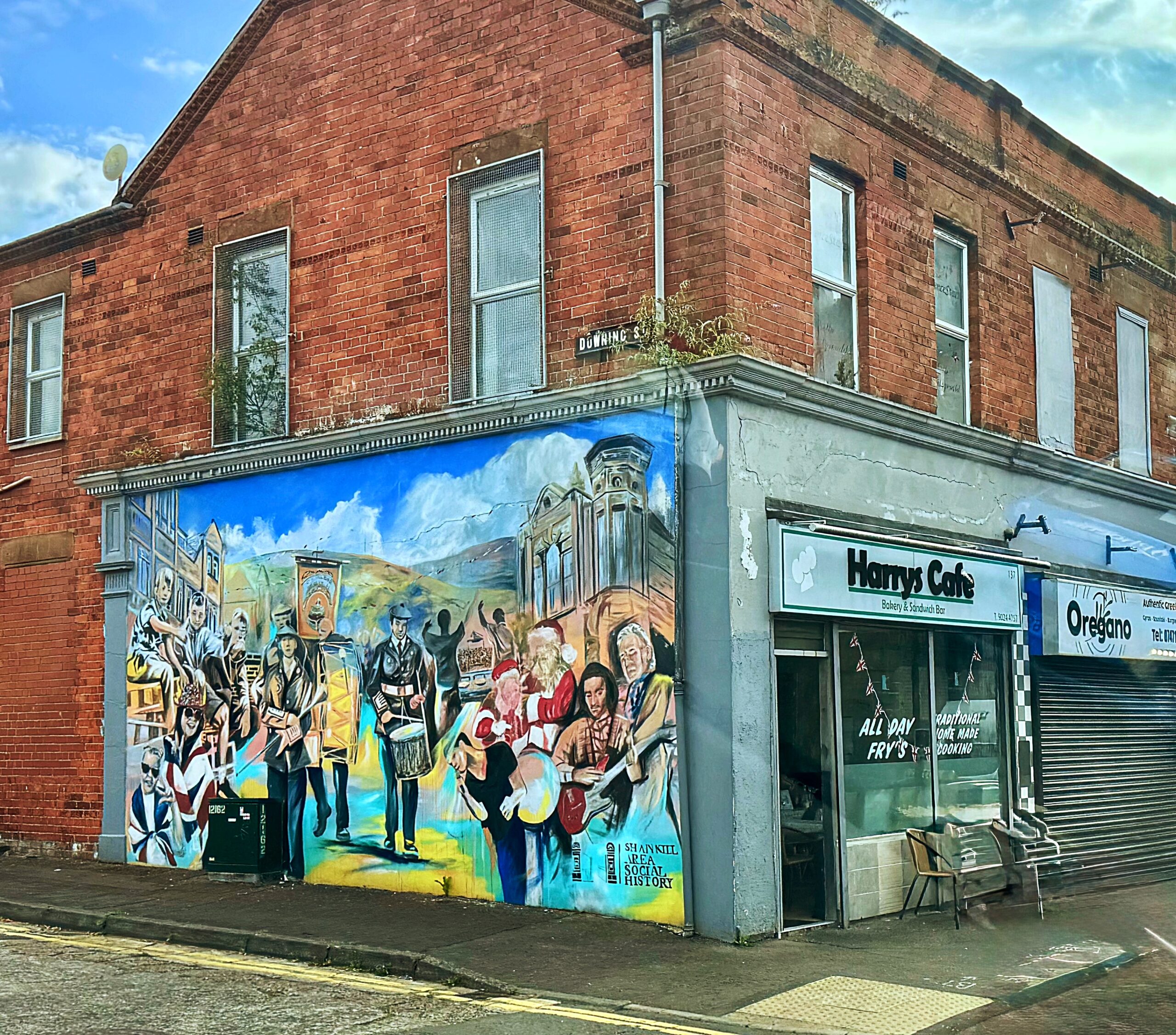
Belfast was our first stop on our Northern Ireland day trip from Dublin. Throughout our journey through Ireland, we had learned a great deal about the long conflict over national identity and the question of whether Northern Ireland should remain part of the United Kingdom. Even during our brief drive through Belfast, the city’s political history felt much more visible than it had in other parts of Ireland. We passed buildings covered with murals, British flags flying and images of the British monarchs displayed prominently.

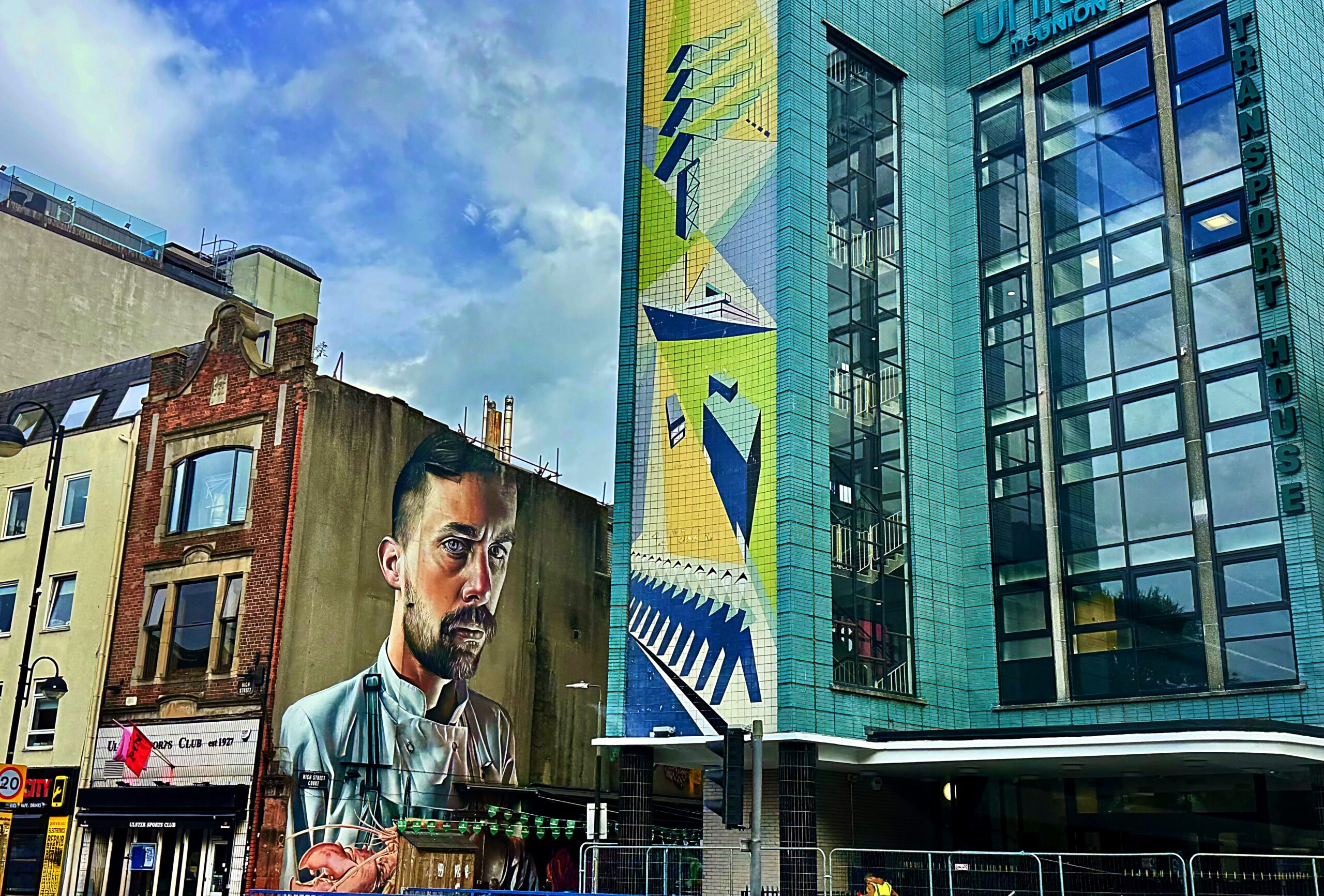
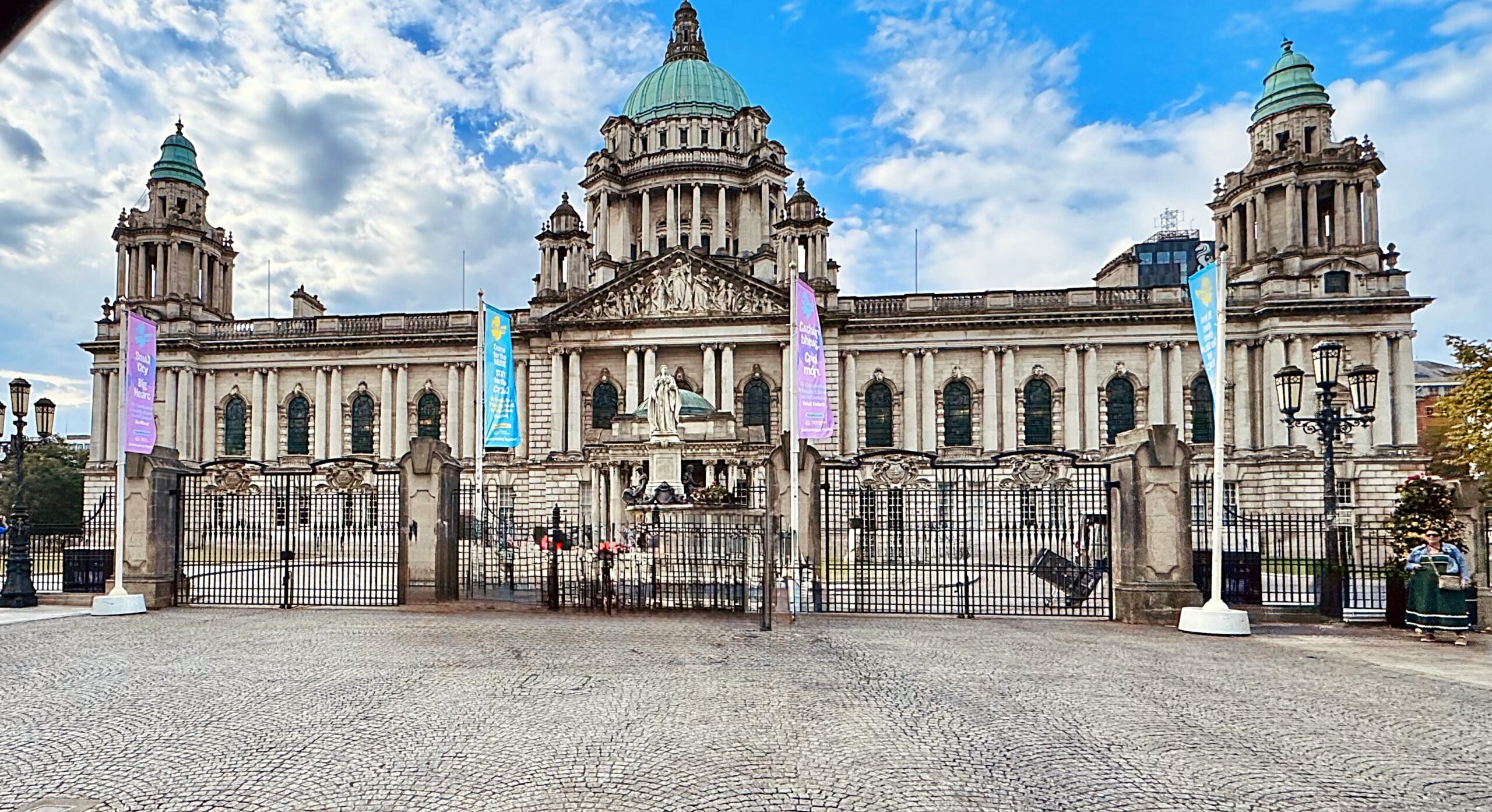
Beautiful Architecture Around the City

Murals Around Belfast
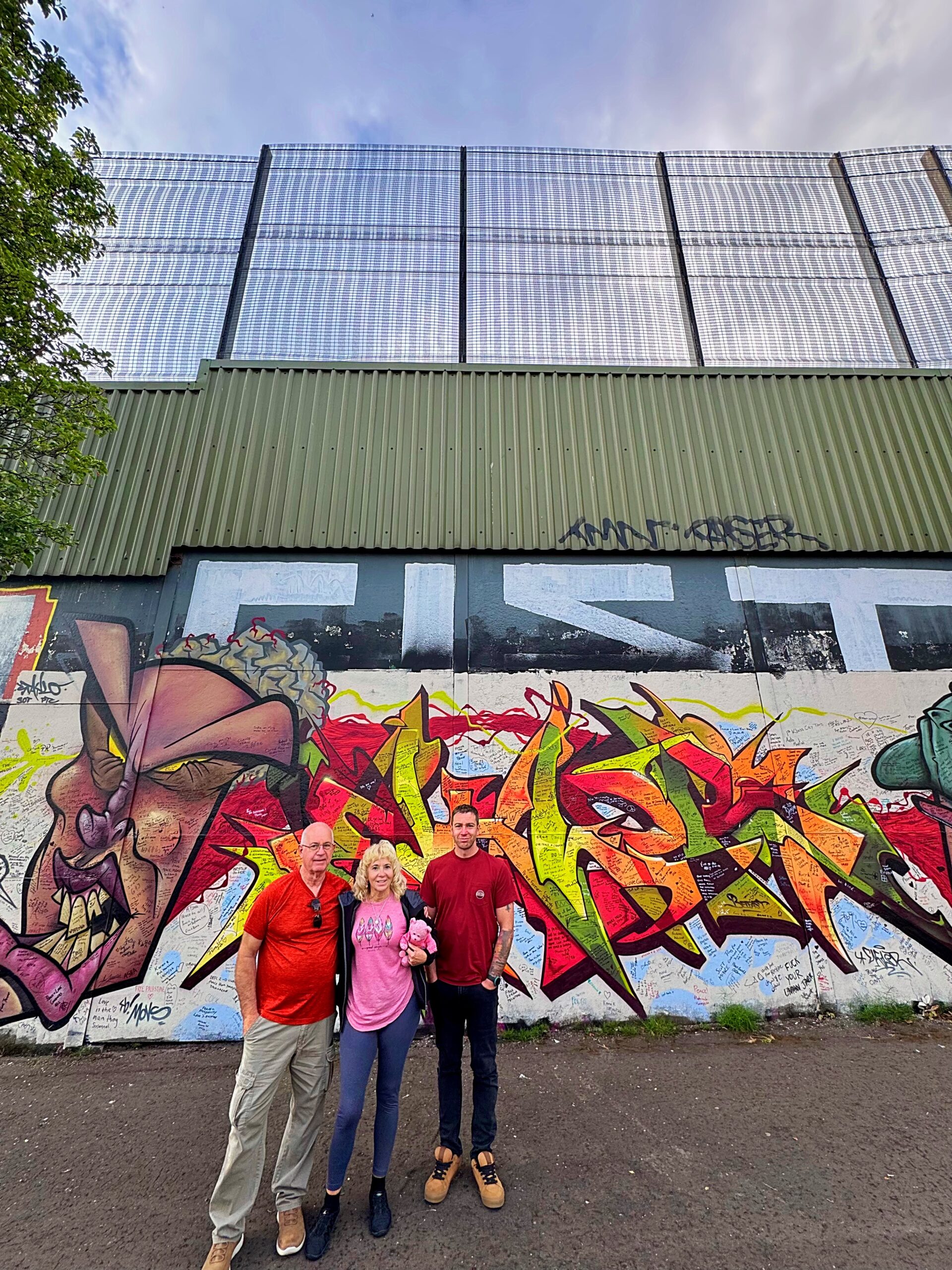
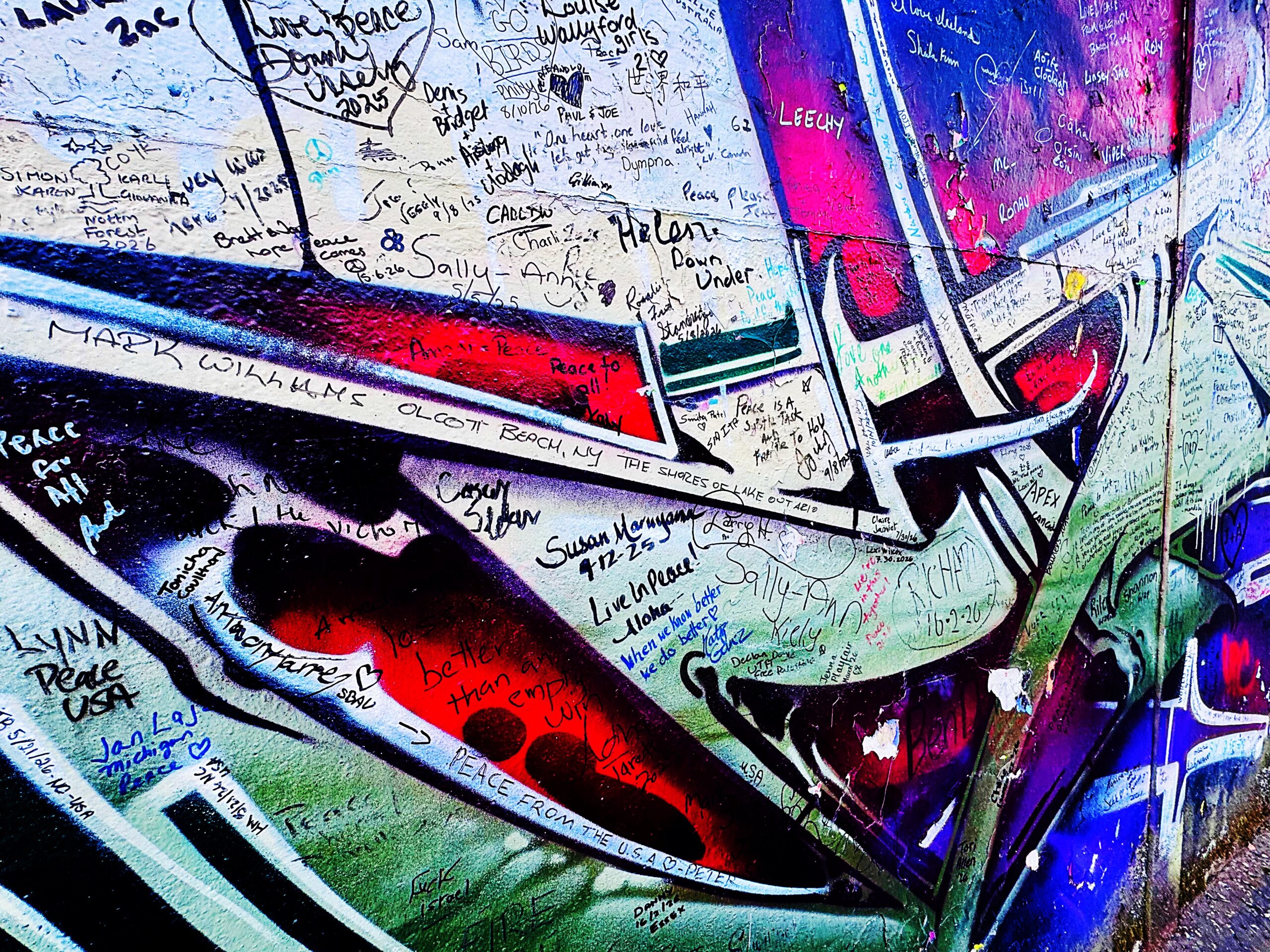
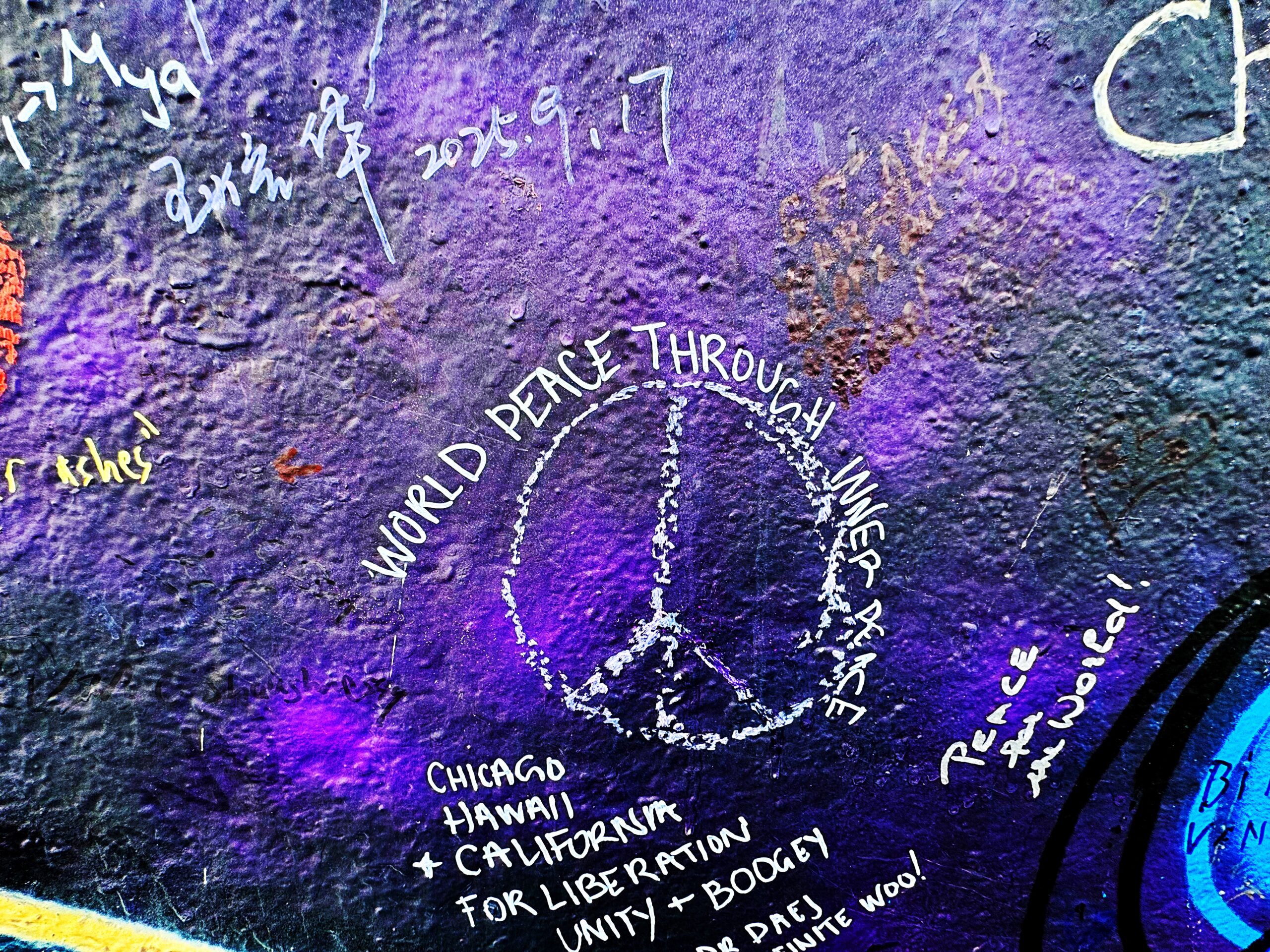
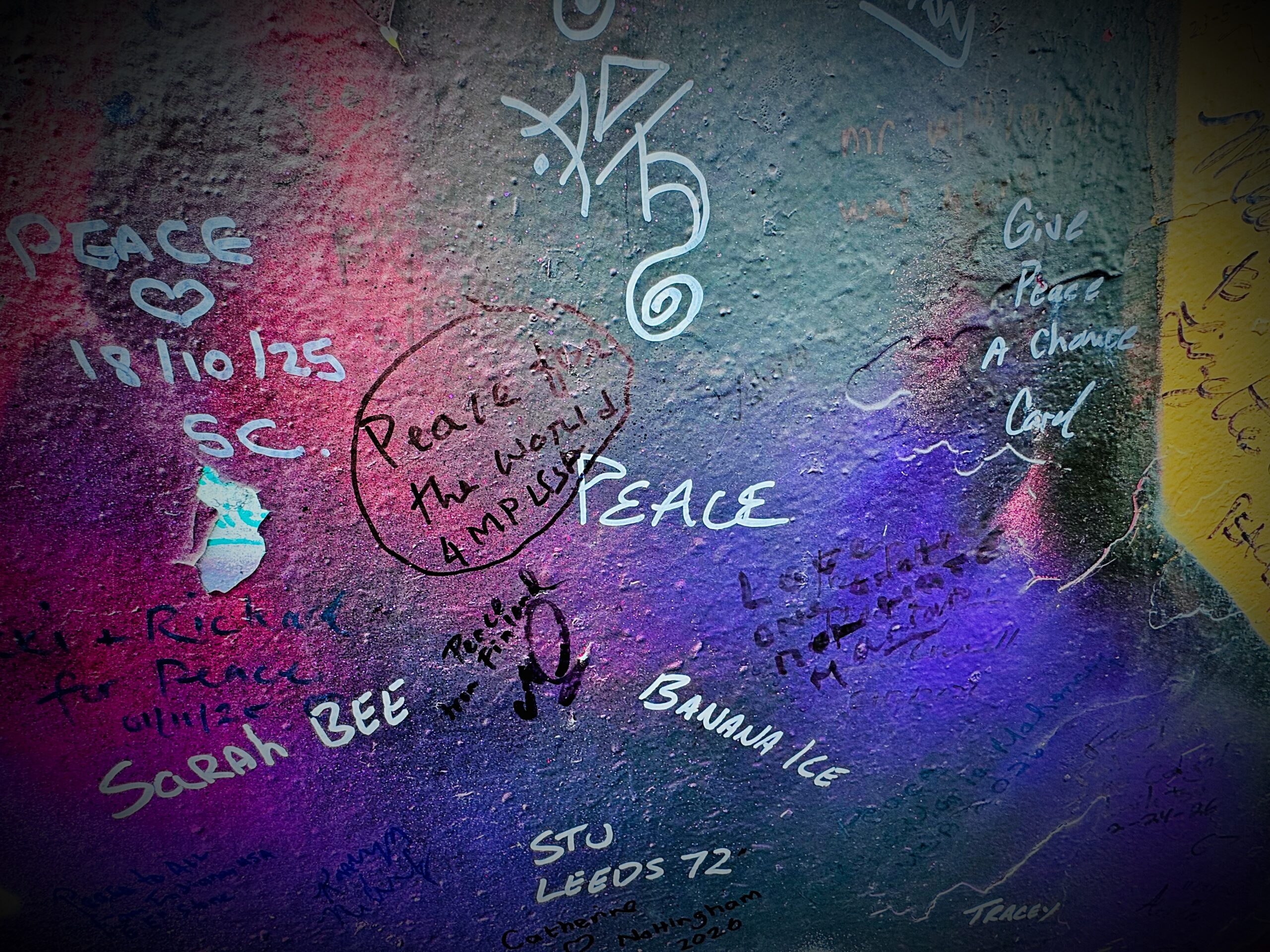
Peace Wall

We stopped at a section of the Peace Wall for about 15 minutes. Even though our visit was brief, it was a very moving place to see in person. Brian was kind enough to provide us with a pen so we could add our own message to the wall. After learning so much about The Troubles during our journey, standing beside the wall made that history feel much more real.

Carrick-a-Rede Rope Bridge

A Little Background

Carrick-a-Rede is one of Northern Ireland’s most dramatic coastal landmarks. The name comes from the Irish Carraig a’ Ráid, meaning “rock in the road,” referring to the small rocky island just offshore along the Causeway Coast.

For more than 250 years, local salmon fishermen used rope bridges to reach the island during the fishing season. The bridge allowed them to cross the narrow chasm between the mainland and Carrick-a-Rede Island, giving them access to some of the best salmon fishing grounds along the coast.

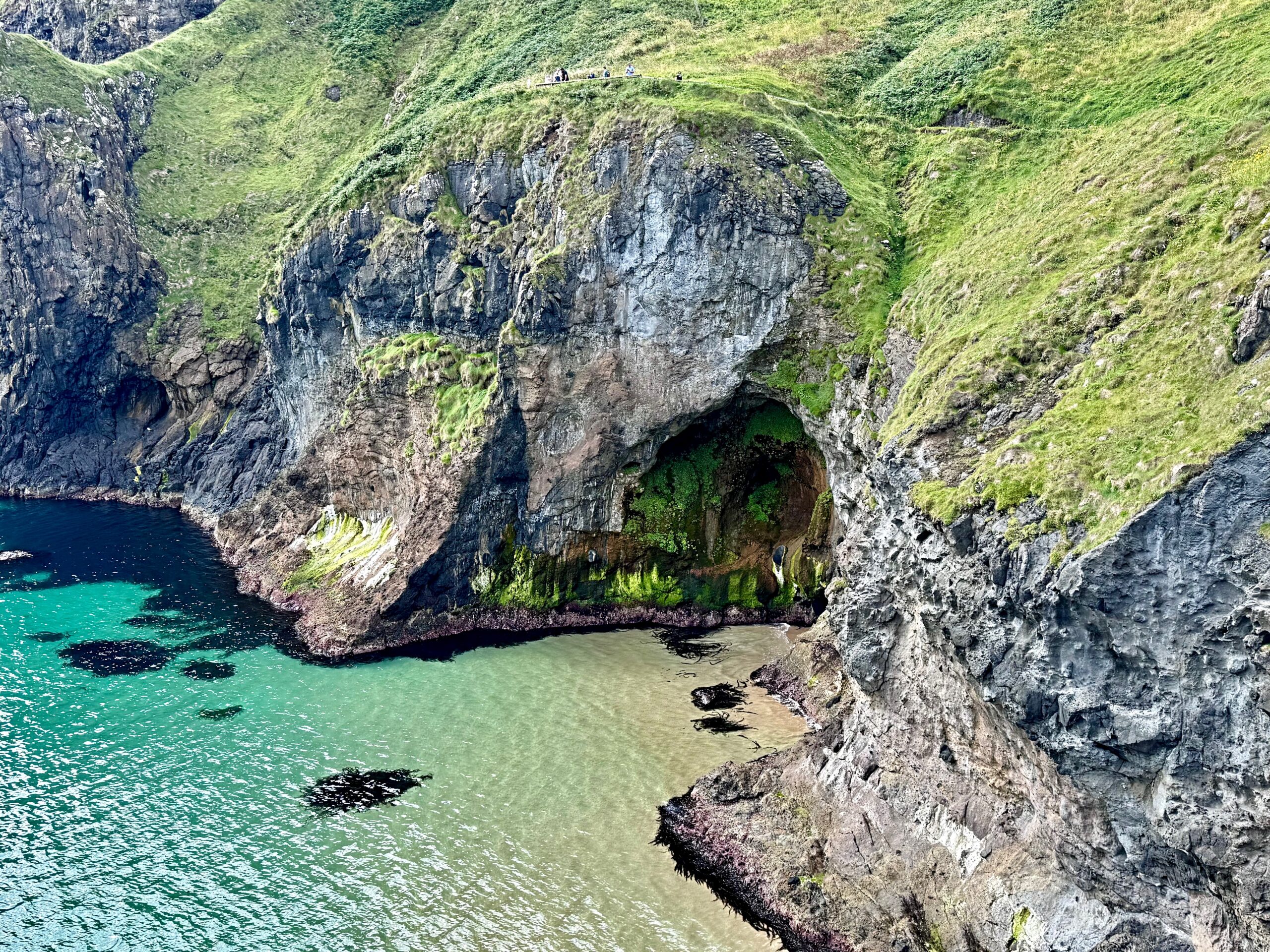
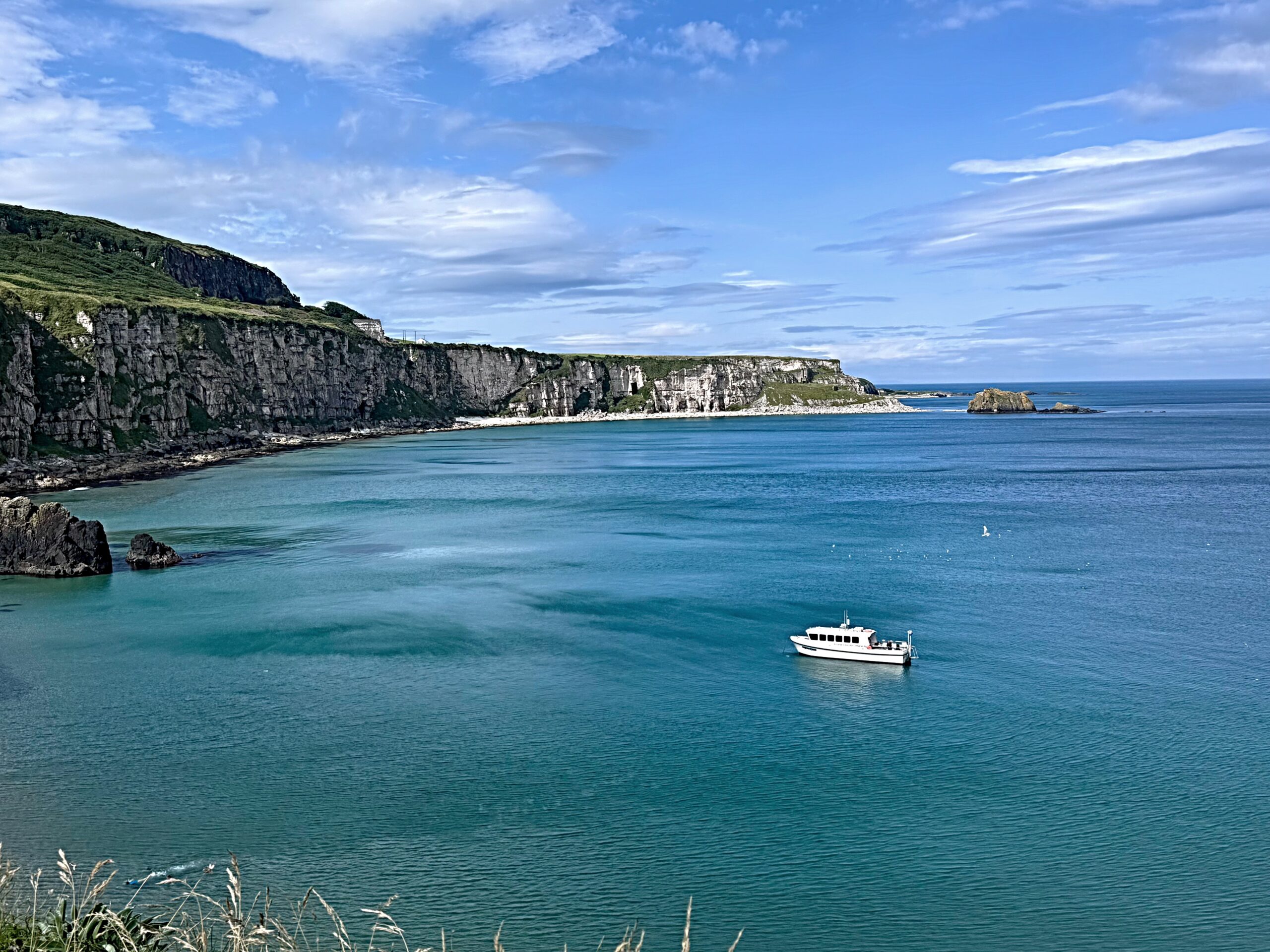
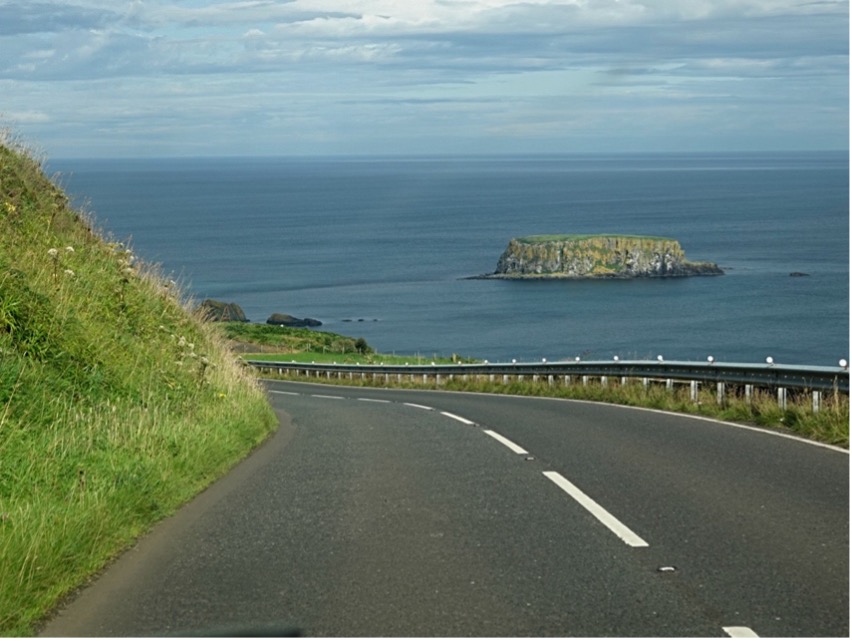
Today, the original fishermen’s bridge has been replaced by a much safer modern version, but the setting is every bit as dramatic. Suspended nearly 100 feet above the Atlantic, the bridge stretches across the rocky gap and offers spectacular views of the surrounding coastline. On a clear day, it is even possible to see Scotland in the distance.  

Exploring Carrick-a-Rede

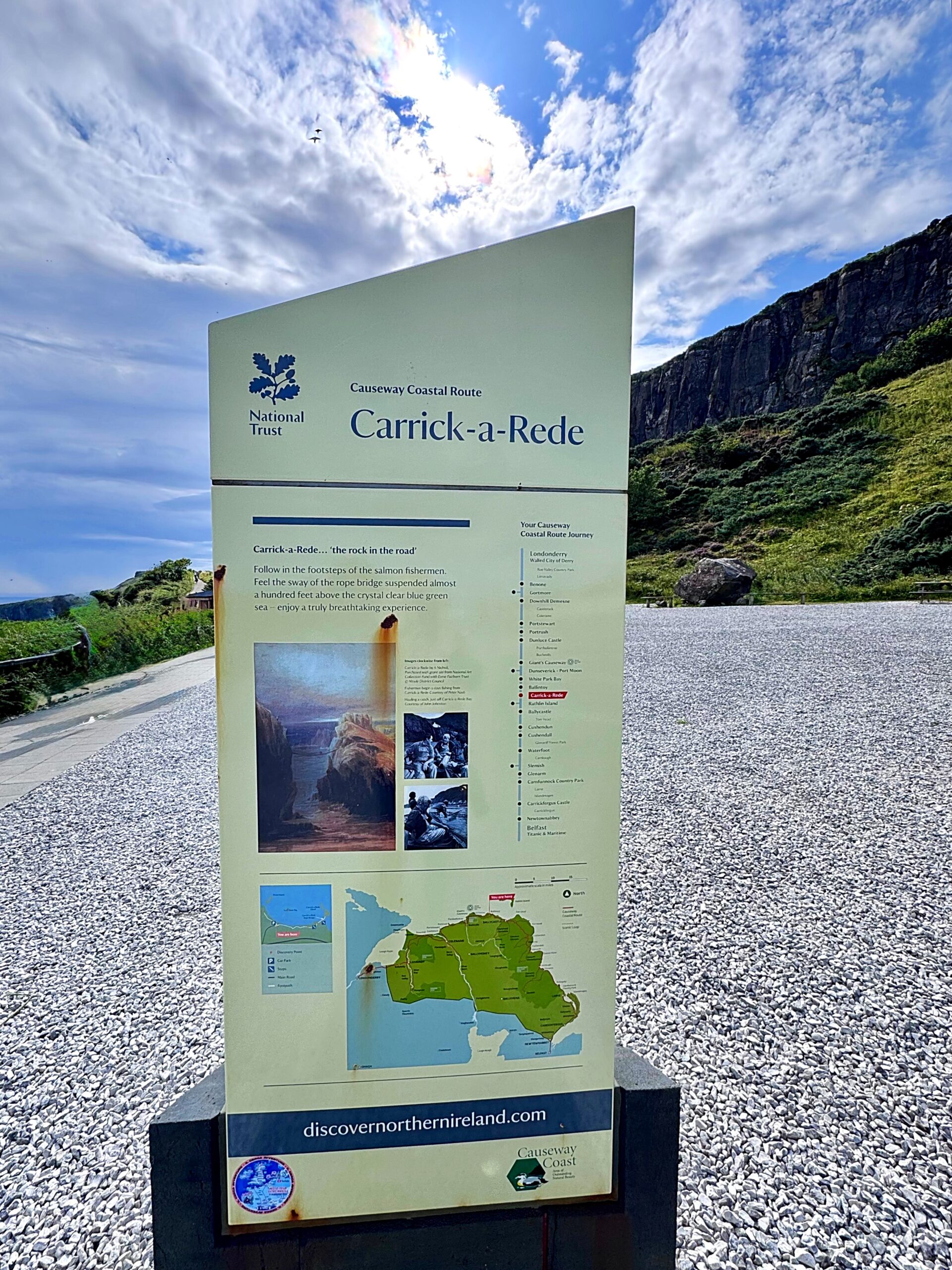
Visiting Carrick-a-Rede involves more than simply walking across the famous rope bridge. From the visitor area, a scenic coastal path leads roughly 1 mile (1.6 km) along the cliffs and back. The National Trust rates the walk as moderate, with a mixture of paved, gravel and grassy paths, some uneven terrain, hills and several sets of steep steps.

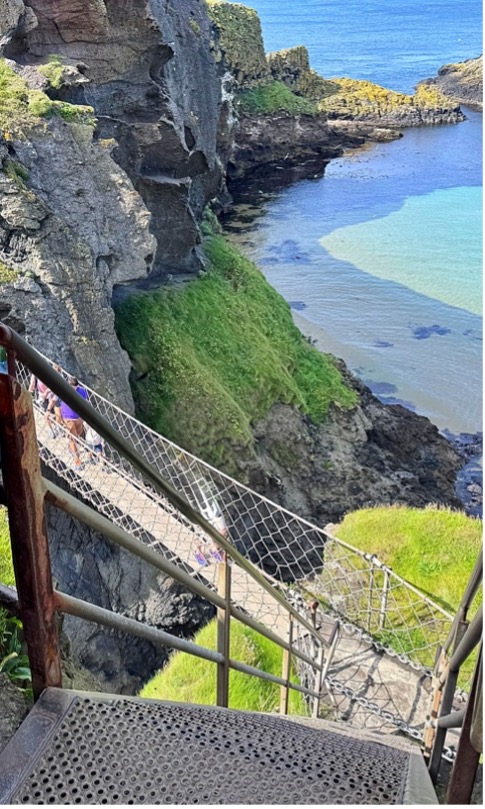
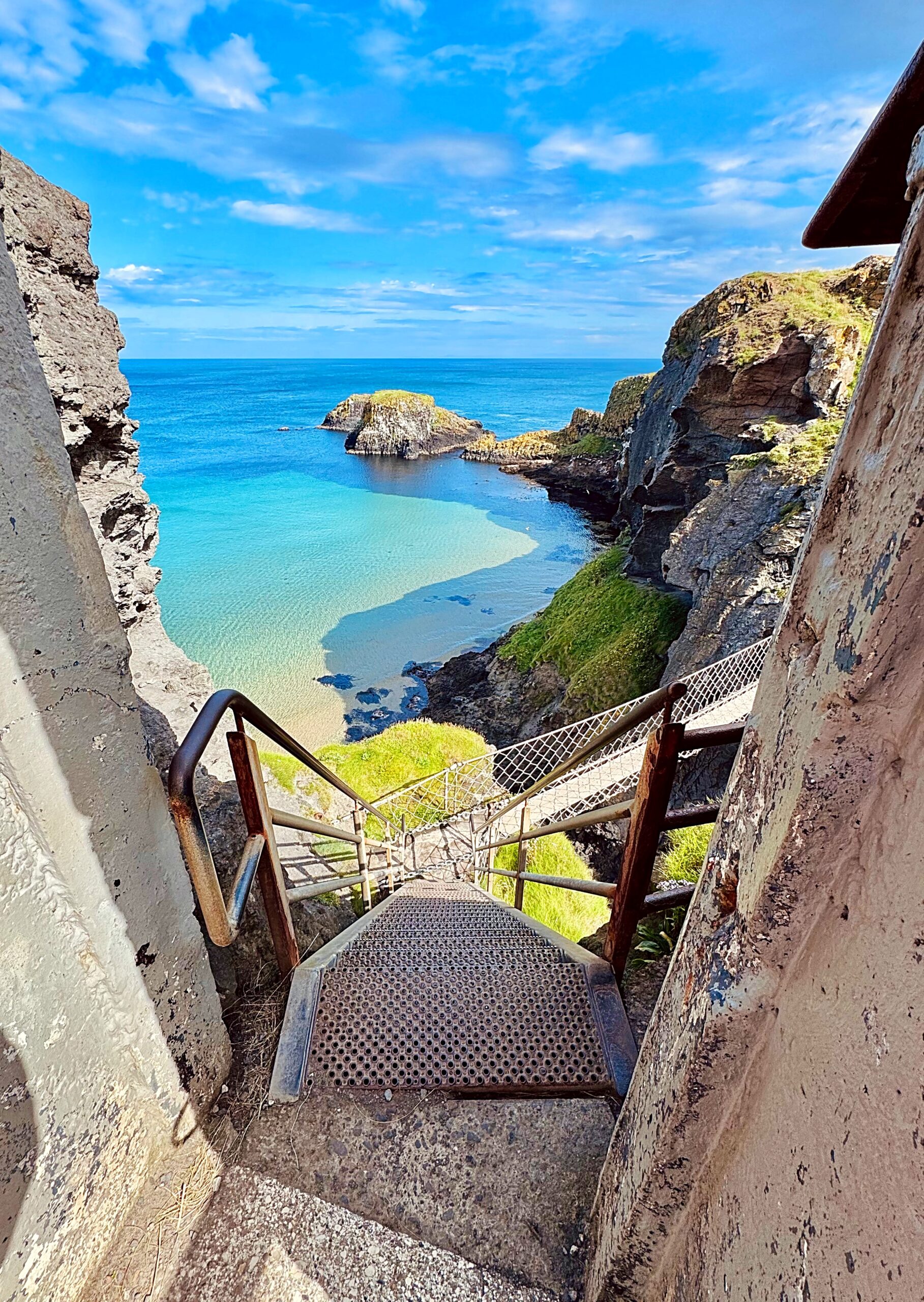
The most challenging section comes near the bridge, where visitors descend a long series of cliffside steps followed by a steep metal staircase. And remember—whatever you walk down, you must climb back up on the return trip. There are benches along portions of the route where you can stop and rest.

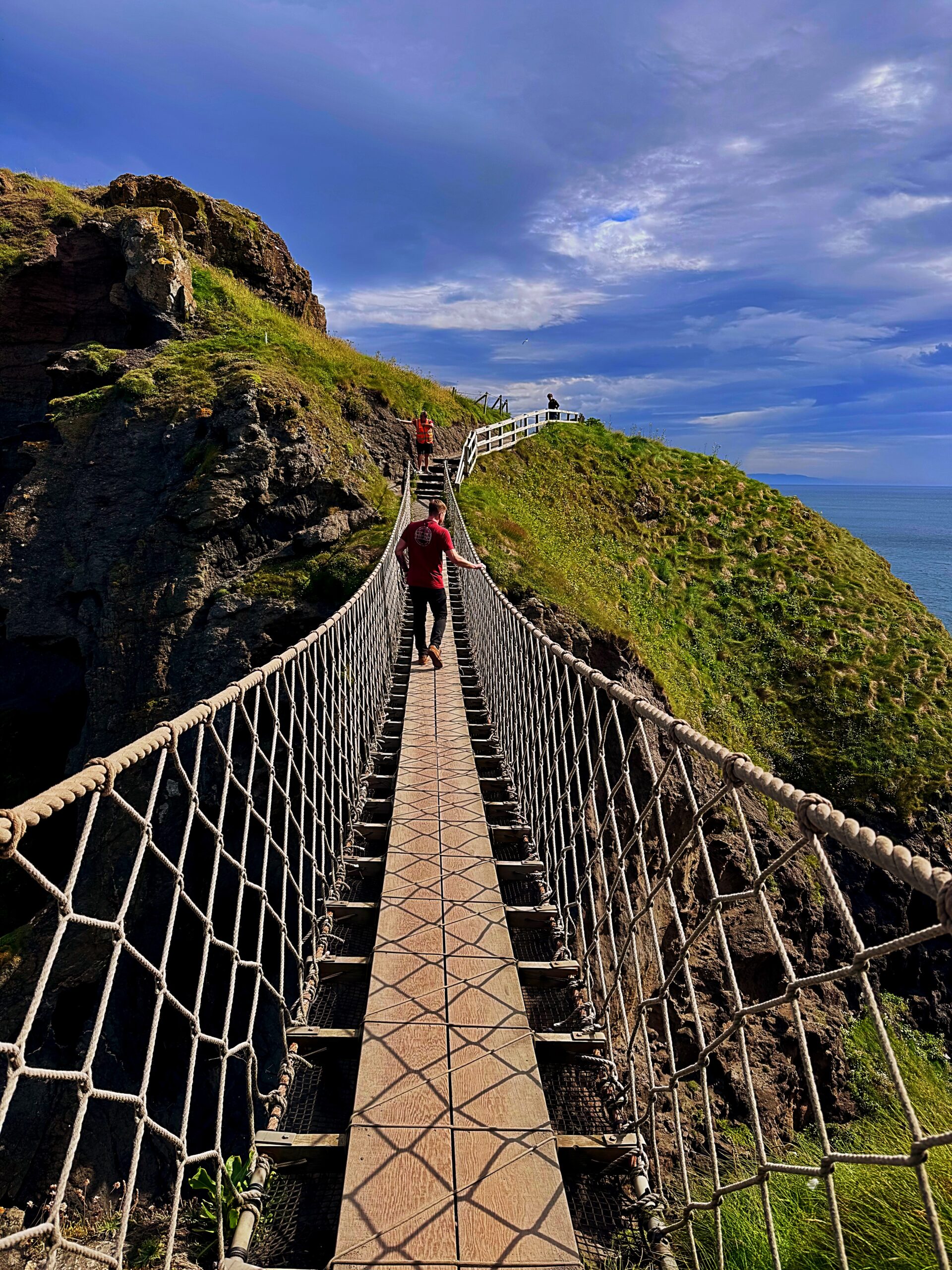
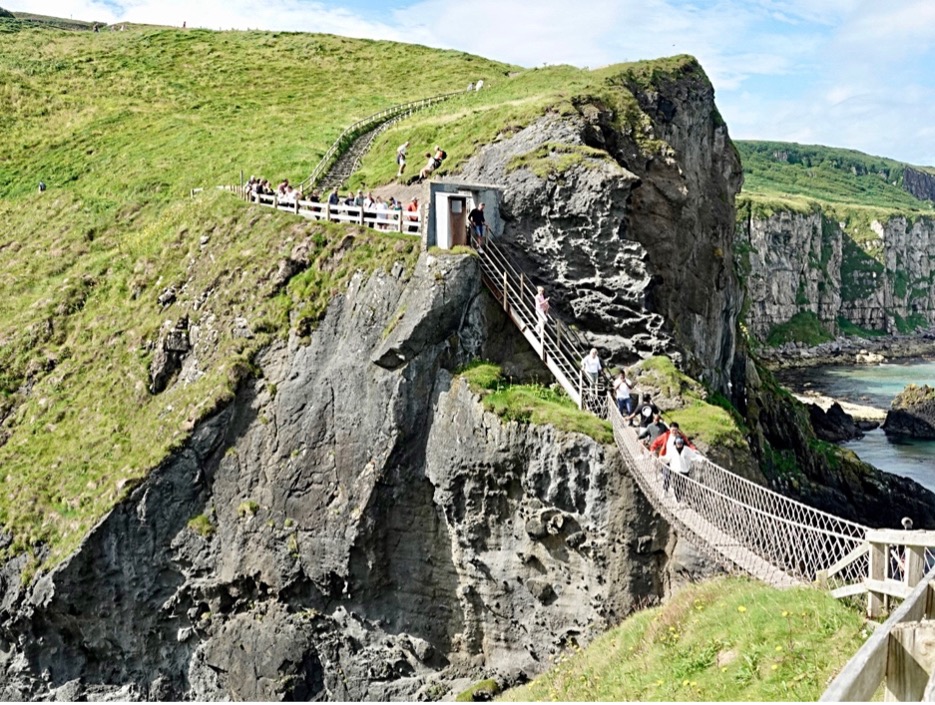
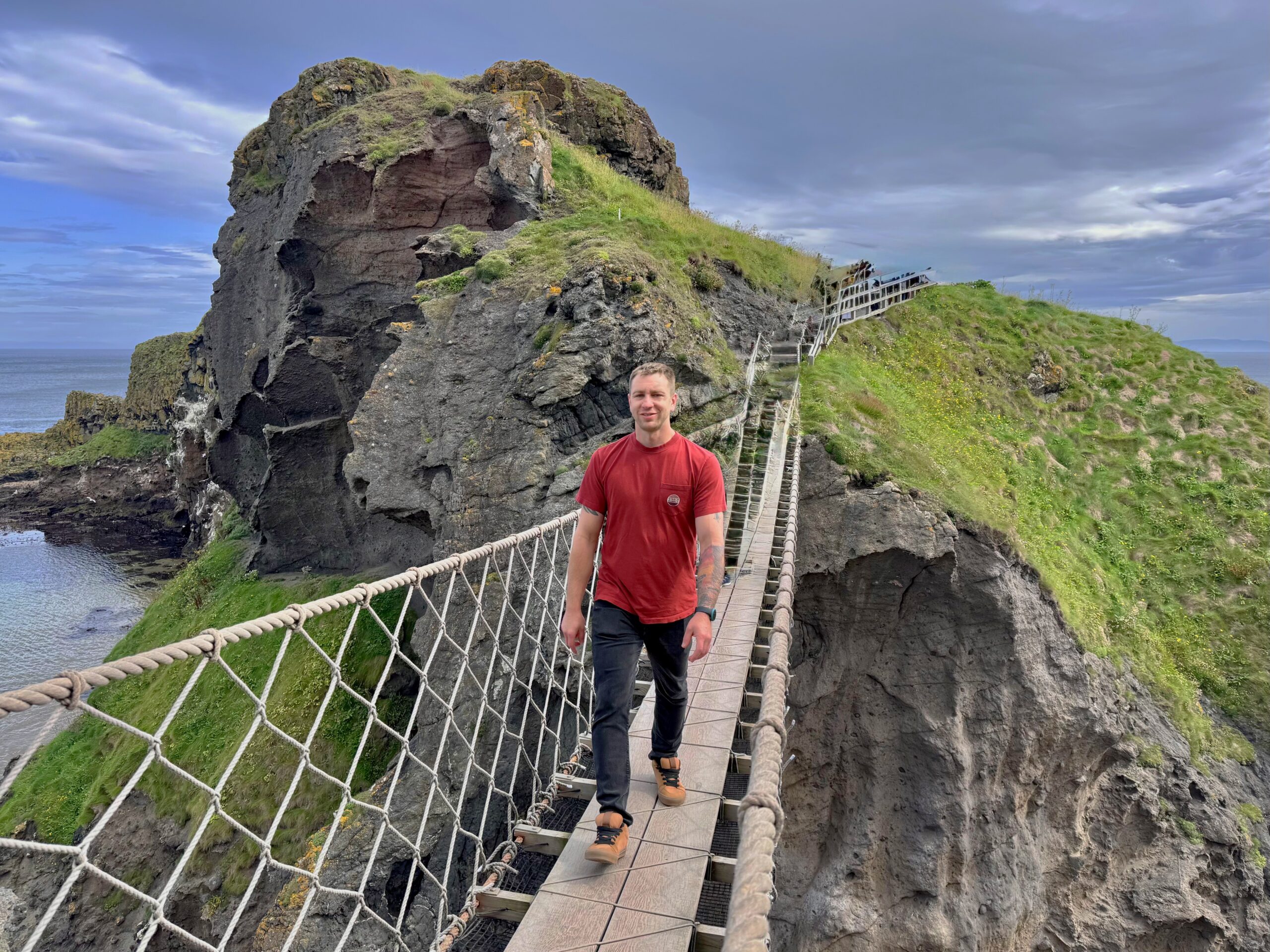
The rope bridge itself is about 100 feet (30 meters) above the sea and connects the mainland with tiny Carrick-a-Rede Island. The bridge does move slightly beneath your feet, but the crossing is short and controlled by National Trust staff. Once across, you can spend a little time exploring the island and enjoying spectacular views of the surrounding coastline before crossing the bridge again for the return walk.

Bridge crossings are timed and availability can be limited, especially during busy periods, so it is best to check current ticket requirements in advance. Weather can also affect access, as the bridge may close in high winds or poor conditions.

Difficulty: Moderate. Anyone comfortable walking hills and climbing stairs should generally manage it, but the steep steps and uneven terrain may be difficult for visitors with limited mobility. The first 0.5 km of the coastal path is accessible to visitors with limited mobility, but the remainder of the route to the bridge is not suitable for wheelchairs.

Our Experience

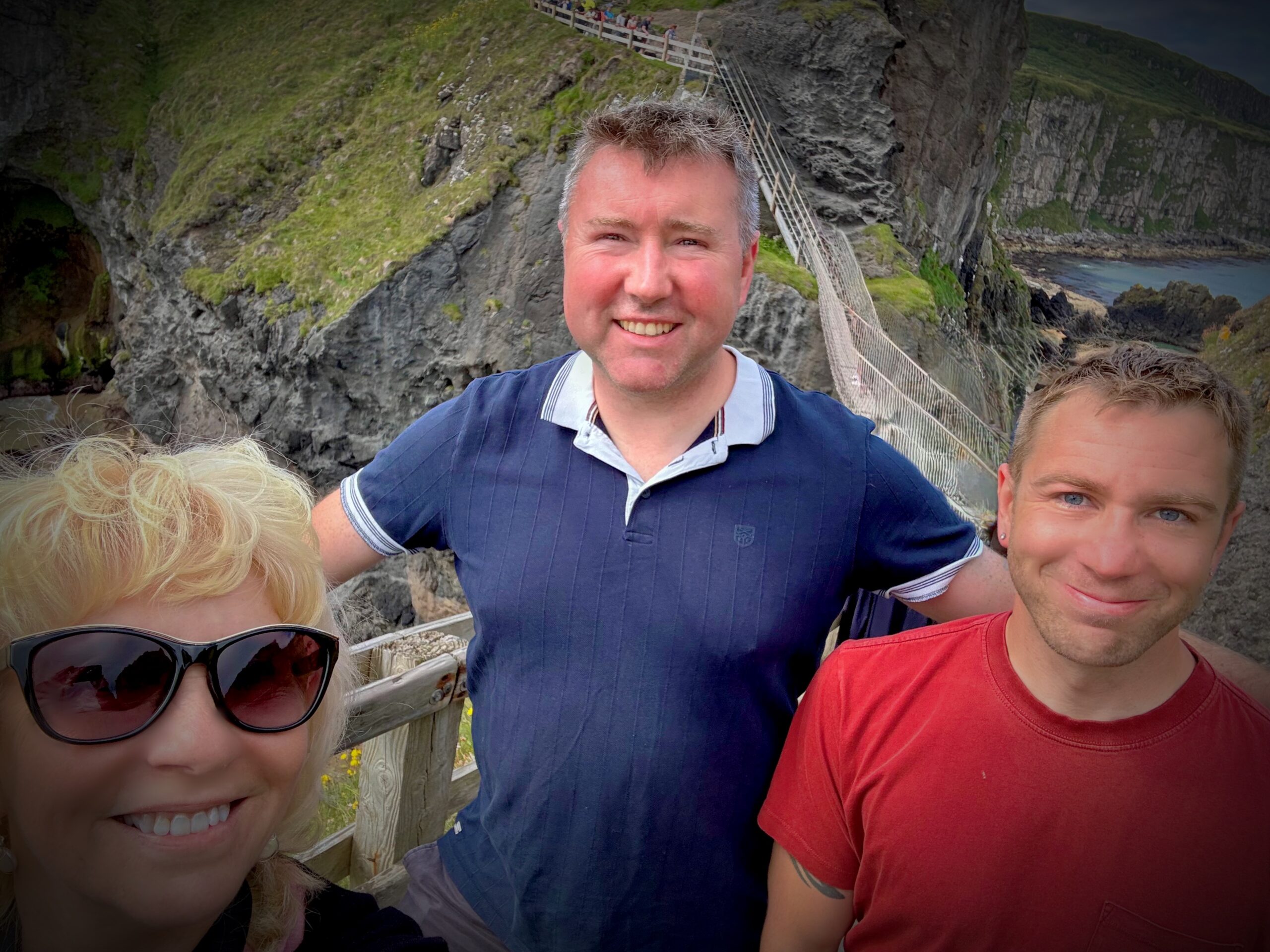
This was our first major stop along the Causeway Coast, and it was a magnificent introduction to this part of the country.  We purchased our tickets the previous evening, so we breezed right in and parked the car.

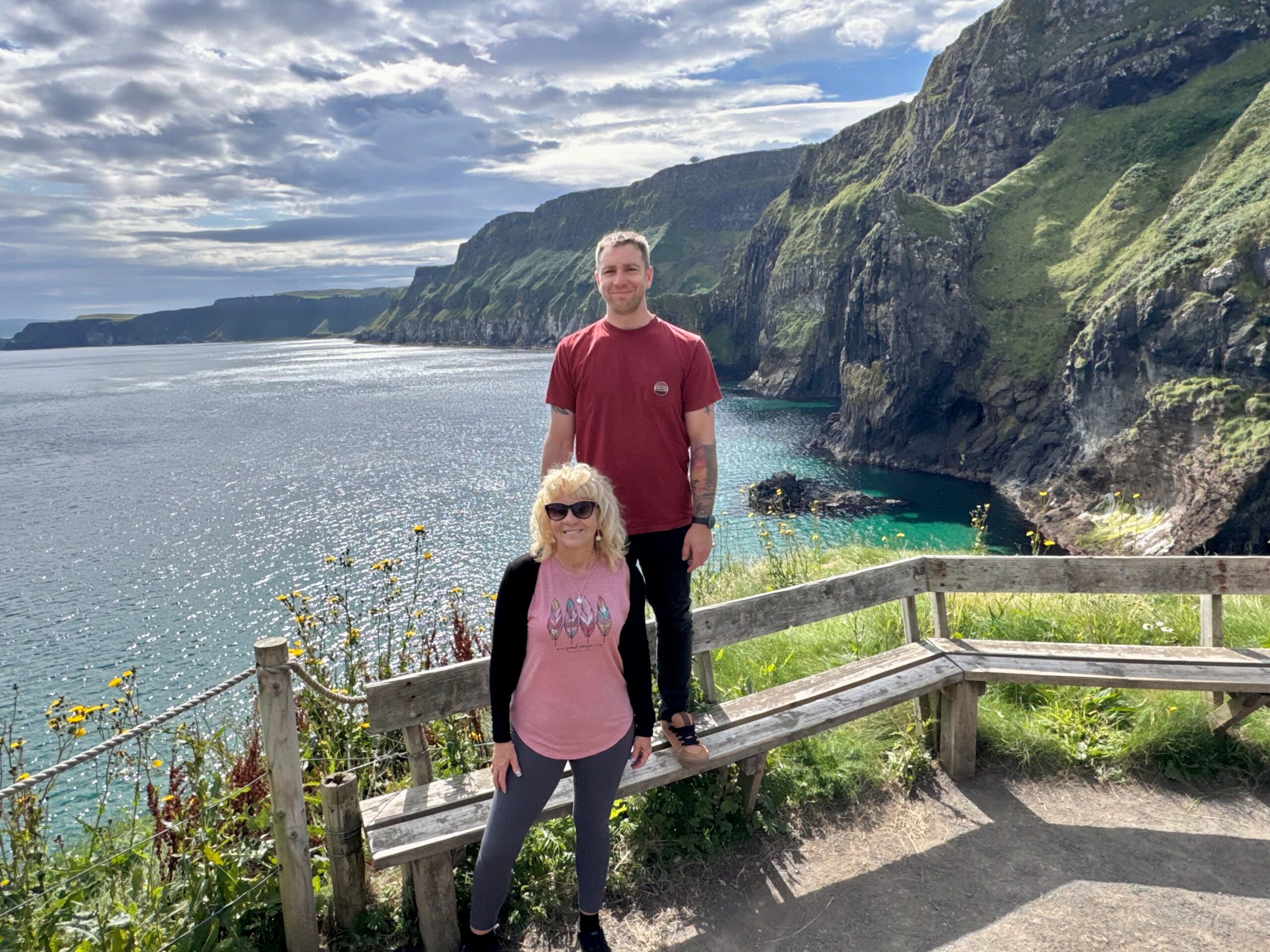
We were blessed with partly cloudy skies and comfortable temperatures upon arrival.  The day was even clear enough to catch a glimpse of Scotland in the distance.  The walk to the bridge took about 30 minutes and was pleasant and not overly strenuous until the last portion. During the last 10 minutes, the terrain became much rockier and some climbing was involved. Fortunately, there was a bench before this more difficult portion of the walk. Tom and Pink Bear opted to stay behind on the bench.  Rob and I went on with Brian to the bridge.

Traveling to Carrick-a-Rede

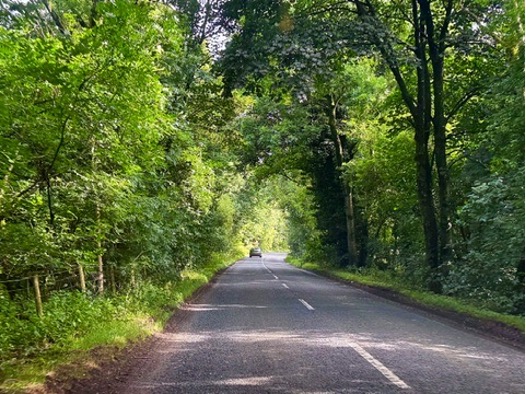
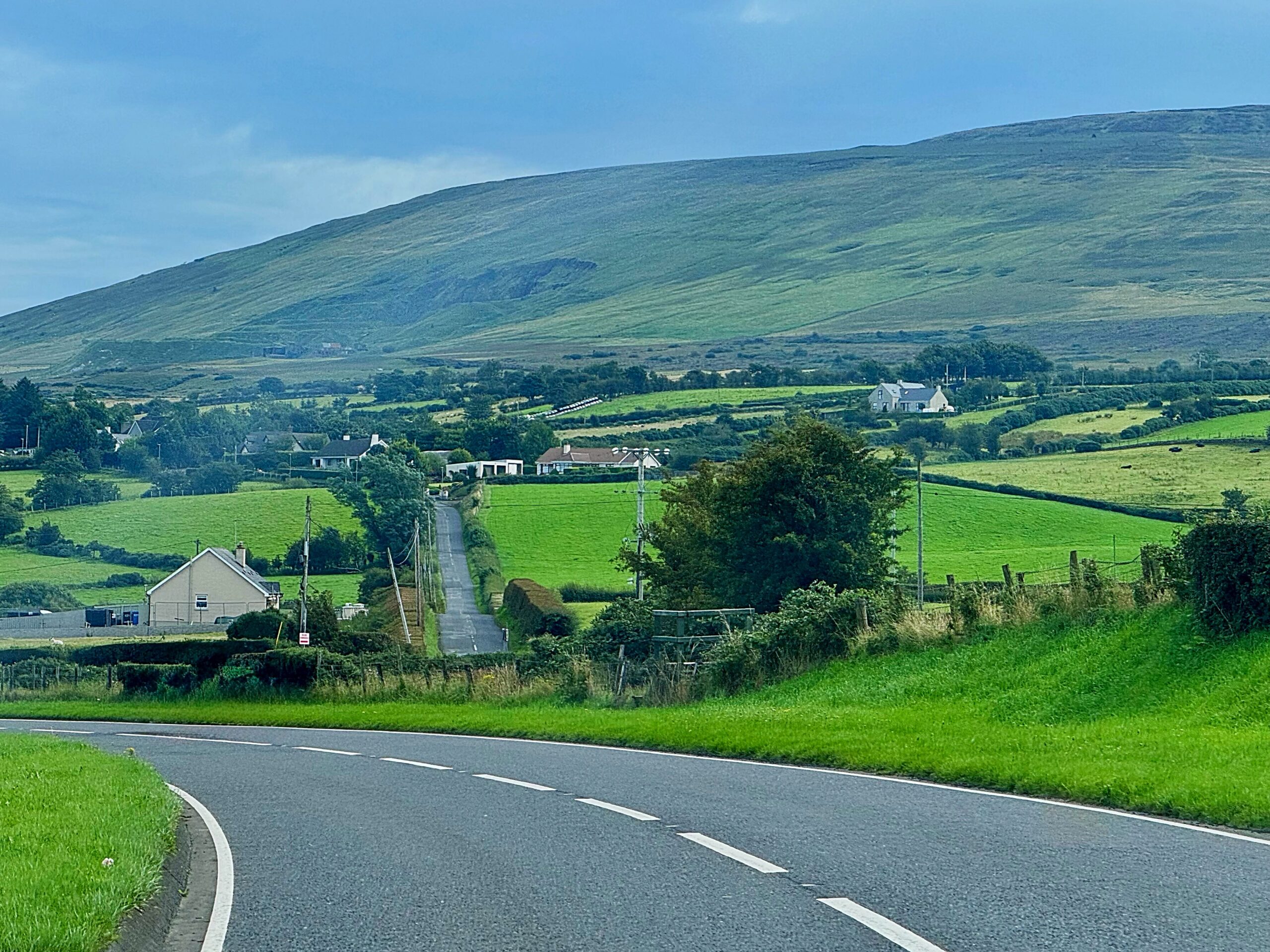
The Drive Toward Carrick-a-Rede
The Sign at the Entrance to the Coastal Path to the Bridge
Type your paragraph here
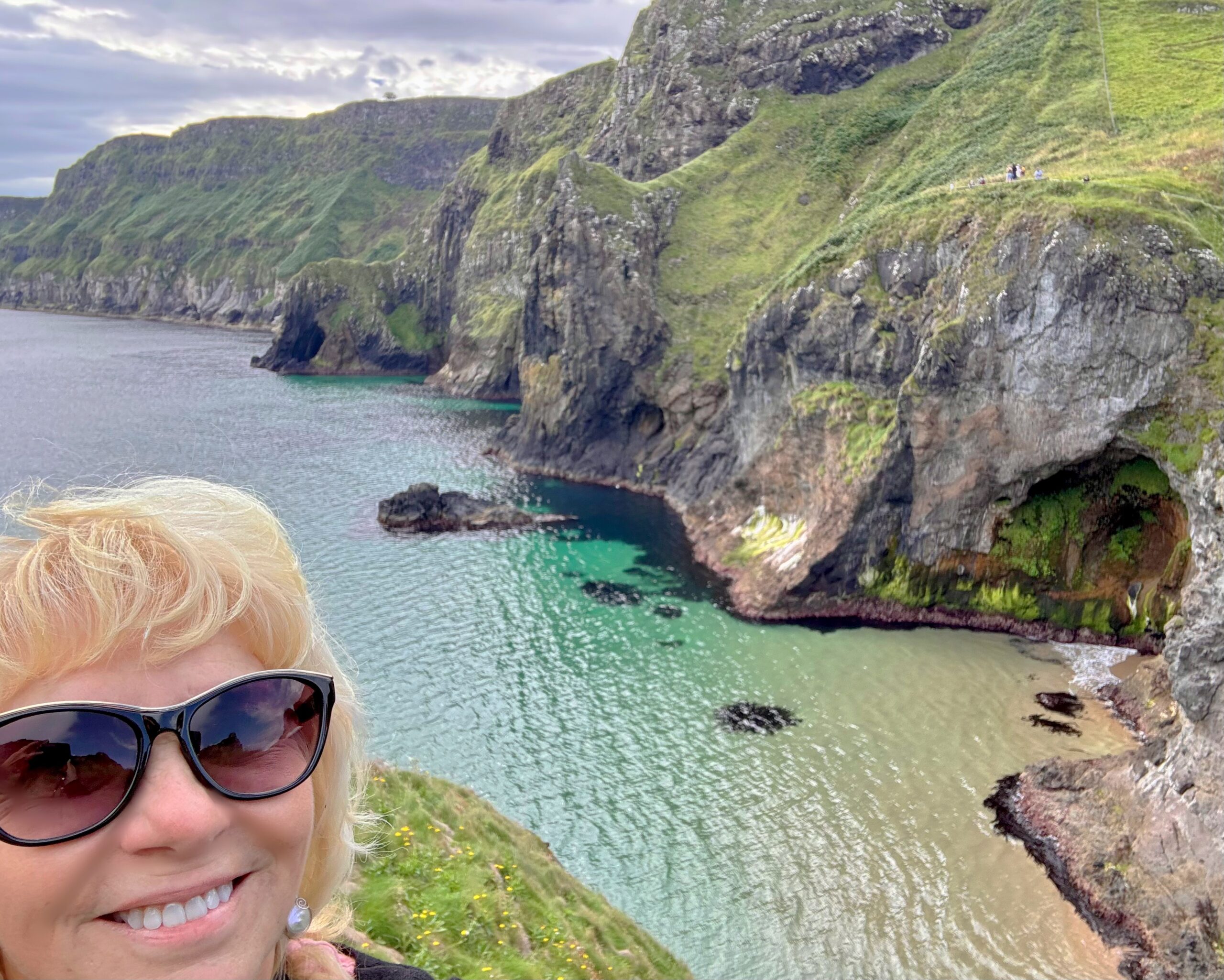
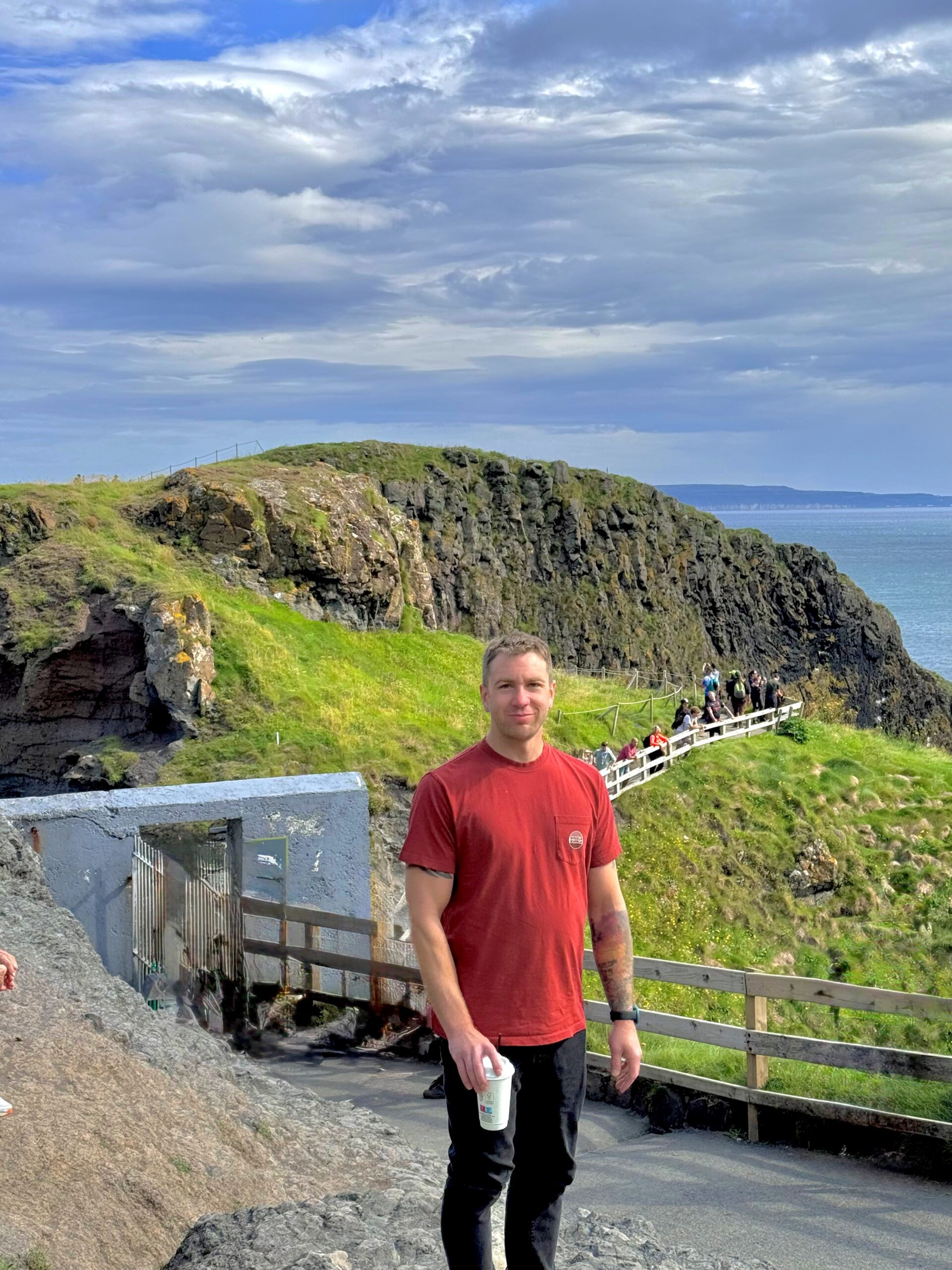
Access to the bridge is regulated by an attendant, and we had to wait for another group to exit before we could proceed. The bridge is narrow, with ropes on either side to hold onto as you cross. You cannot stop on the bridge and must continue straight across, but the crossing itself only takes a few minutes. It was a beautiful experience, and for those comfortable with the walk and the bridge, I highly recommend it.
On the Island Looking Toward the Bridge
 Walking Back to the ‘Mainland’
Giant’s Causeway

A Little History

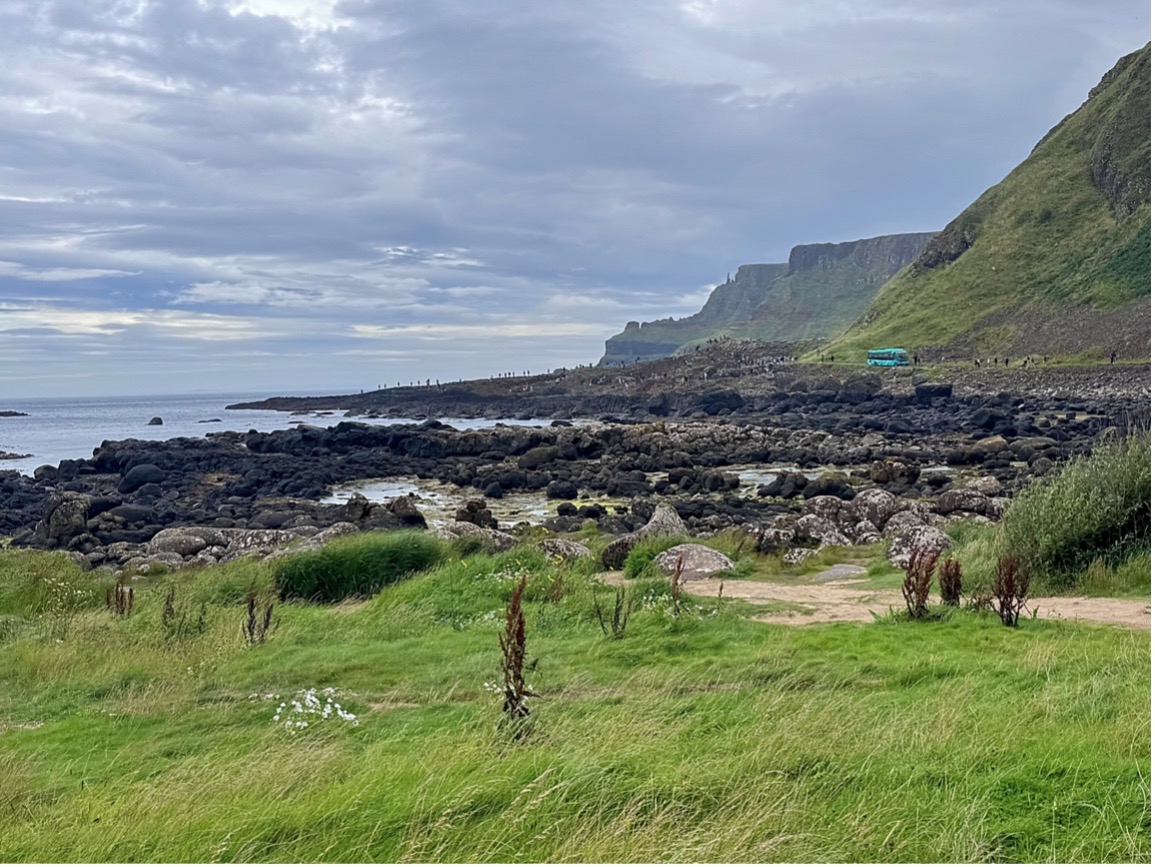
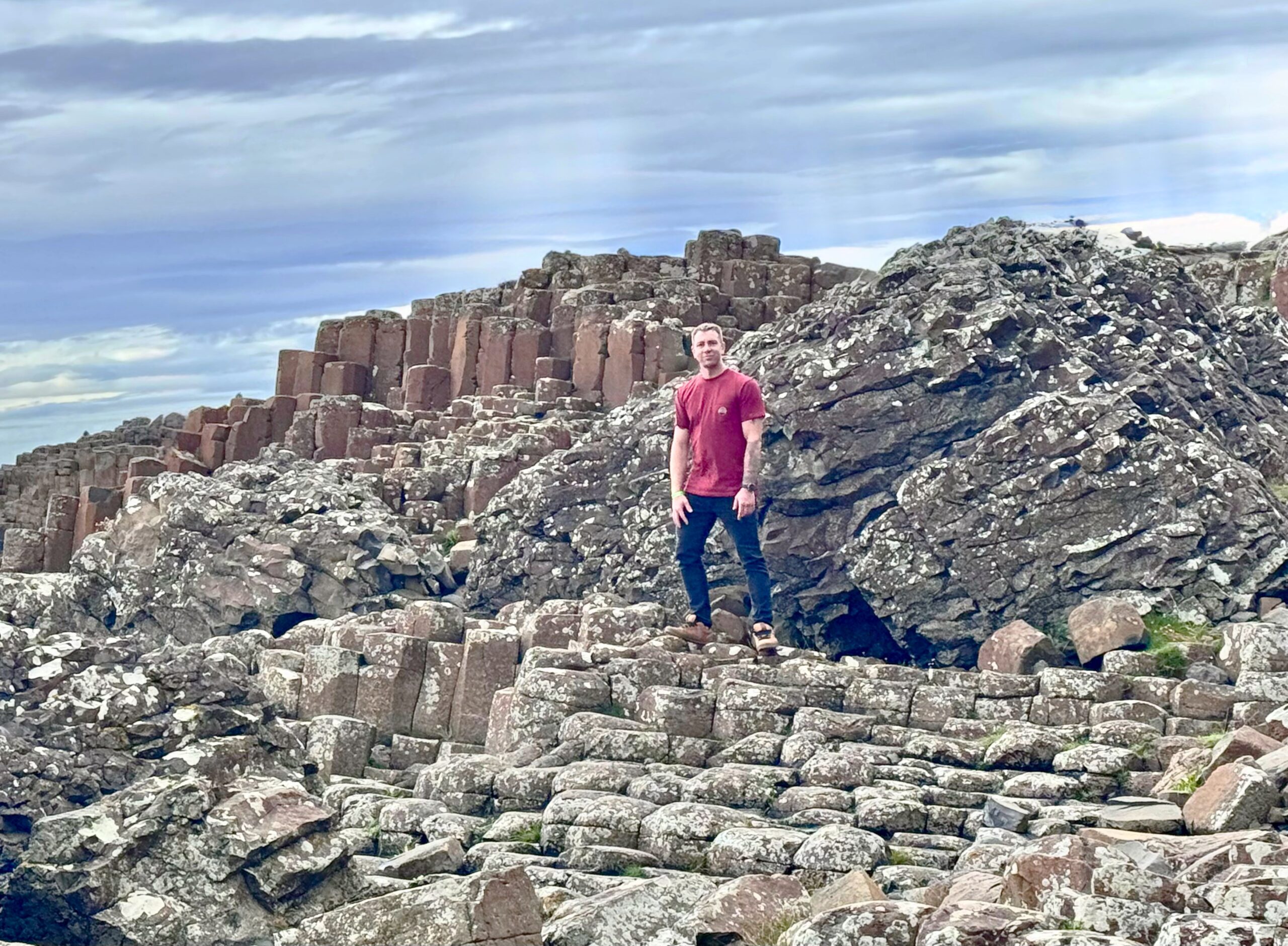
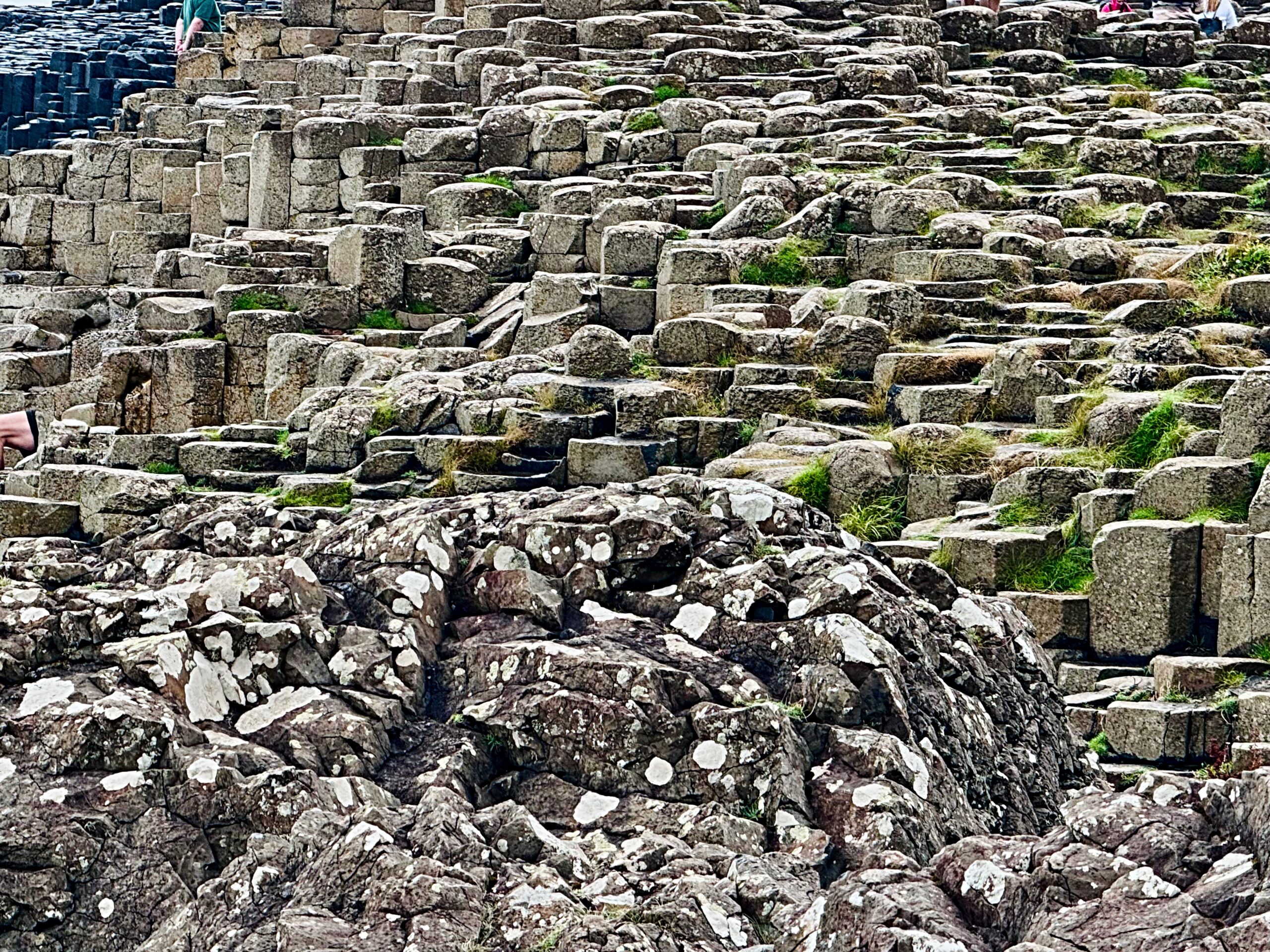
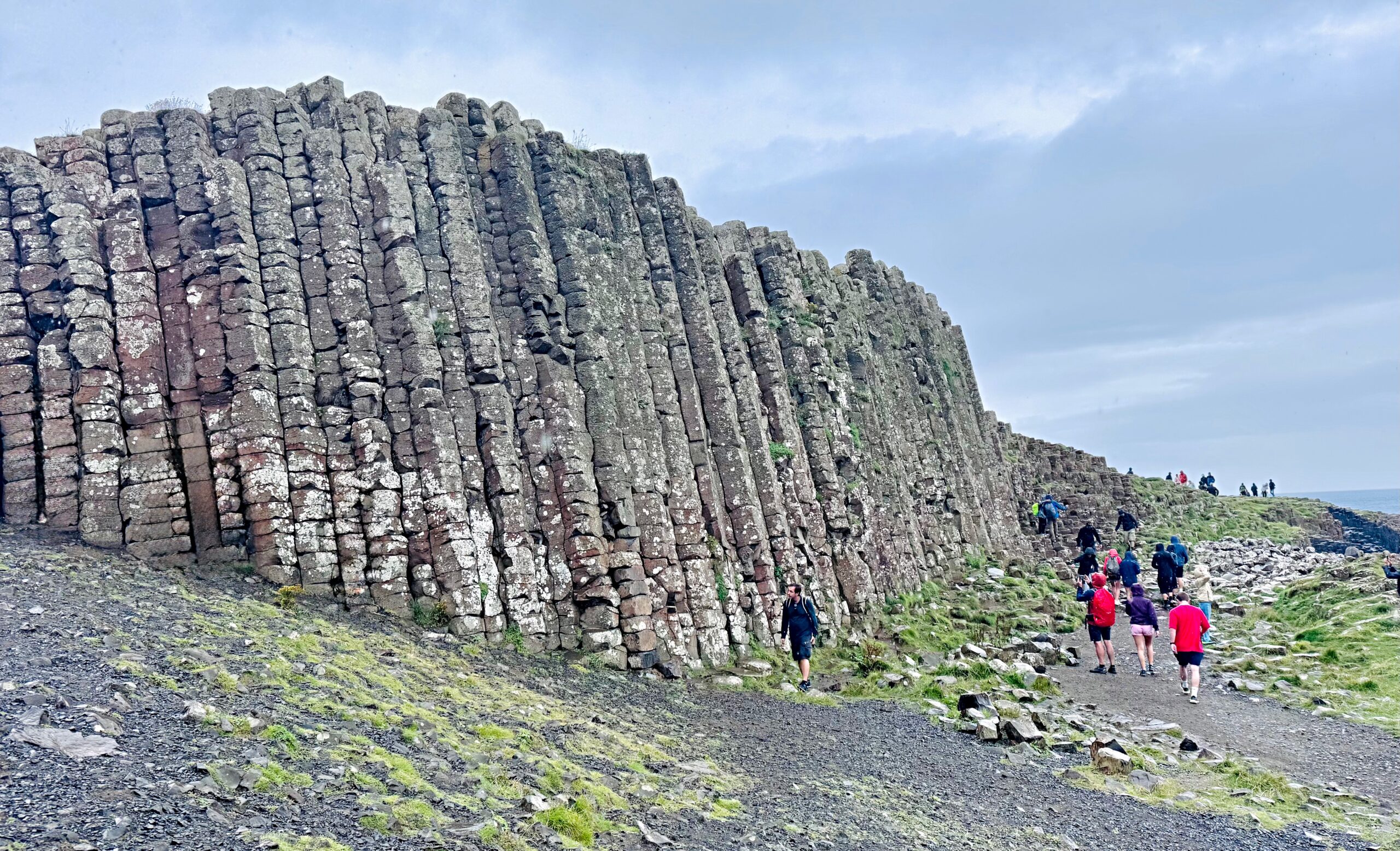
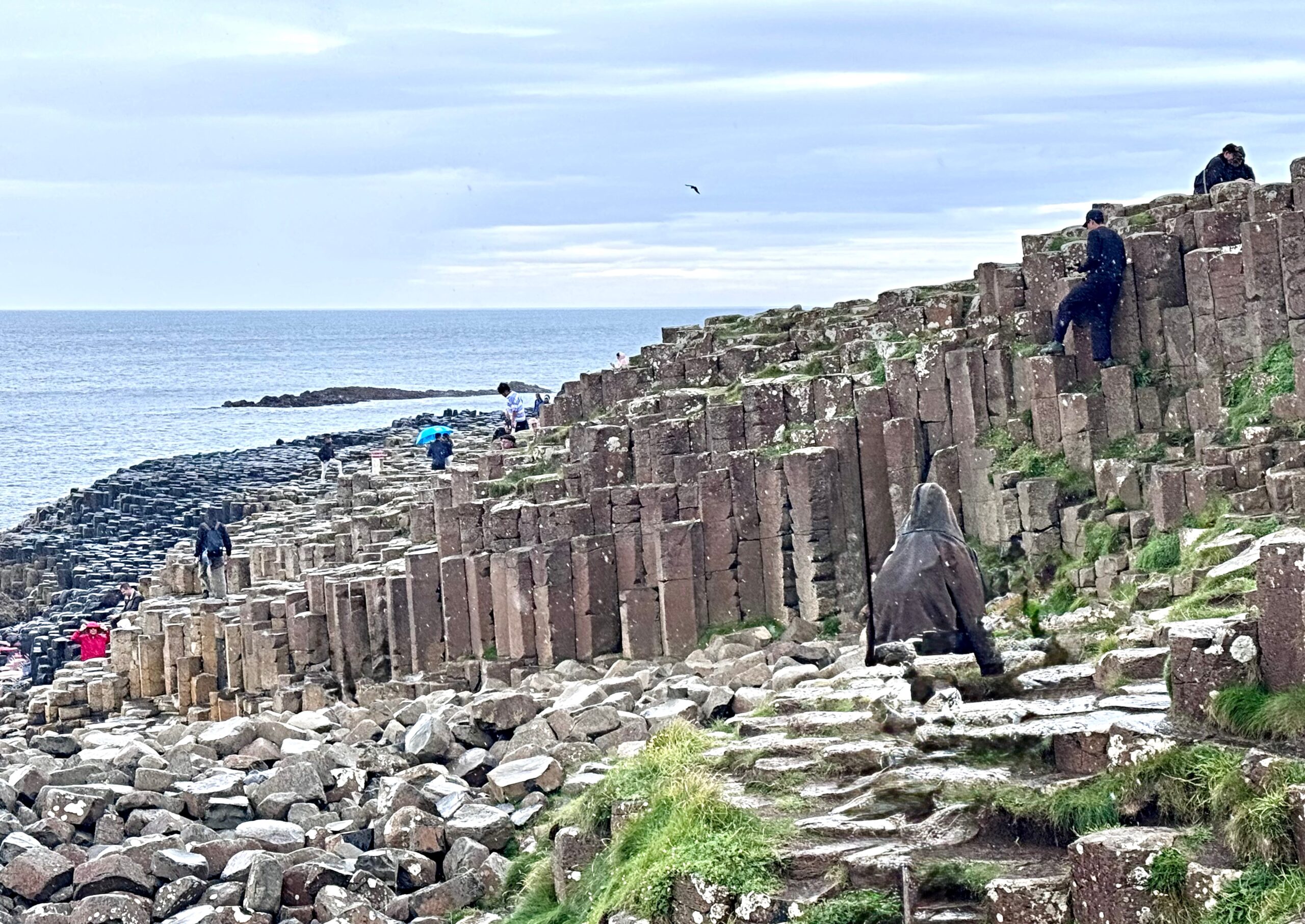
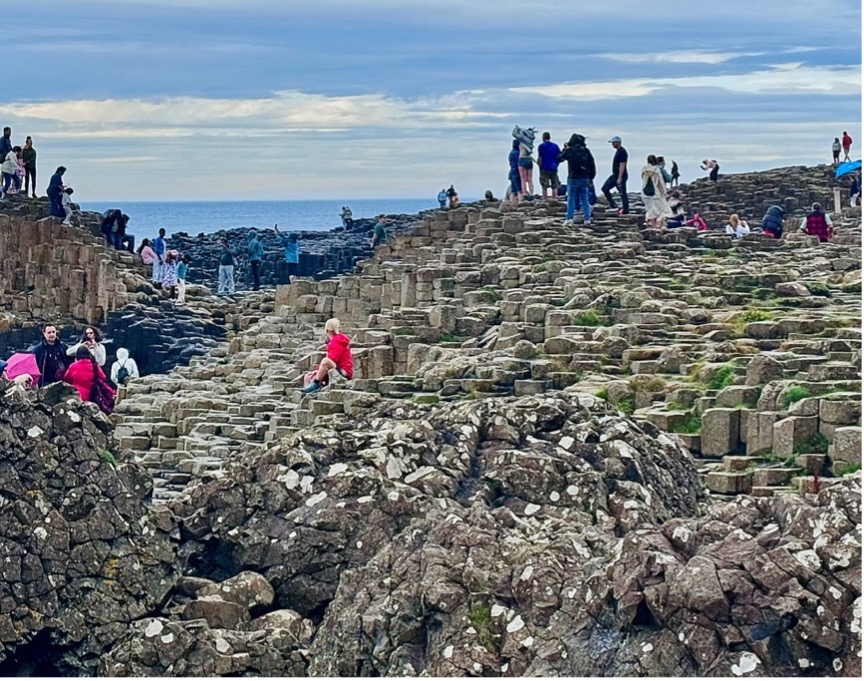
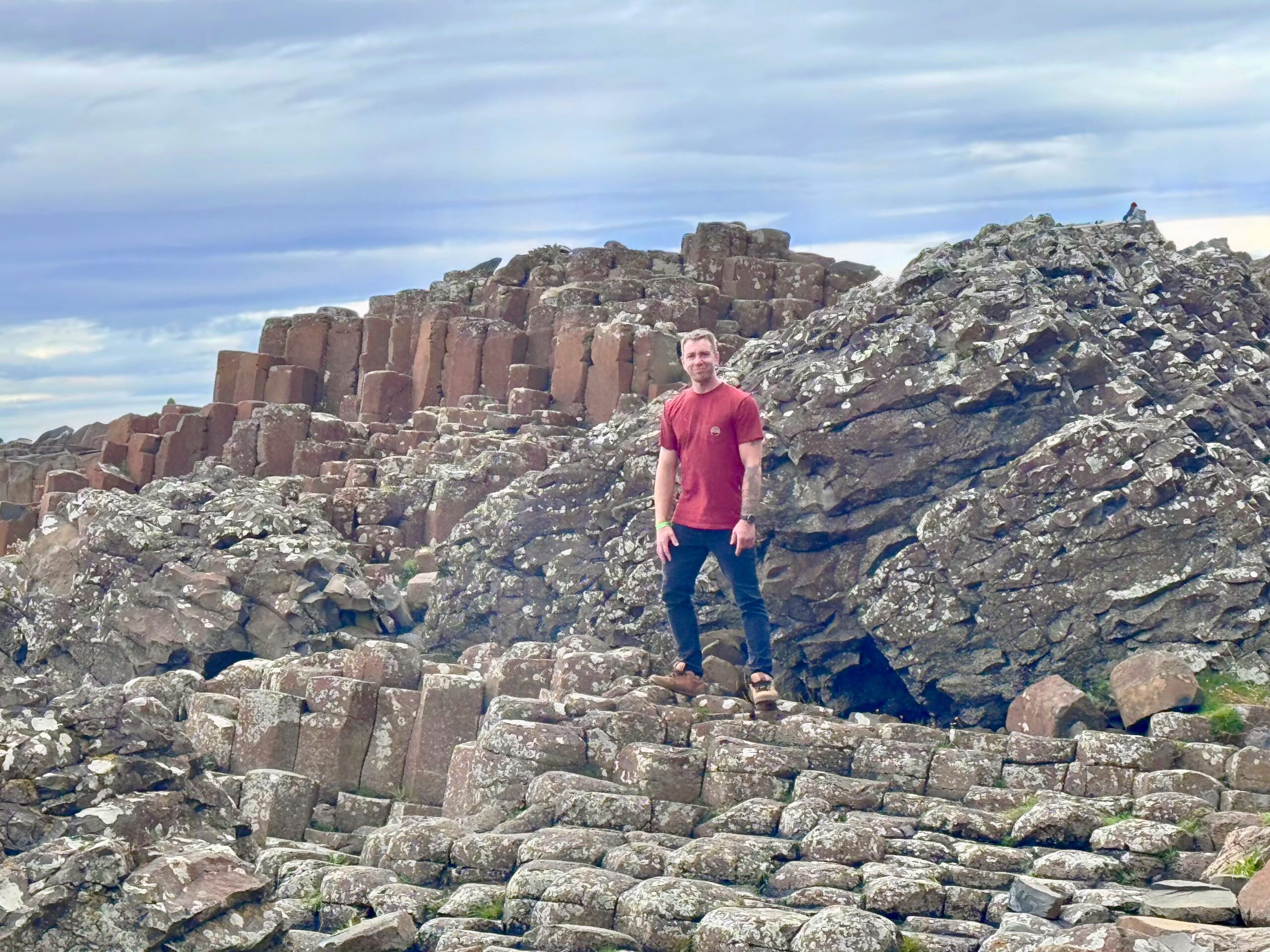
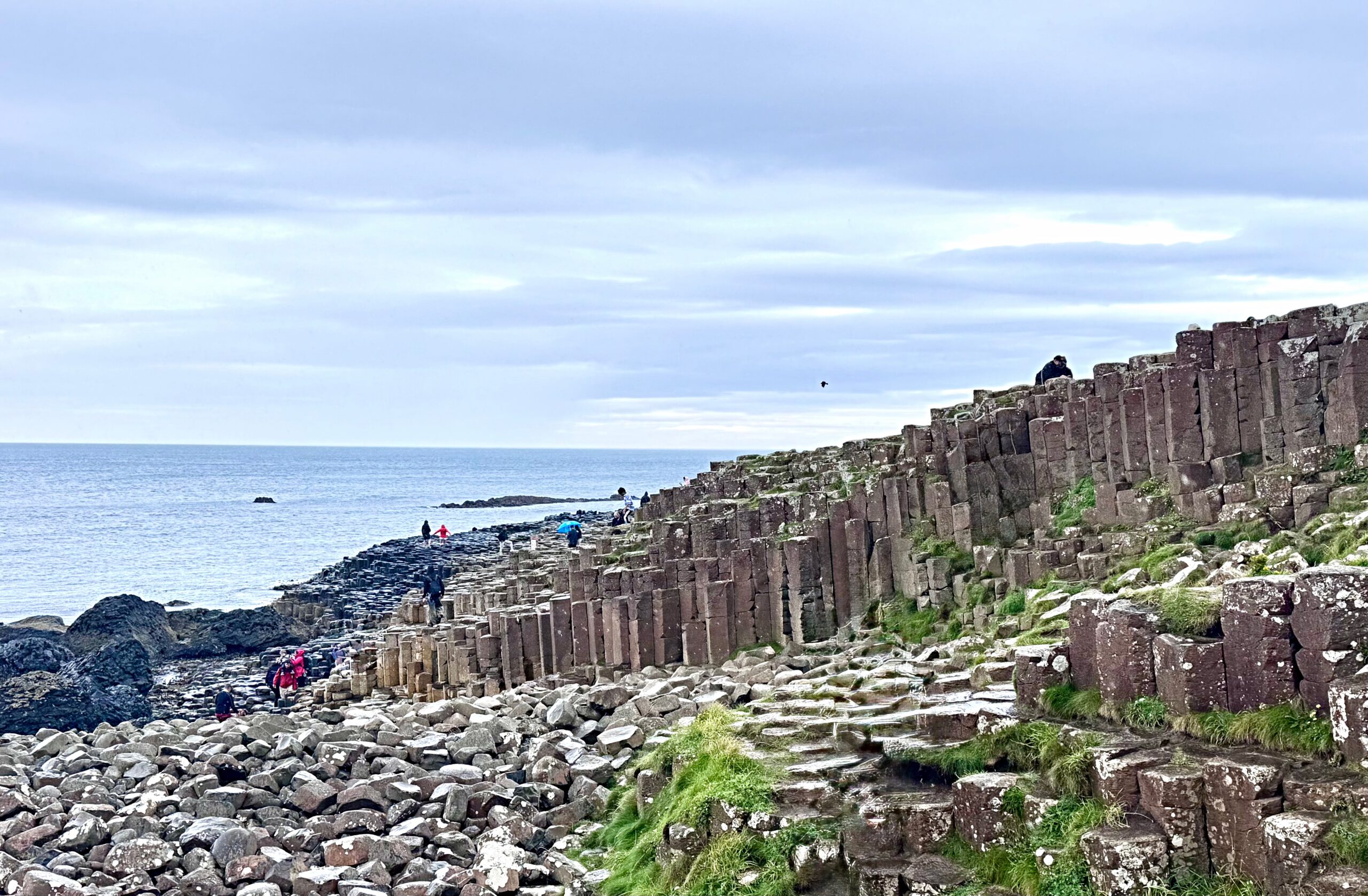
The Giant’s Causeway is one of Northern Ireland’s most recognizable natural landmarks and a UNESCO World Heritage Site. Located along the rugged coast of County Antrim, it is made up of around 40,000 interlocking basalt columns, many of them forming remarkably regular hexagonal shapes.

The columns were created nearly 60 million years ago during a period of intense volcanic activity. As thick layers of lava cooled and contracted, they fractured into the geometric formations visible today. Over millions of years, erosion and the movement of the sea gradually exposed the unusual landscape.

Of course, Irish legend offers a much more entertaining explanation. According to folklore, the giant Finn McCool built the causeway across the sea so he could confront the Scottish giant Benandonner. Whether you prefer geology or giants, the result is one of the most extraordinary landscapes in Ireland.

Exploring the Giant’s Causeway

The easiest and most popular way to explore the Giant’s Causeway is by following the Blue Trail from the Visitor Center down to the famous basalt columns. The route is about 0.8 miles (1.3 km) round trip and is rated easy, although the paved path is steep in places. There are several places to stop and rest along the way.

Once you reach the shoreline, you are free to walk among the columns and explore the unusual rock formations. This is where a little care is needed. The basalt stones are uneven and can become very slippery when wet, so sturdy shoes are a good idea, and visitors should pay attention to conditions and ranger advice.

For those wanting more of a hike, several longer trails climb above the Causeway and provide beautiful views of the coastline. The Red Trail includes the famous Shepherd’s Steps—162 steep stone steps—and uneven terrain, while the clifftop Yellow Trail is rated challenging and follows rougher paths and grassy tracks.

Difficulty: The basic visit to the Causeway is easy to moderate for most reasonably mobile visitors. The steep walk back uphill to the Visitor Center is probably the most tiring part. Walking directly on the stones requires more balance because of the uneven surface. Visitors with mobility limitations can enjoy parts of the site without climbing on the rocks, and the Green Trail provides the most accessible route.

Our Experience

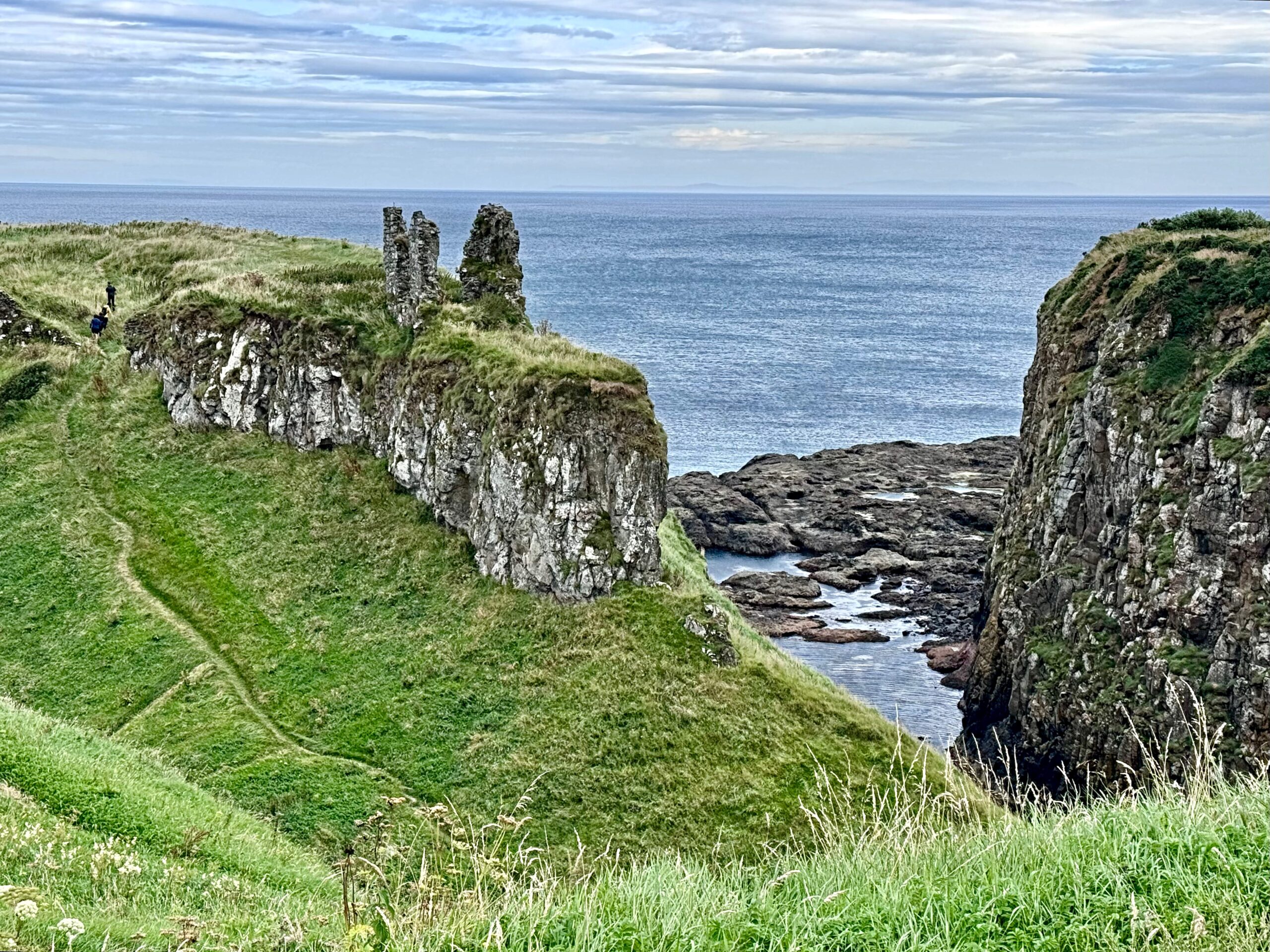
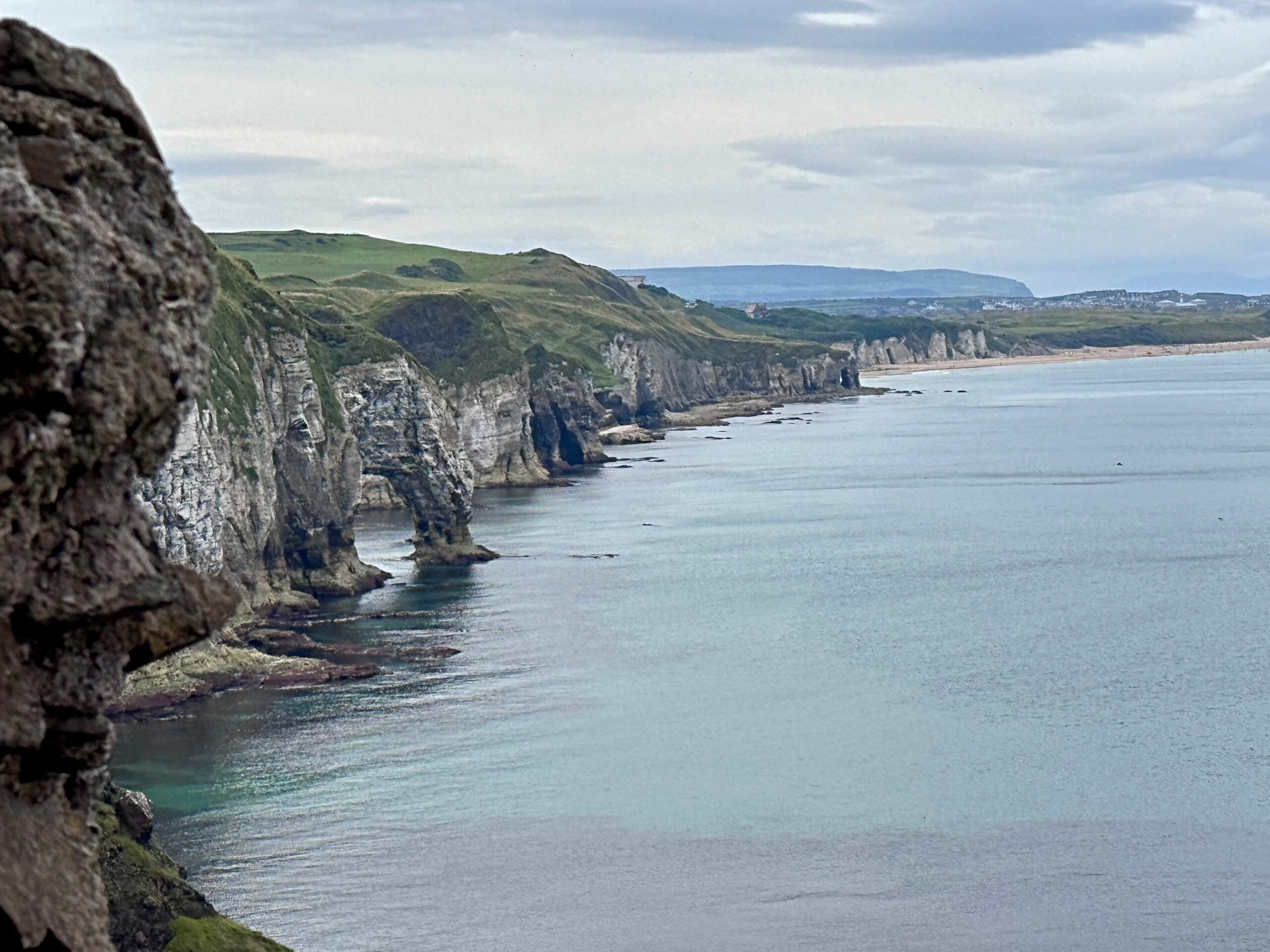
After the rope bridge, we headed to the Giant’s Causeway.  On the way, we were able to view the ruins of Dunseverick Castle perched above the dramatic Causeway Coast.

After a brief stop at the Dunseverick Castle viewpoint we proceeded to Giant’s Causeway.  There is a charge to enter the Visitor Center, but walking down to the Giant’s Causeway itself is free. Our guide had complimentary admission to the Visitor Center, so we went inside. There are some interesting exhibits and information, as well as a gift shop. We did not feel that paying to enter the Visitor Center was necessary to enjoy the Causeway itself.
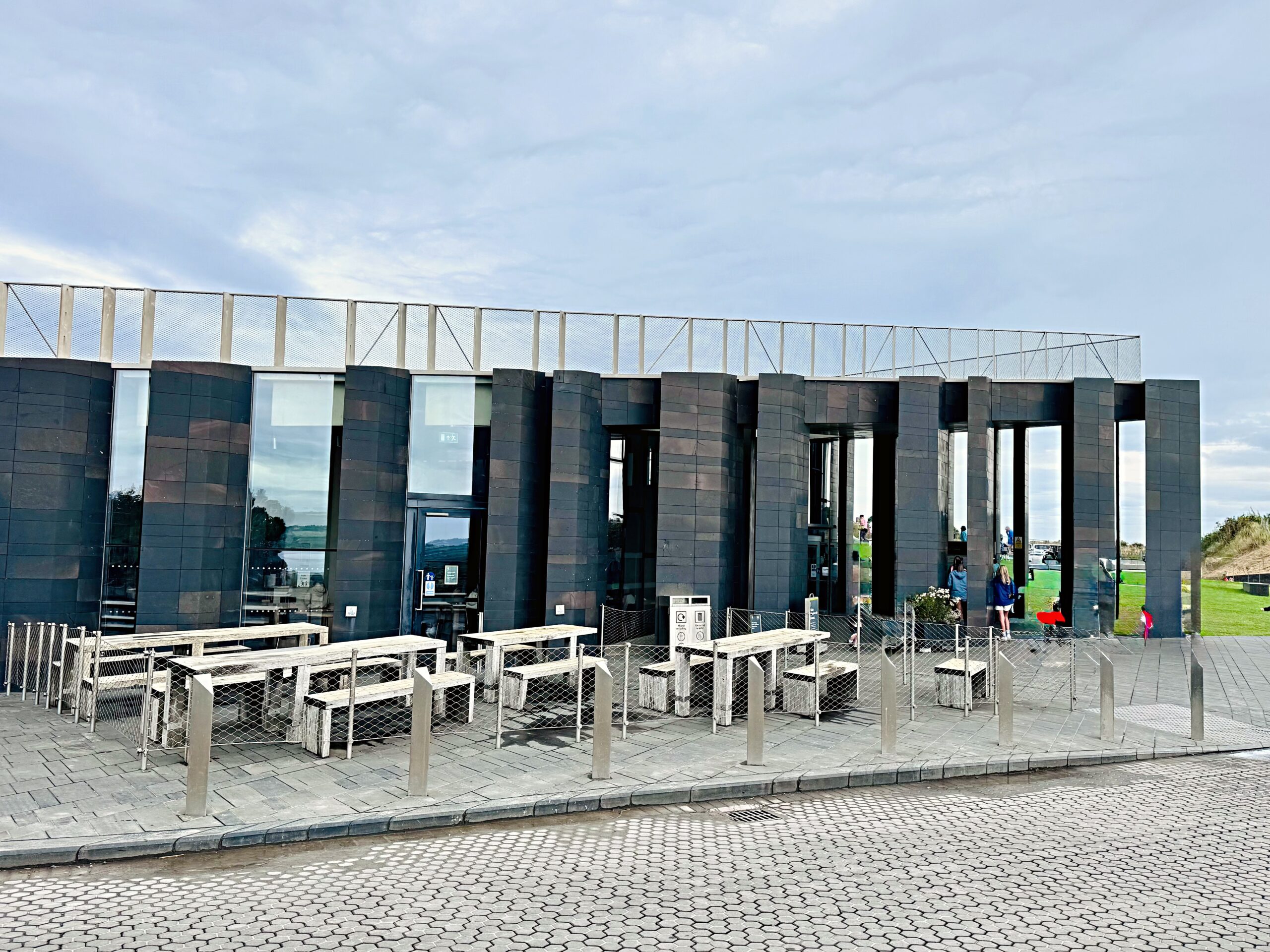
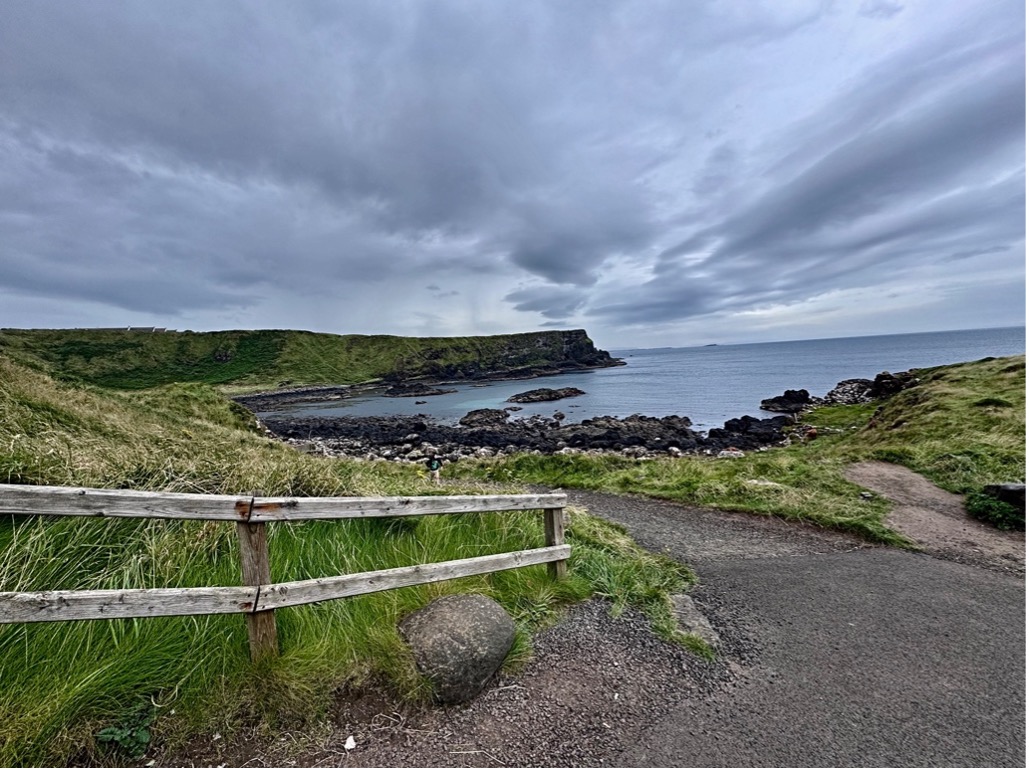
We then headed down the path to the Causeway.  It took us about 25 minutes, and it started to drizzle along the way.  The views along the path were still gorgeous and not obscured by the light rain. If the weather is nice, I recommend taking your time on the walk so you can fully appreciate the scenery.
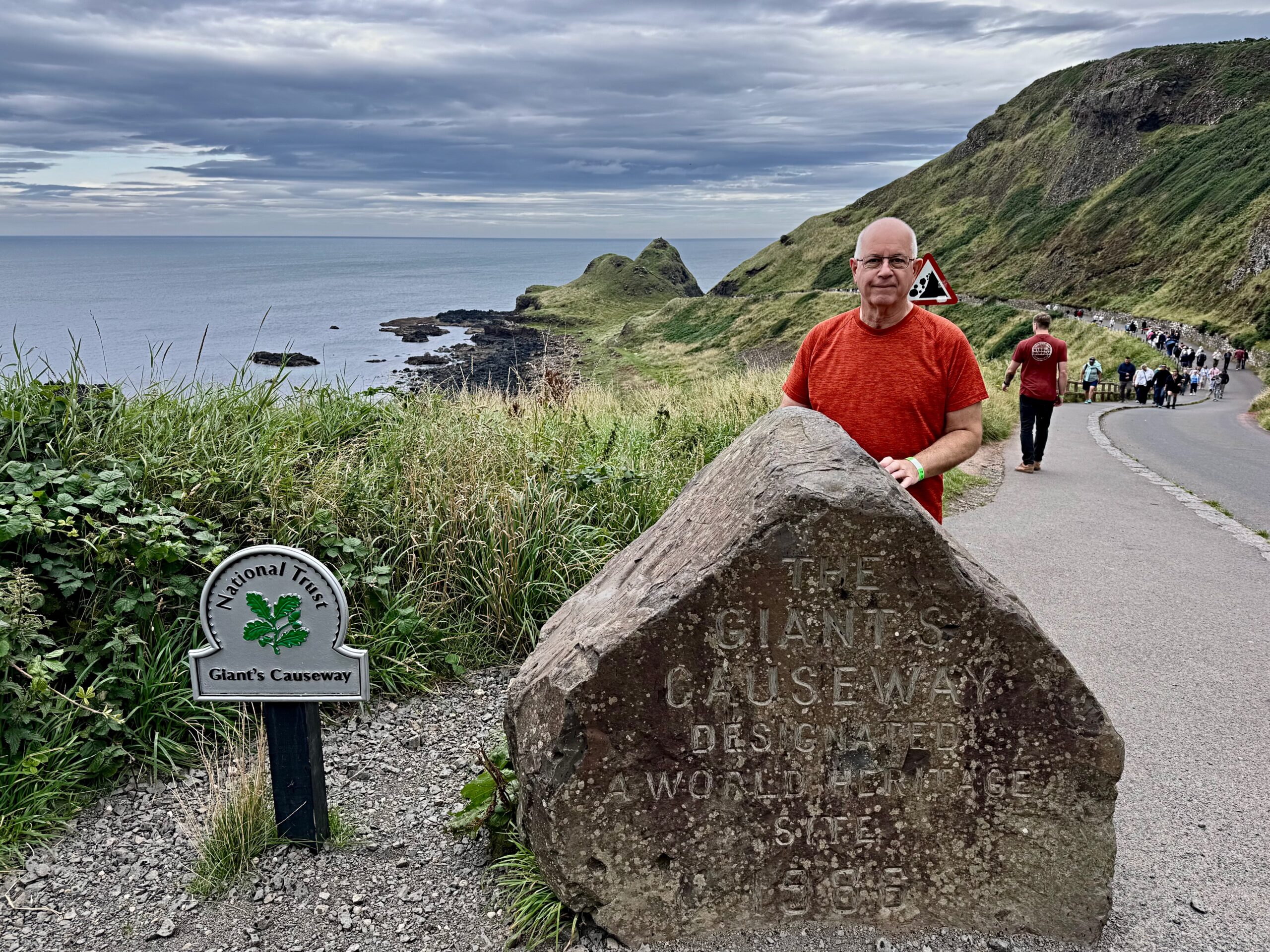
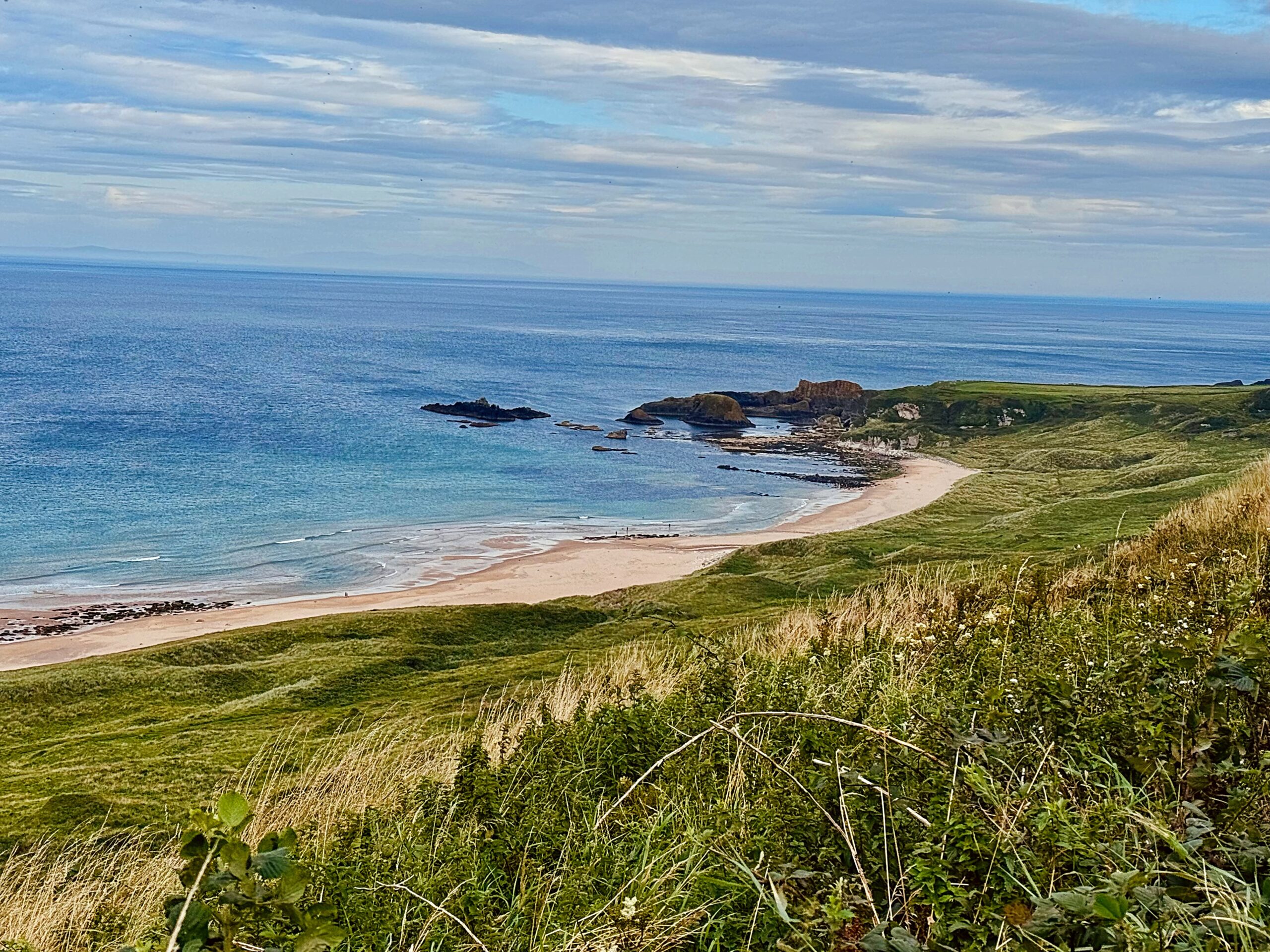
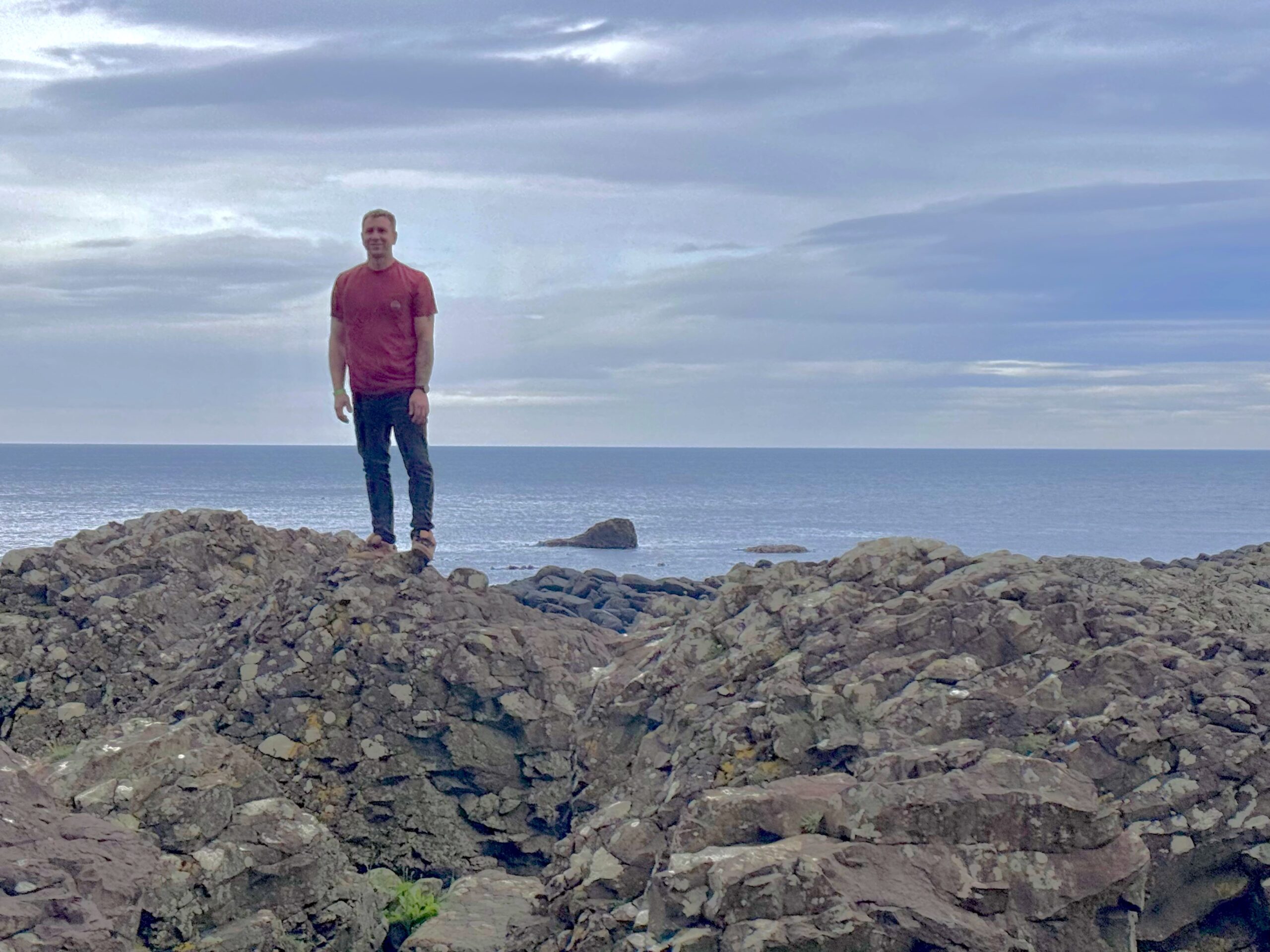
The Causeway area itself is quite vast.  Rob was comfortable climbing on the stones, but Tom and I were happy to admire them from more of a distance.  Unfortunately, after about 15 minutes the rain became more steady, and we decided to return to the Visitors Center area.  I do feel we needed more time to fully appreciate the area.  We could have easily spent an hour here.
The Causeway area itself is quite vast.  Rob was comfortable climbing on the stones, but Tom and I were happy to admire them from more of a distance.  Unfortunately, after about 15 minutes the rain became more steady, and we decided to return to the Visitors Center area.  I do feel we needed more time to fully appreciate the area.  We could have easily spent an hour here.
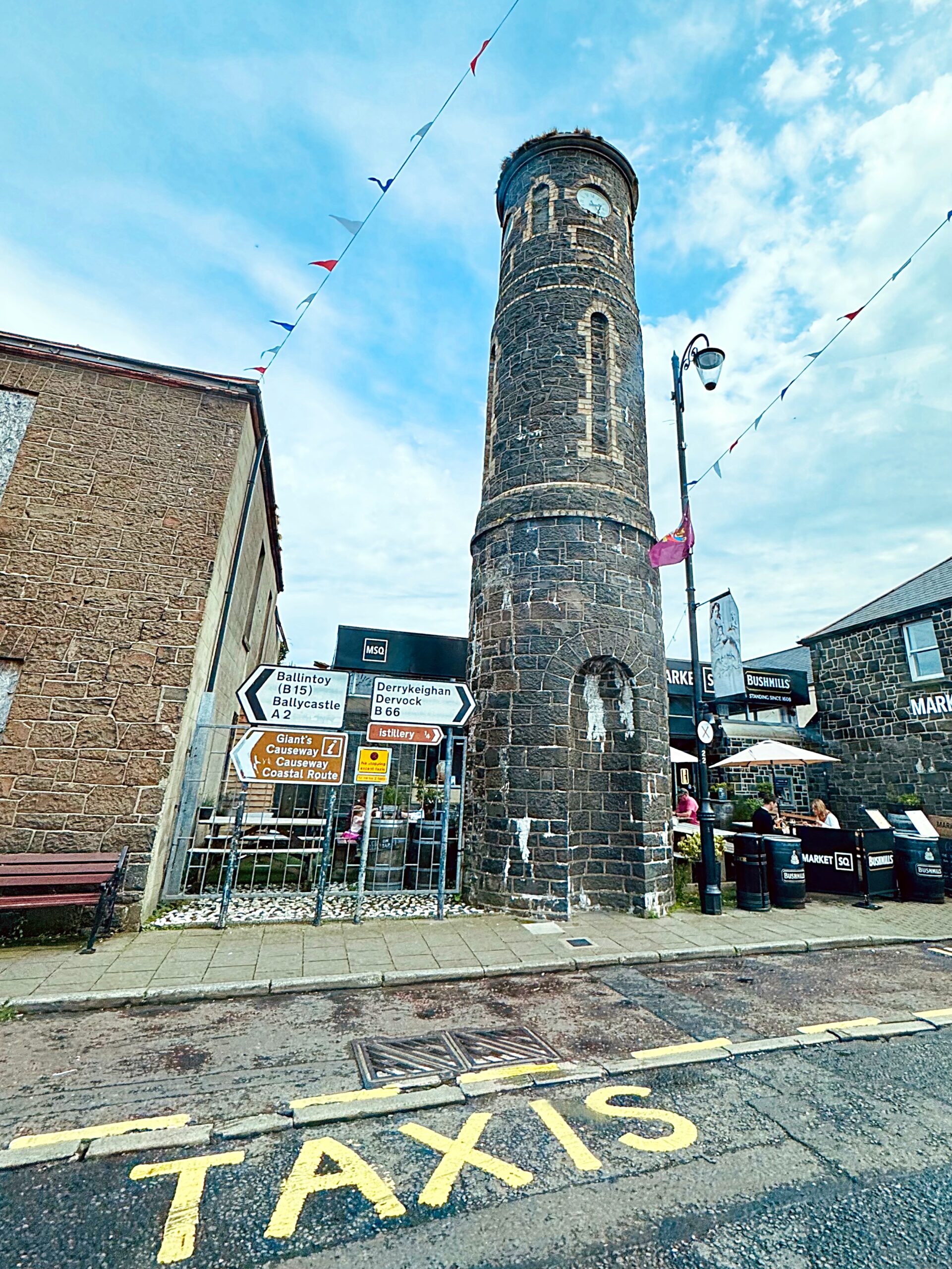
After leaving Giant’s Causeway, we passed through the village of Bushmills.
Dunluce Castle

A Little History

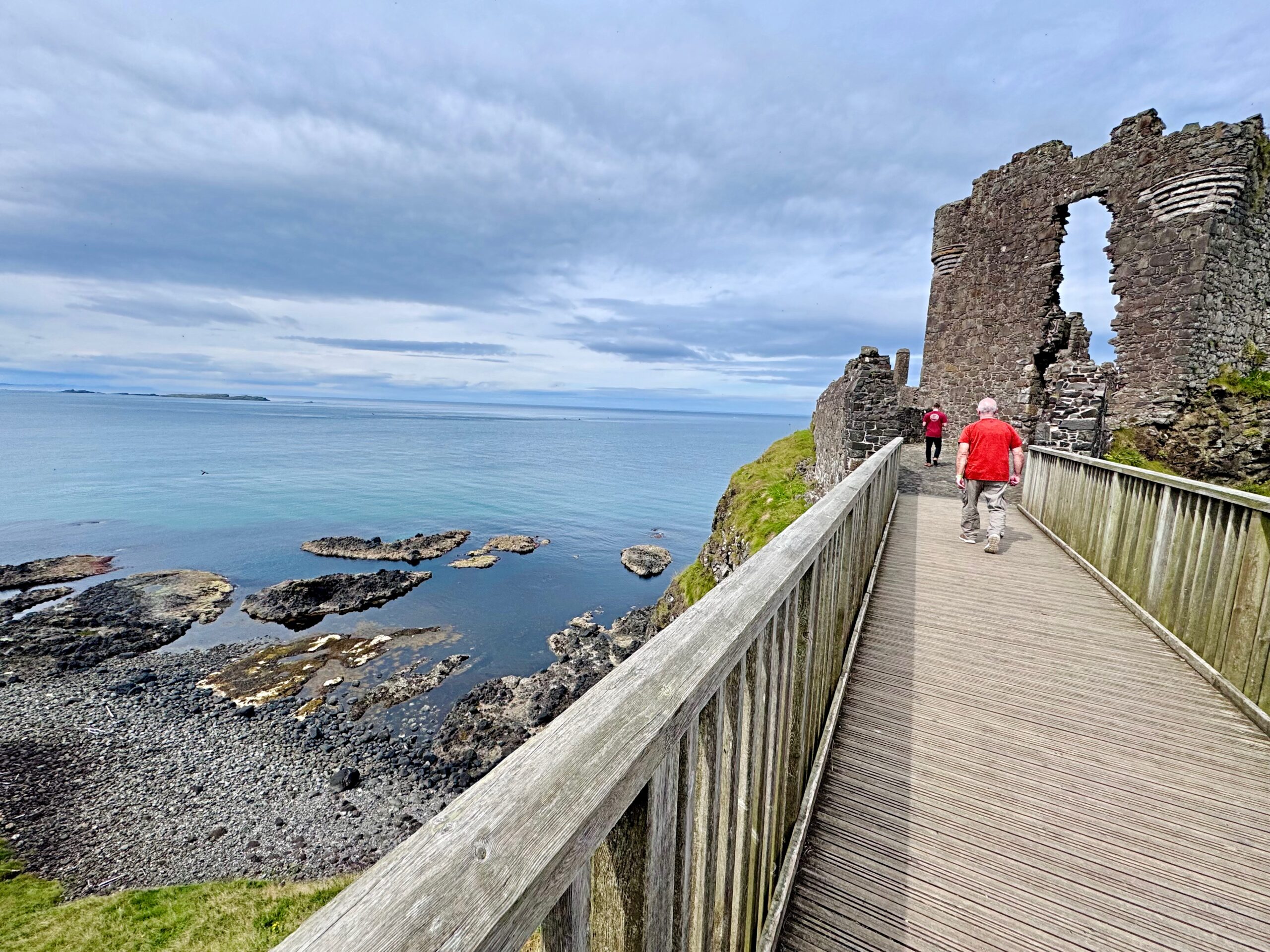
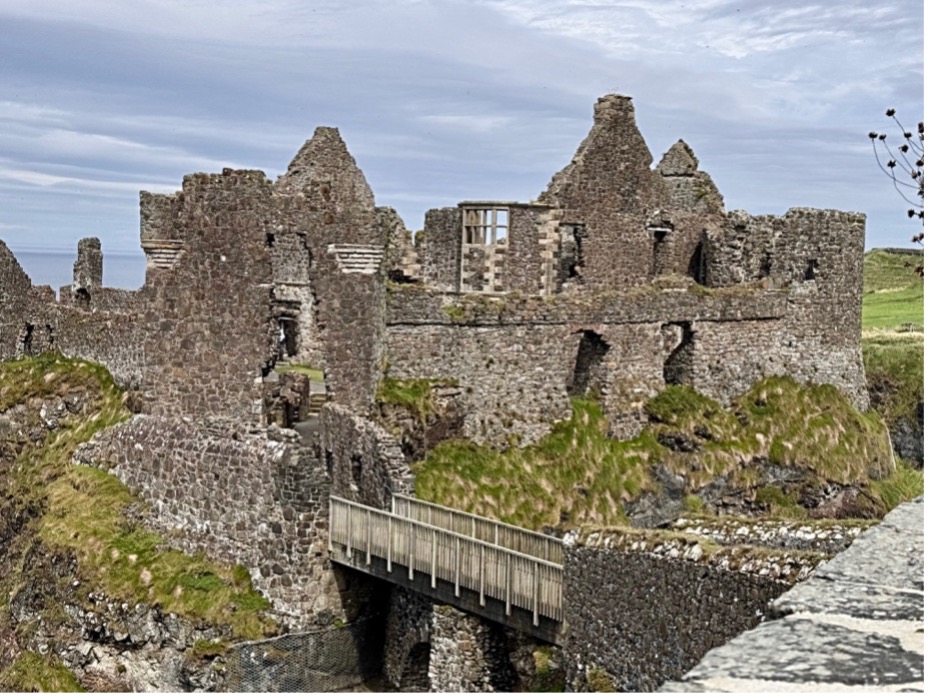
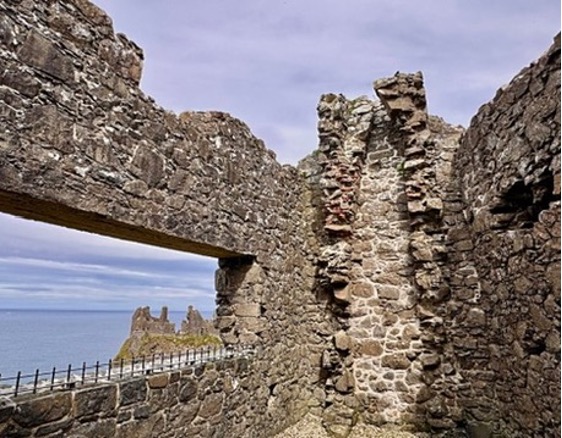
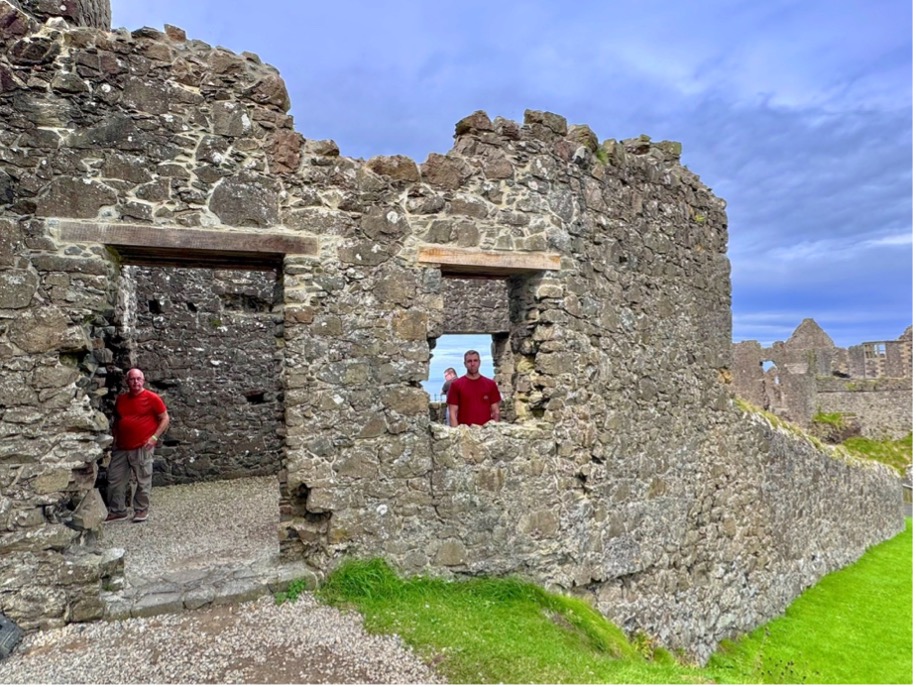
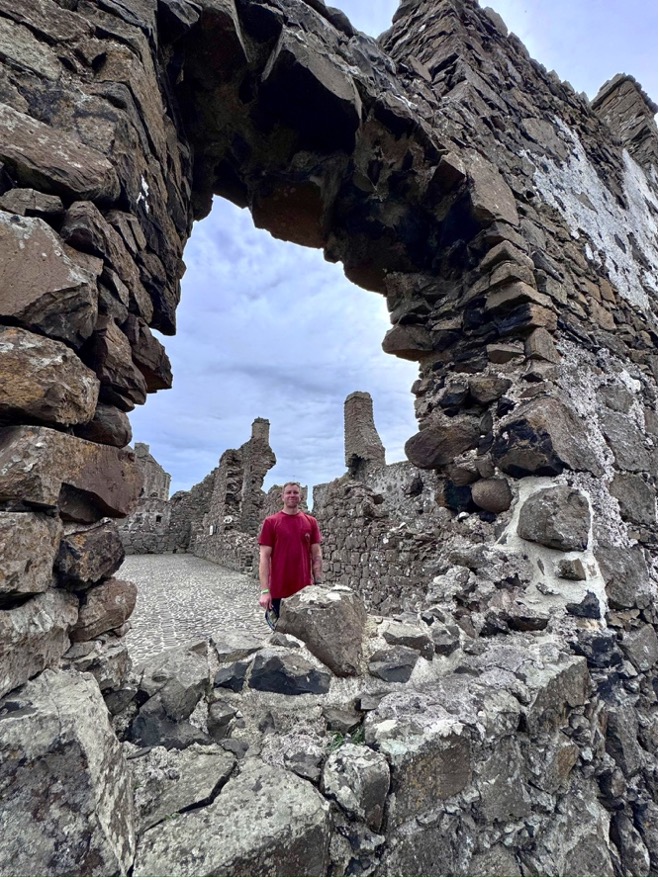
Perched dramatically on the edge of a basalt cliff overlooking the North Atlantic, Dunluce Castle is one of Northern Ireland’s most striking medieval ruins. Its spectacular setting is part of what makes it unforgettable—the castle appears to cling to the cliff above the sea.

The site dates to the 13th century, although much of the castle seen today was built and expanded during the 16th and 17th centuries by the MacQuillan and MacDonnell clans. Dunluce became an important stronghold along the Causeway Coast and was once the seat of the powerful MacDonnell family.

Life at Dunluce was not always peaceful. The castle witnessed clan rivalries, political struggles and turbulent periods in Irish history. According to a well-known local legend, part of the castle kitchens collapsed into the sea during a storm, although historians debate exactly how much of that story is true.

Today, visitors can walk through the atmospheric ruins, cross the bridge leading onto the rocky headland and enjoy sweeping views of the coastline. Even in ruins, Dunluce gives a wonderful sense of what a dramatic and formidable fortress this must once have been.

Visiting the Castle

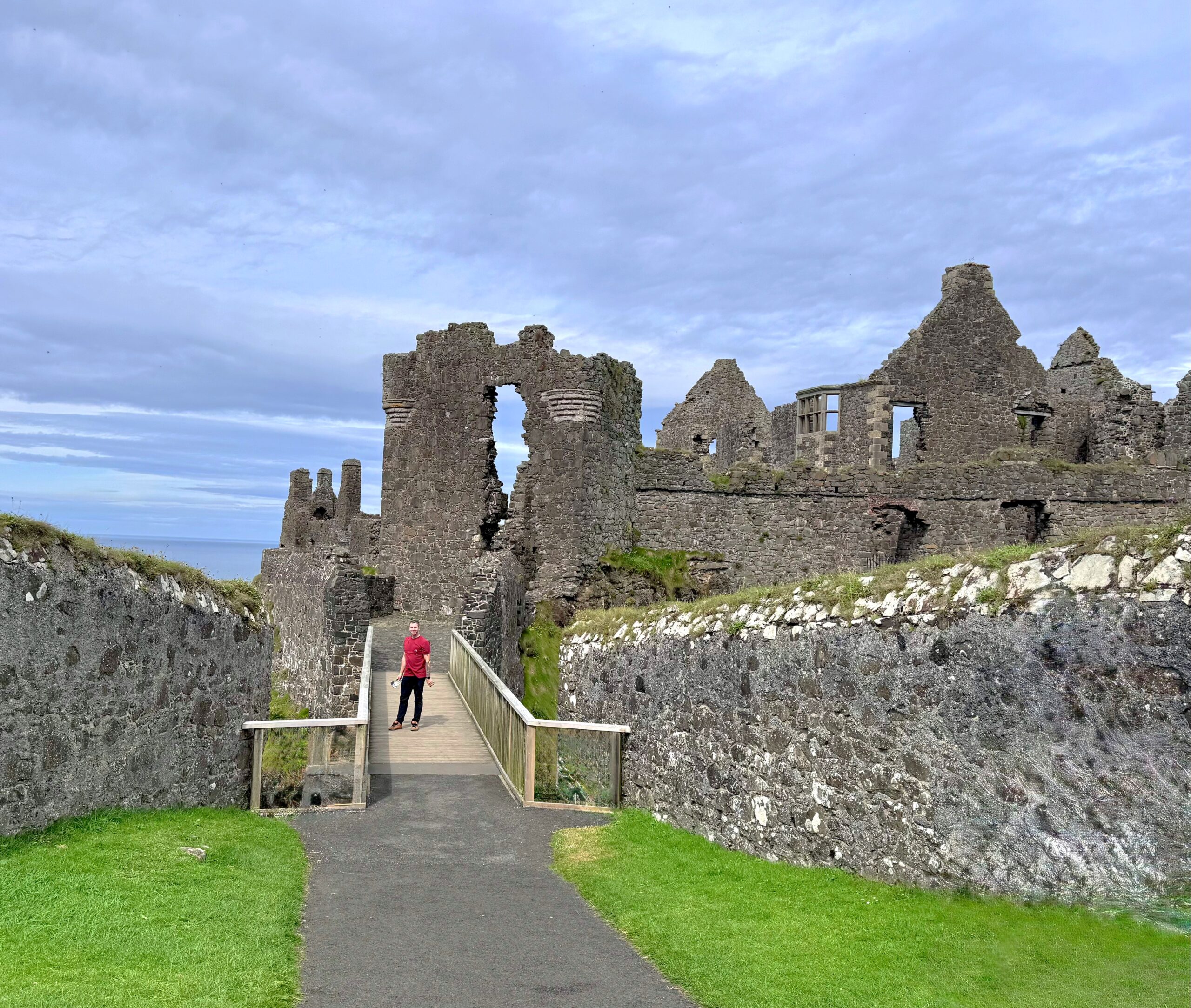
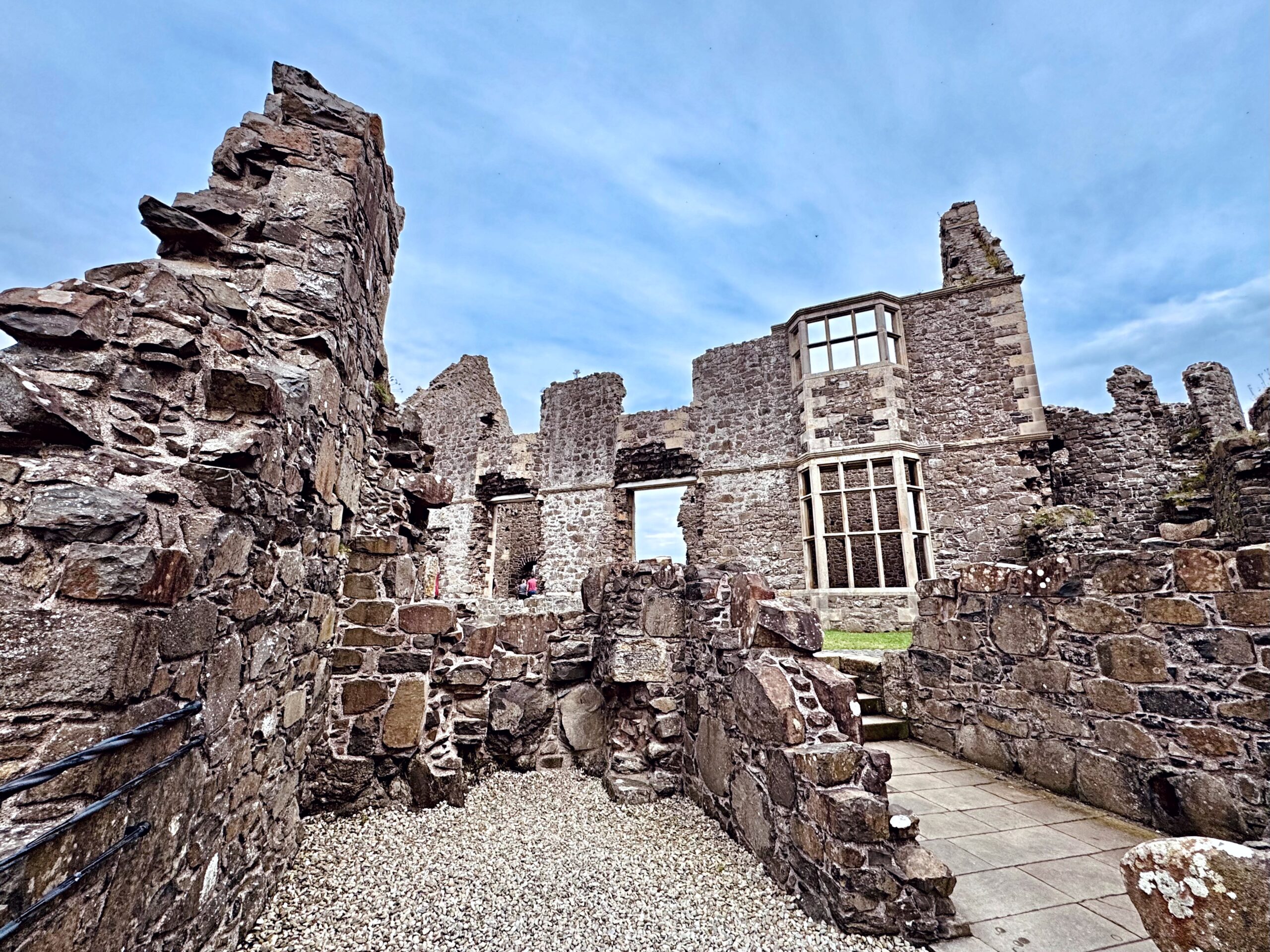
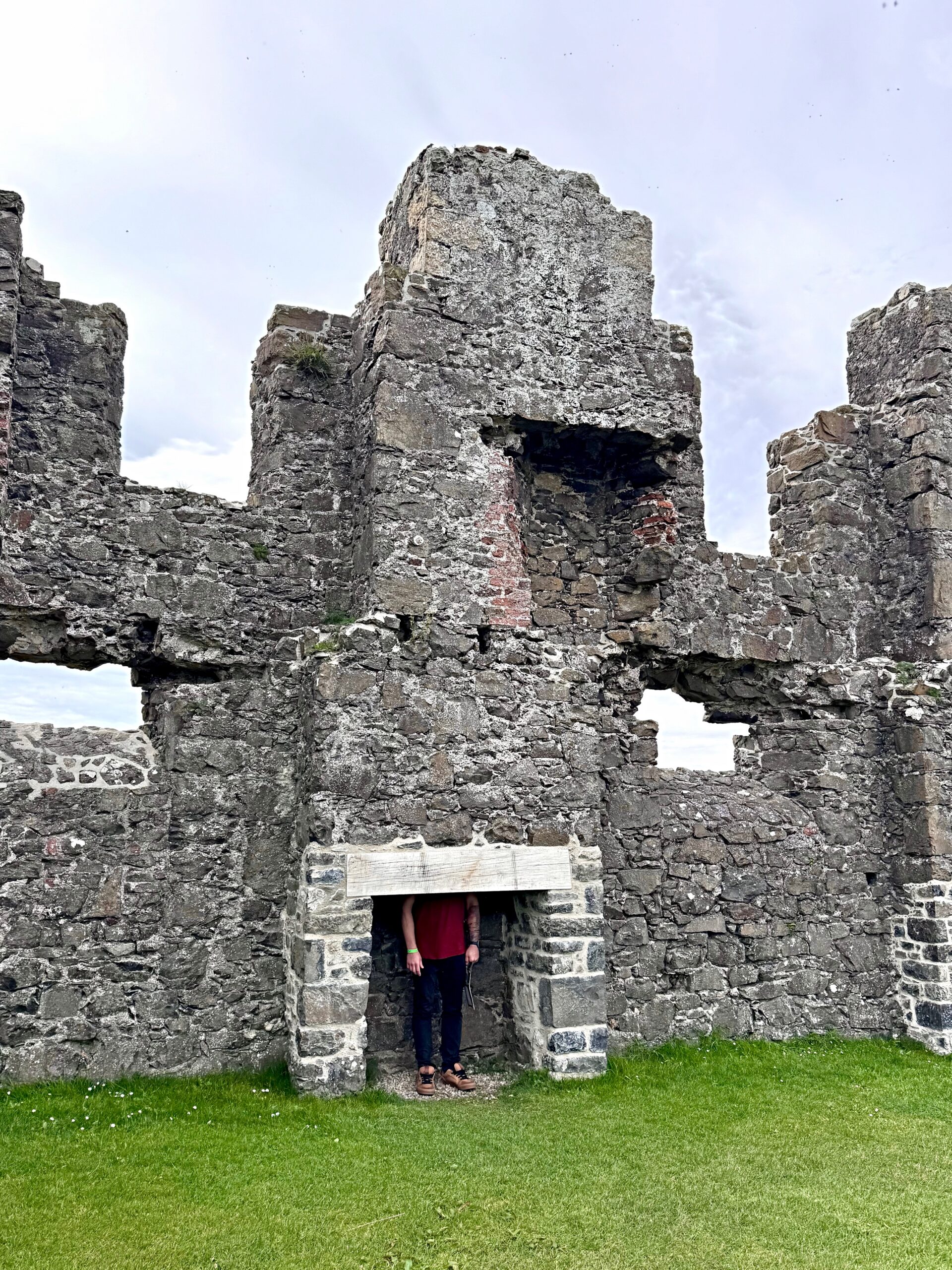
Visiting Dunluce Castle is relatively straightforward, but there are a few things to know before you go. From the entrance, visitors follow a short path and cross a narrow bridge to the rocky headland where the castle ruins sit. Once inside, you can wander through the remains of the towers, courtyard and living areas while taking in dramatic views of the Atlantic and surrounding cliffs.

The site is not especially large, and most visitors can explore it comfortably in about 45 minutes to an hour. The terrain is uneven in places, with stone steps, rough surfaces and some slopes, so sturdy shoes are a good idea.

Difficulty: Easy to moderate. The walk is not long, but the uneven ground and steps may be challenging for anyone with limited mobility. Much of the appeal of Dunluce is simply wandering through the ruins and enjoying the coastal views, so there is no need to rush.

Our Experience

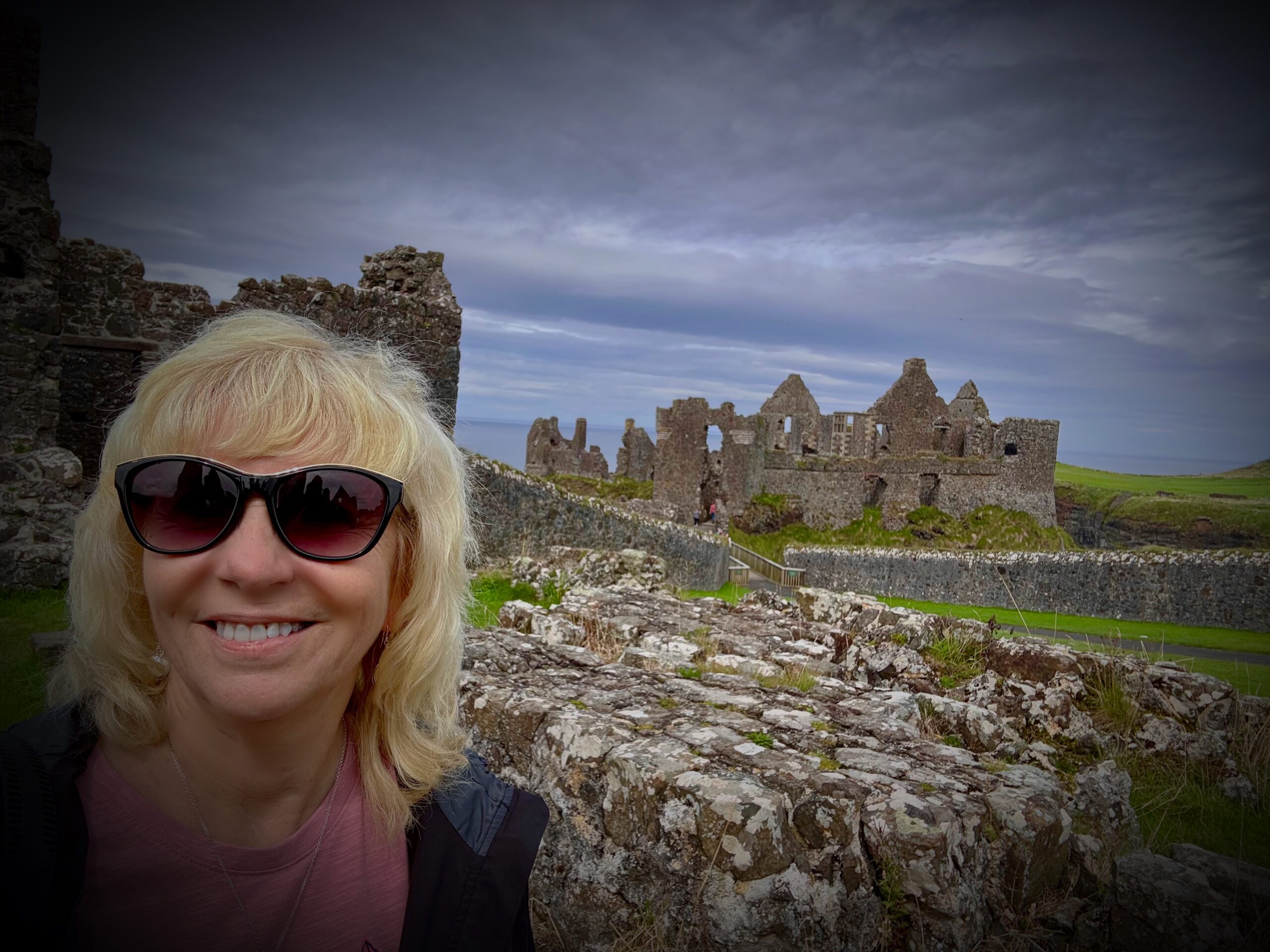
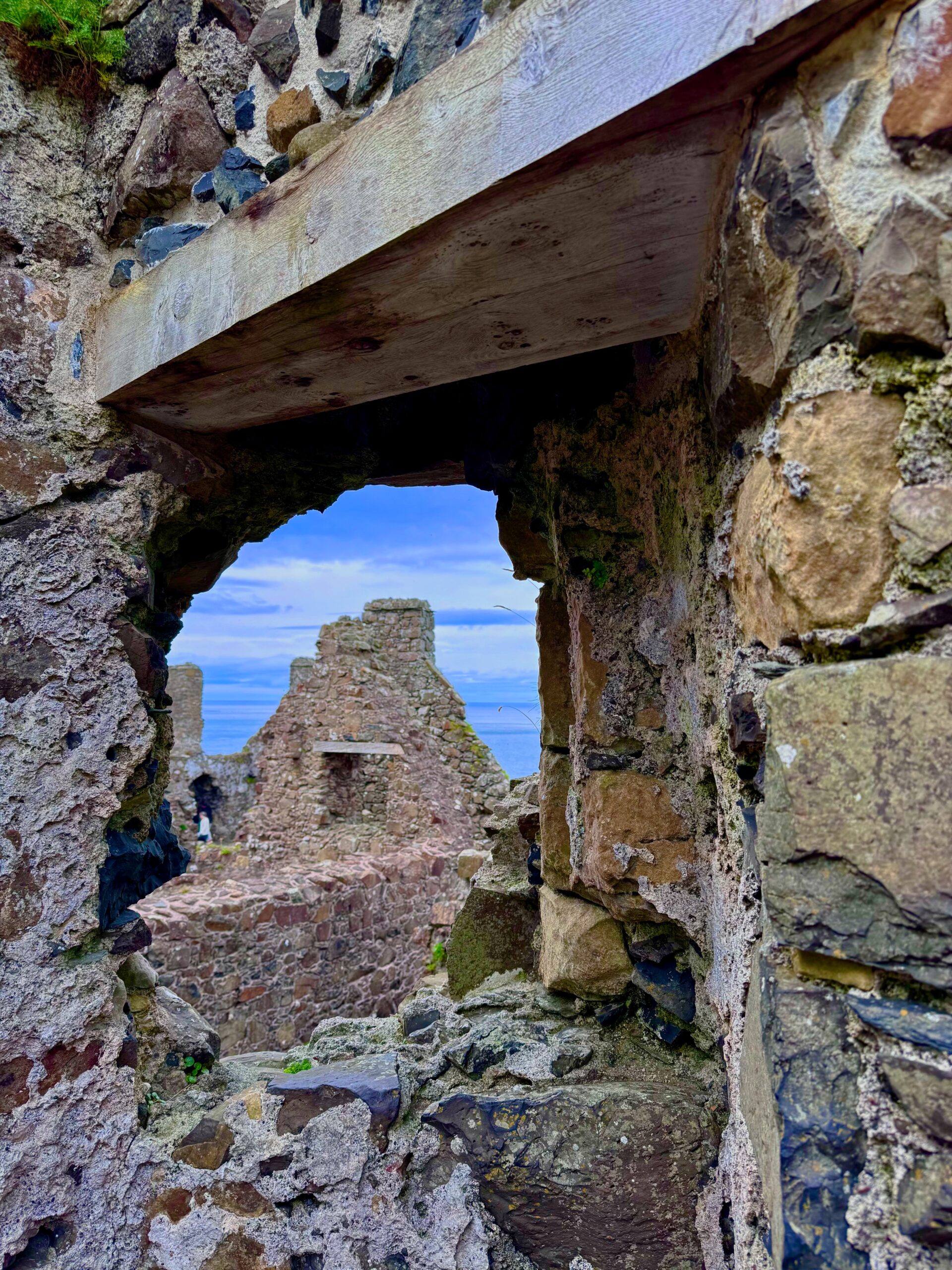
Our final stop on our Northern Ireland day trip was Dunluce Castle, and we were very impressed with it. There is a small fee for entry, but tickets do not need to be purchased in advance. We spent about 45 minutes here and felt that was enough time. We were very glad the rain had stopped, and the sun was even peeking through the clouds. That is Ireland—raining one minute and sunny the next. Overall, we were fortunate to have very little rain on our trip, and the weather never seriously interfered with our plans.

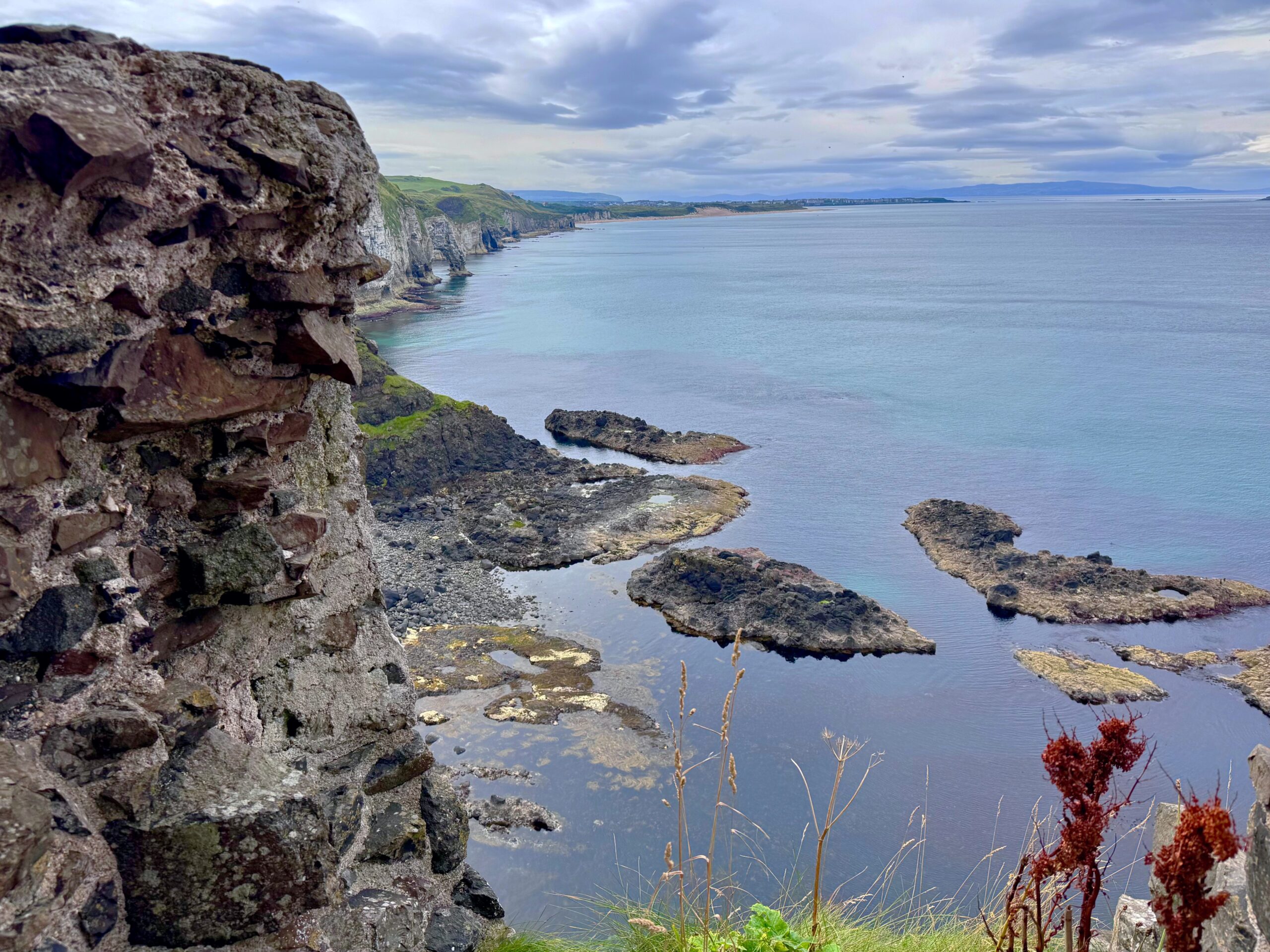
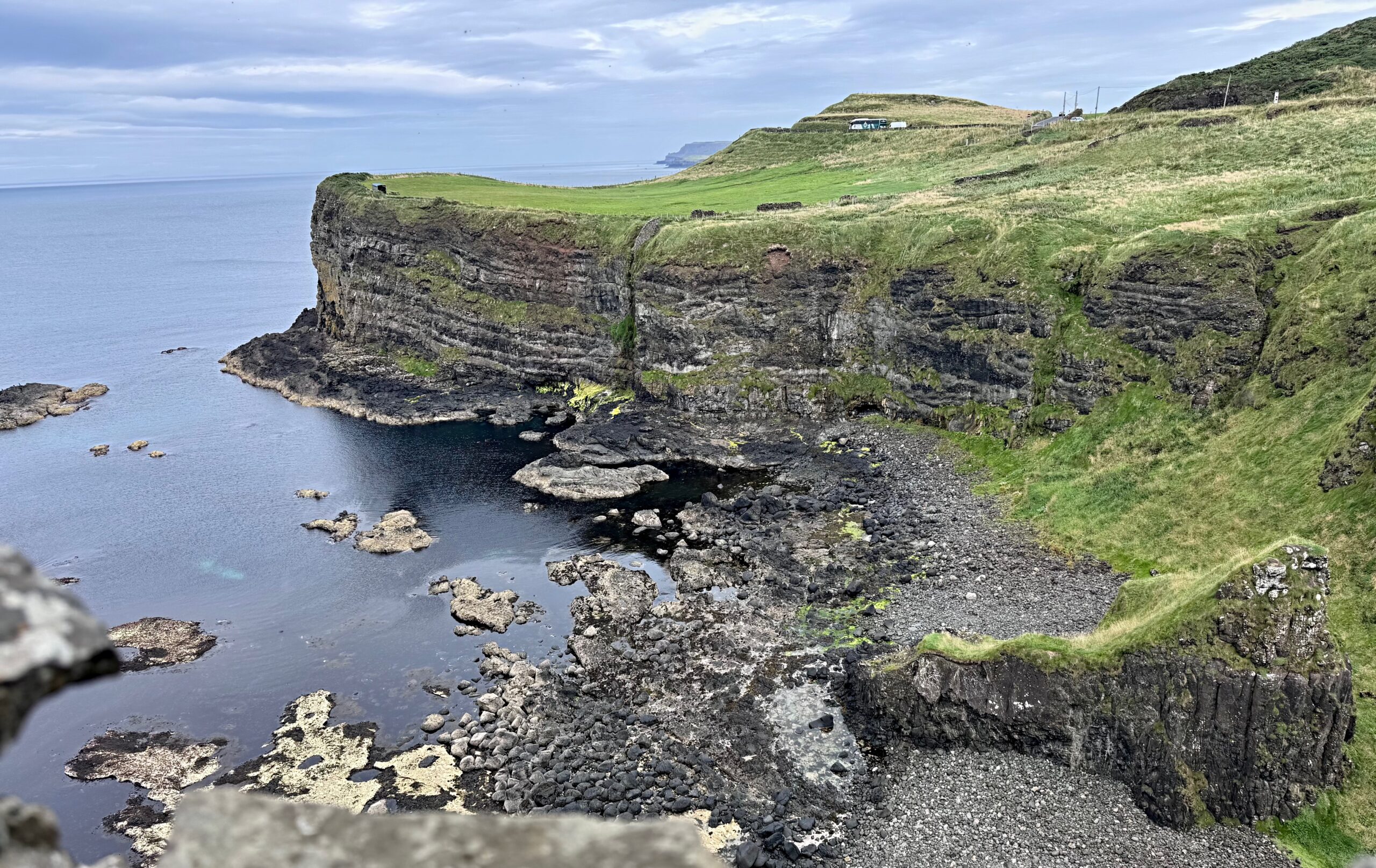
View from the Entrance

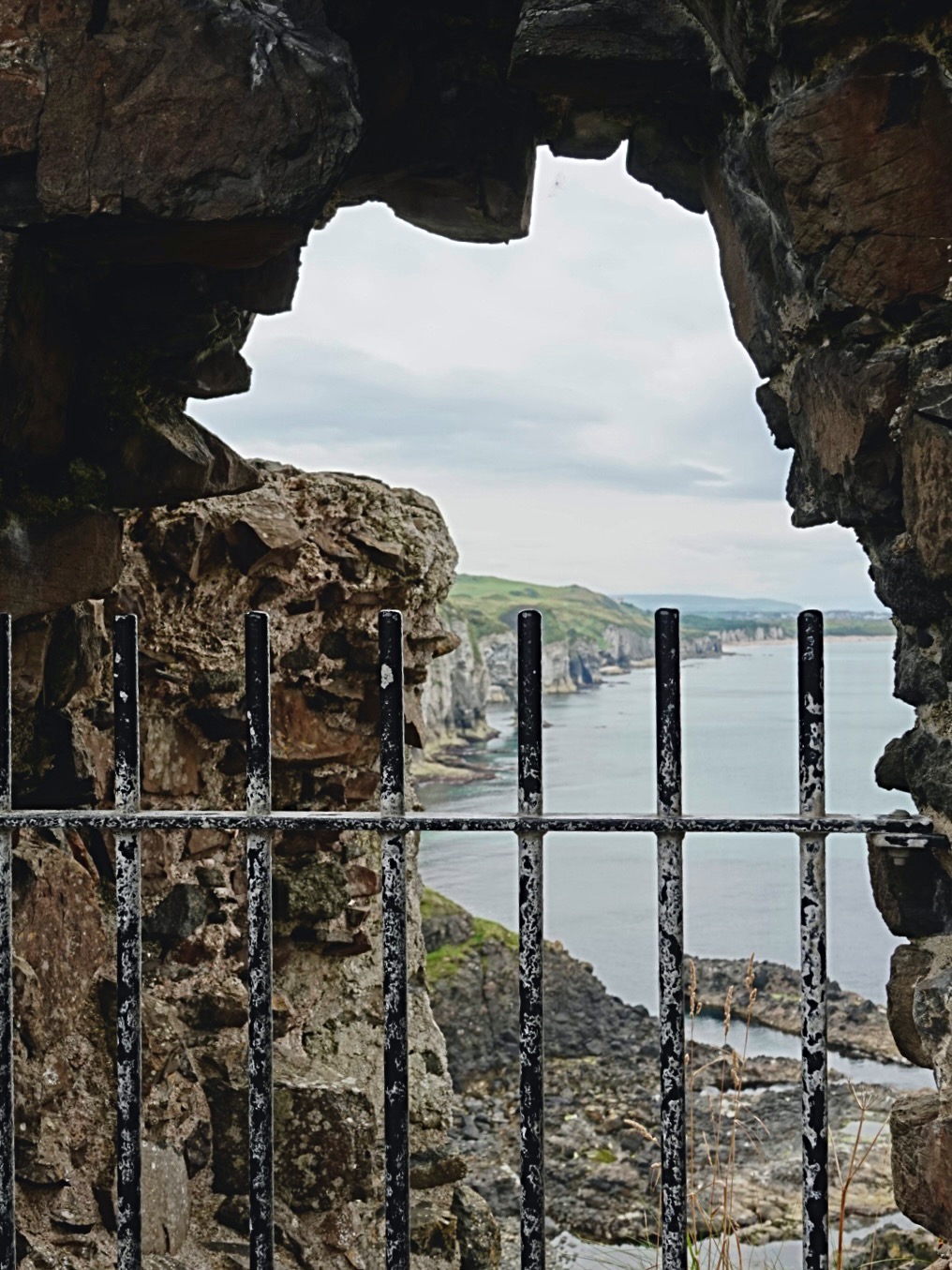
Inside the Grounds

Beautiful Views from the Castle Grounds
Pink Bear Retirement Rating

🧸

⭐️Northern Ireland Day Trip from Dublin – 5/5 A wonderful combination of history, scenery and adventure. If time permits, I recommend spending more than one day in Northern Ireland to fully appreciate the area.

⭐️ Carrick-a-Rede Rope Bridge – 5/5 A highlight of the day for anyone comfortable with a long walk, uneven terrain, steep steps and the moving rope bridge. It may not be suitable for those with mobility or balance limitations, and the bridge can close during bad weather.

⭐️ Giant’s Causeway – 5/5 Fascinating geology and beautiful coastal scenery. Take your time walking to the Causeway if the weather permits and use the available shuttle bus if you prefer not to make the walk.

⭐️ Dunluce Castle – 5/5 An impressive castle ruin in a spectacular coastal setting. The ruins are fun to explore, and the views alone make it worth a stop.

Final Thoughts

Our day in Northern Ireland turned out to be one of the most memorable days of our entire Ireland journey. We knew we would see beautiful scenery, but I don’t think we expected the day to have quite so much variety. Within a few hours we went from the complicated history and emotion of Belfast and the Peace Wall to walking along spectacular coastal cliffs, crossing the Carrick-a-Rede Rope Bridge, exploring the incredible formations of Giant’s Causeway and wandering through the ruins of Dunluce Castle.

What stayed with me most was how different Northern Ireland felt from the other parts of Ireland we visited. Even our brief time in Belfast gave us a better understanding of the history and divisions that shaped this part of the island. Seeing the murals, flags and Peace Wall made that history feel much more real than simply reading about it. At the same time, once we reached the Causeway Coast, we were surrounded by some of the most beautiful scenery of our entire trip.

If I could change one thing, I would give Northern Ireland more time. Giant’s Causeway alone deserved a more leisurely visit, and I would have liked additional time to explore Belfast. We packed a tremendous amount into one day, and while it worked very well, this is an area that could easily justify several days. That is probably the best compliment I can give it—we left feeling that our day trip had given us a wonderful introduction, but there was still so much more we would have liked to see.

I would absolutely recommend a Northern Ireland day trip from Dublin to anyone who has limited time and wants to experience this part of Ireland. And for travelers like us who don’t want to drive or spend the day on a large tour bus, a private guide made the day surprisingly easy. We were able to travel at our own pace, see an incredible amount, and simply enjoy the experience rather than worry about transportation.

Tips

  • If possible, give Northern Ireland more than one day. Belfast, the Peace Wall and Giant’s Causeway can each justify considerably more time than we were able to spend.
  • Carrick-a-Rede was one of our highlights but be prepared for a fairly long walk with uneven terrain, steep steps and a moving rope bridge. The bridge may also close during bad weather.
  • Visiting Northern Ireland from Dublin without a car is easier than it may seem. If you do not enjoy large, organized tours, consider hiring a private guide. Prices vary considerably, so compare several guides before booking.
  • We used several private guides during our Ireland journey and had very good experiences overall. For this Northern Ireland day trip, Brian Hennessy of Dubh Linn Tours was an excellent choice.

Leave a Comment

Your email address will not be published. Required fields are marked *

Scroll to Top